
Burnout
Staff exhaustion caused by workload or stress.
Definition
Staff exhaustion caused by workload or stress.
Why it matters
Burnout is part of the Operations vocabulary used across home health operations, documentation, and revenue cycle. Understanding it helps clinicians, QA leads, and administrators stay aligned on care quality and compliance.
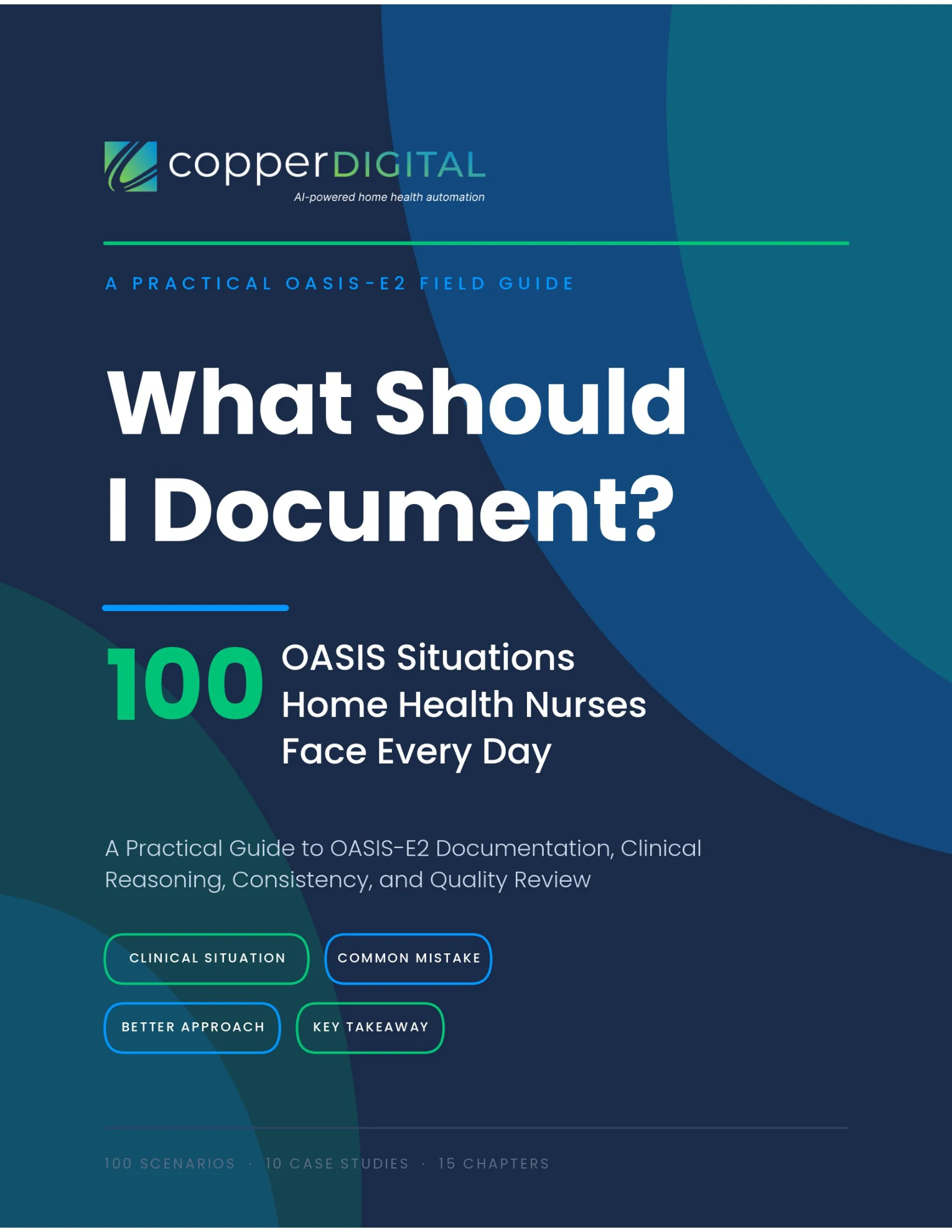
What Should I Document? 100 OASIS Situations Home Health Nurses Face Every Day
100 real OASIS scenarios, worked end to end — clinical situation, common mistake, better approach, and key takeaway. Built around OASIS-E2 (effective April 1, 2026) to turn what you assess into accurate, defensible documentation.
Related terms
Listen While You Read
Conversations on operations
Episodes from Inside Home Health that put Burnout in operational context.
 Ep 23
Ep 23Ep 23 · Aug 17, 2026
The Hidden Spreadsheet Error That's Causing the Nursing Shortage | Robert Wingo
 Robert Wingo, BSN, RN, NI-BCWatch
  Ep 16
Ep 16Ep 16 · Jun 15, 2026
Star Agency or Compliance Disaster? Understanding Home Health Ratings
 Kathy DuckettWatch
  Ep 15
Ep 15Ep 15 · Jun 8, 2026
The Biggest Mistake Healthcare Makes About Nurses
 Luke AdamsWatch
Related Blogs
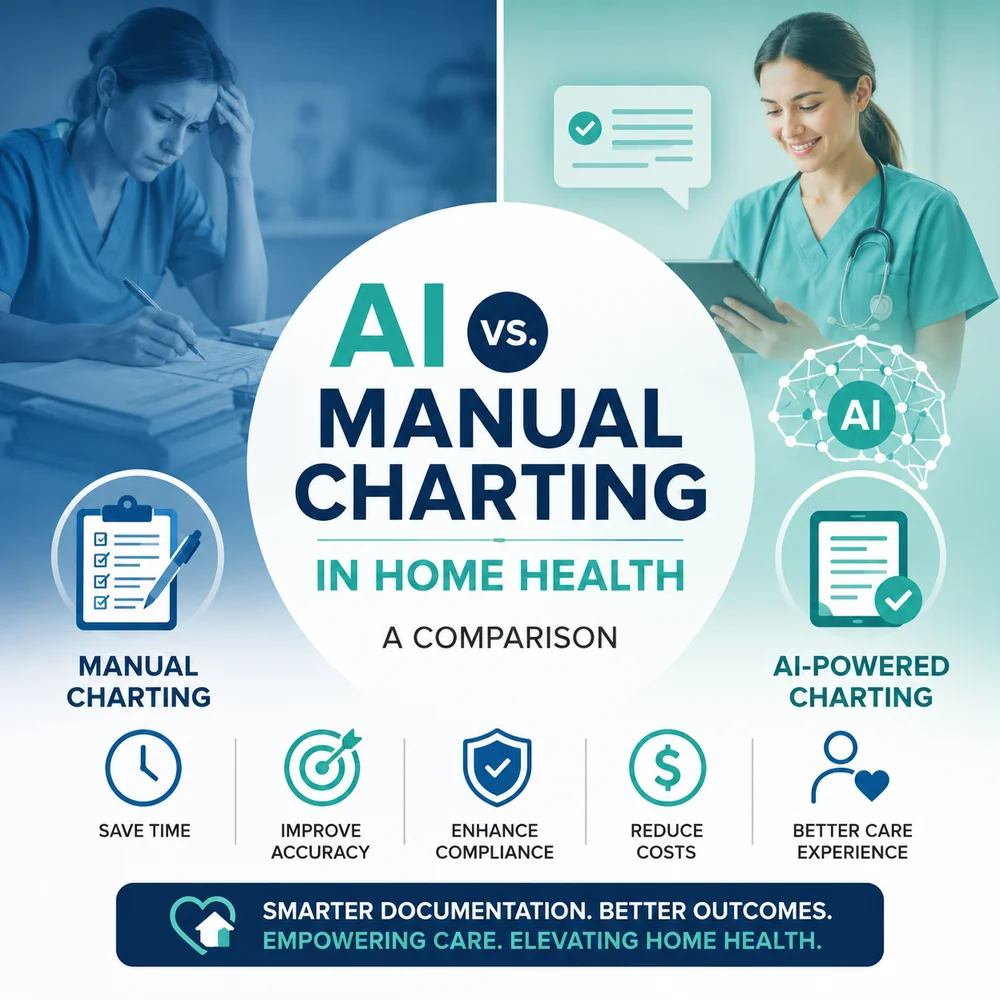
AI vs. Manual Charting in Home Health: An Honest Comparison
Manual charting has been the home health standard for decades, but AI-assisted documentation is changing how notes get done. This honest comparison weighs both across time, accuracy, compliance, cost, clinician experience, and patient care, and explains why the best workflows combine AI efficiency with clinician judgment.
Home Health Documentation Workflow: What Actually Slows Nurses Down?
Home health documentation is one of the biggest administrative burdens clinicians carry, but it is rarely slow for the reasons people assume. The problem usually isnt the nurse, its the workflow surrounding the note: medication reconciliation, OASIS, duplicate entry across disconnected systems, interruptions, and after-hours charting. Here is what actually slows nurses down and how to fix it.

The Hidden Cost of Late Nursing Documentation
Late nursing documentation is far more than an administrative inconvenience. Delayed charting increases patient safety risks, creates handoff gaps, triggers claim denials and undercoding, raises legal and audit exposure, and accelerates nurse burnout and turnover, costing healthcare organizations millions. Most delays happen because nurses lack time to chart in real time, and AI and point-of-care documentation tools can give that time back.

The Biggest Documentation Challenges Home Health Nurses Face
Home health nurses face heavy documentation challenges: delayed point-of-care charting, excessive administrative time, clunky EHRs, OASIS complexity, strict reimbursement rules, working in isolation, endless QA corrections, and after-hours charting that drives burnout. Reducing documentation burden is now essential for clinician retention, patient outcomes, and agency financial performance.

How Ambient AI Is Changing Clinical Documentation
Ambient AI passively listens to patient-clinician conversations and automatically generates structured clinical documentation, using speech recognition, NLP, and large language models to capture symptoms, diagnoses, medications, and plans. It reduces after-hours charting and burnout while the clinician reviews and approves every note. In home health, it works best paired with an AI documentation agent that understands OASIS and referral workflows.