
Digital Transformation
Digital Transformation is the strategic adoption of digital technologies, including EMRs, AI, automation, telehealth, and analytics, to modernize
Definition
Digital Transformation is the strategic adoption of digital technologies, including EMRs, AI, automation, telehealth, and analytics, to modernize
Why it matters
Digital Transformation is part of the Home Health vocabulary used across home health operations, documentation, and revenue cycle. Understanding it helps clinicians, QA leads, and administrators stay aligned on care quality and compliance.
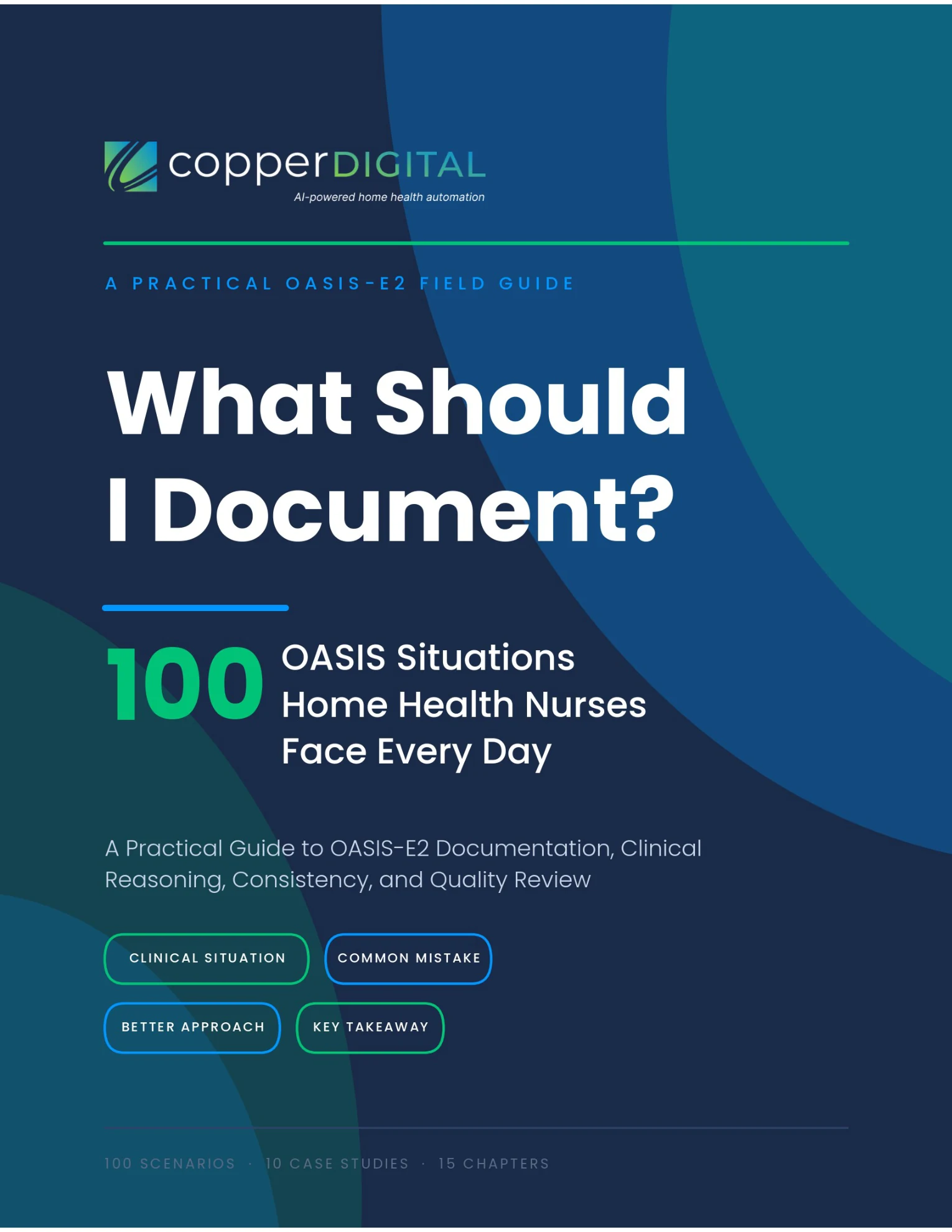
What Should I Document? 100 OASIS Situations Home Health Nurses Face Every Day
100 real OASIS scenarios, worked end to end — clinical situation, common mistake, better approach, and key takeaway. Built around OASIS-E2 (effective April 1, 2026) to turn what you assess into accurate, defensible documentation.
Related terms
Listen While You Read
Conversations on home health
Episodes from Inside Home Health that put Digital Transformation in operational context.
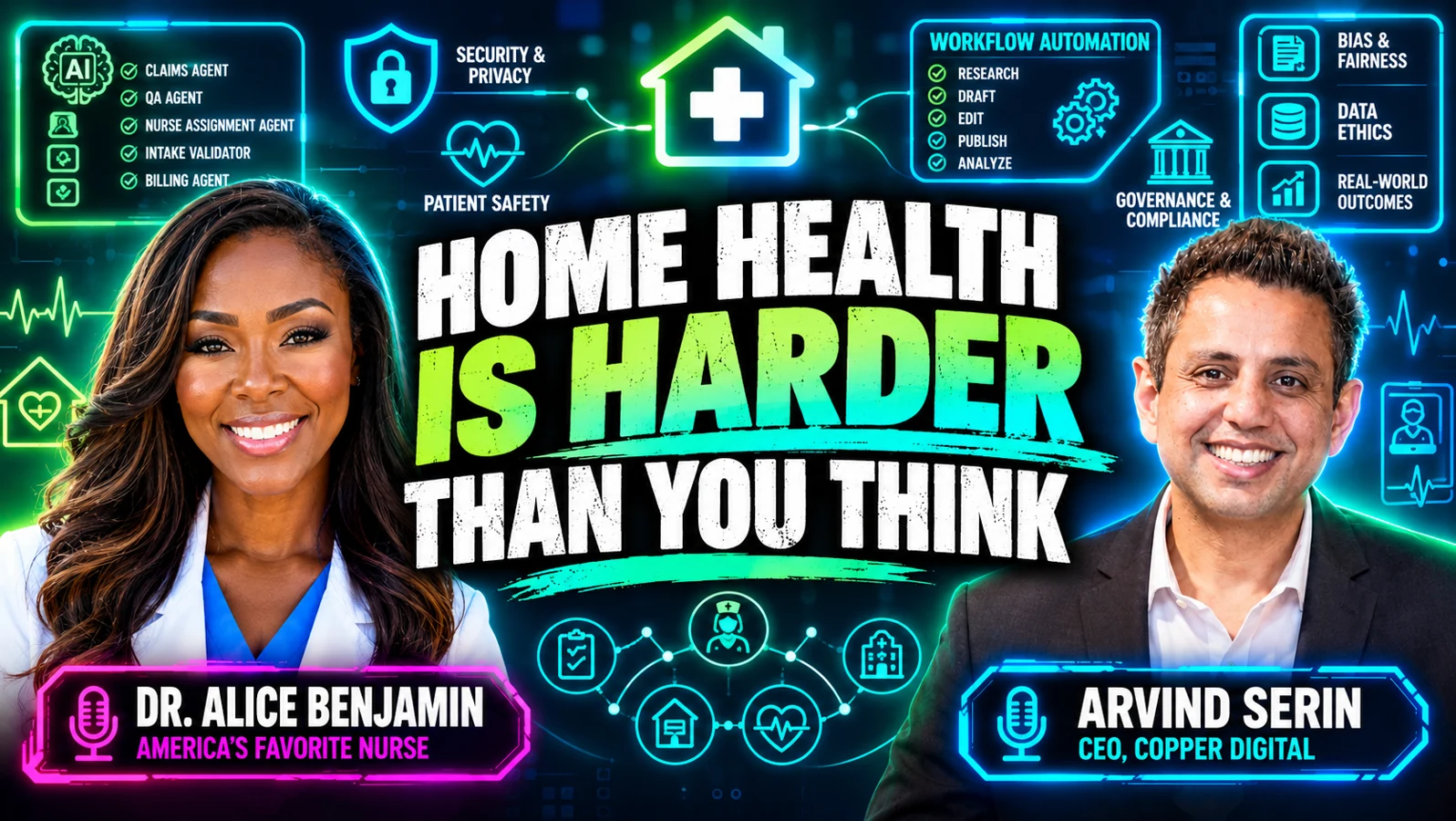 Ep 25
Ep 25 · Oct 5, 2026
Home Health Is NOT “Easy” Anymore: The Hidden Complexity of Care at Home | Nurse Alice Benjamin
 Nurse Alice BenjaminWatch
 Ep 15
Ep 15 · Jun 8, 2026
The Biggest Mistake Healthcare Makes About Nurses
 Luke AdamsWatch
 Ep 16
Ep 16 · Jun 15, 2026
Star Agency or Compliance Disaster? Understanding Home Health Ratings
 Kathy DuckettWatch
Related Blogs
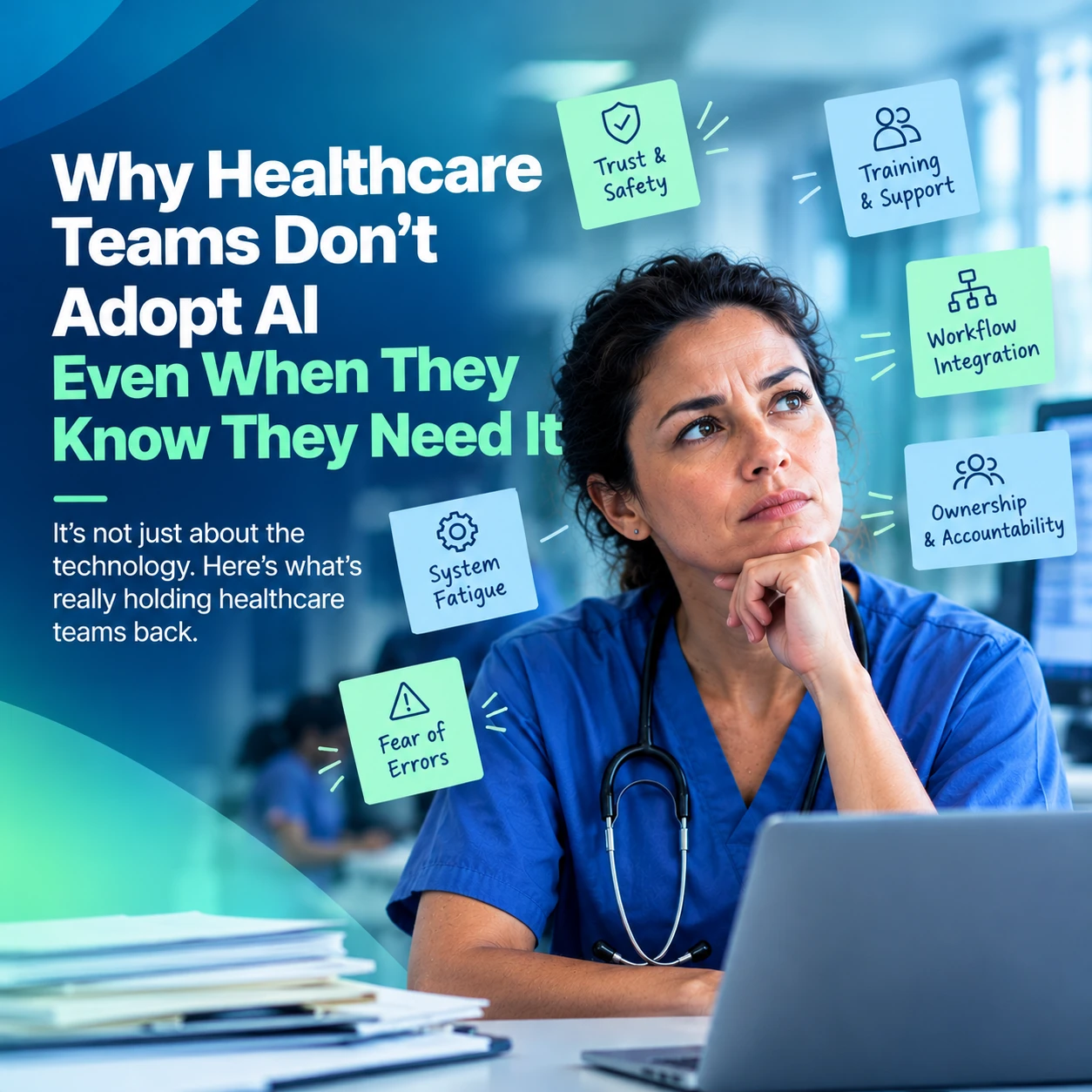
Why Healthcare Teams Don't Adopt AI Even When They Know They Need It
Explore why change fatigue, trust, fear of errors, training, ownership, and workflow design can prevent healthcare teams from adopting AI.

Healthcare AI Trust: Why Great Care Technology Fails Without Earning It
Healthcare AI fails when users don't trust it. Successful healthcare technology must be transparent, reliable, easy to use, protect patient data, fit naturally into caregiving workflows, and strengthen, not replace, the human relationships at the center of care.
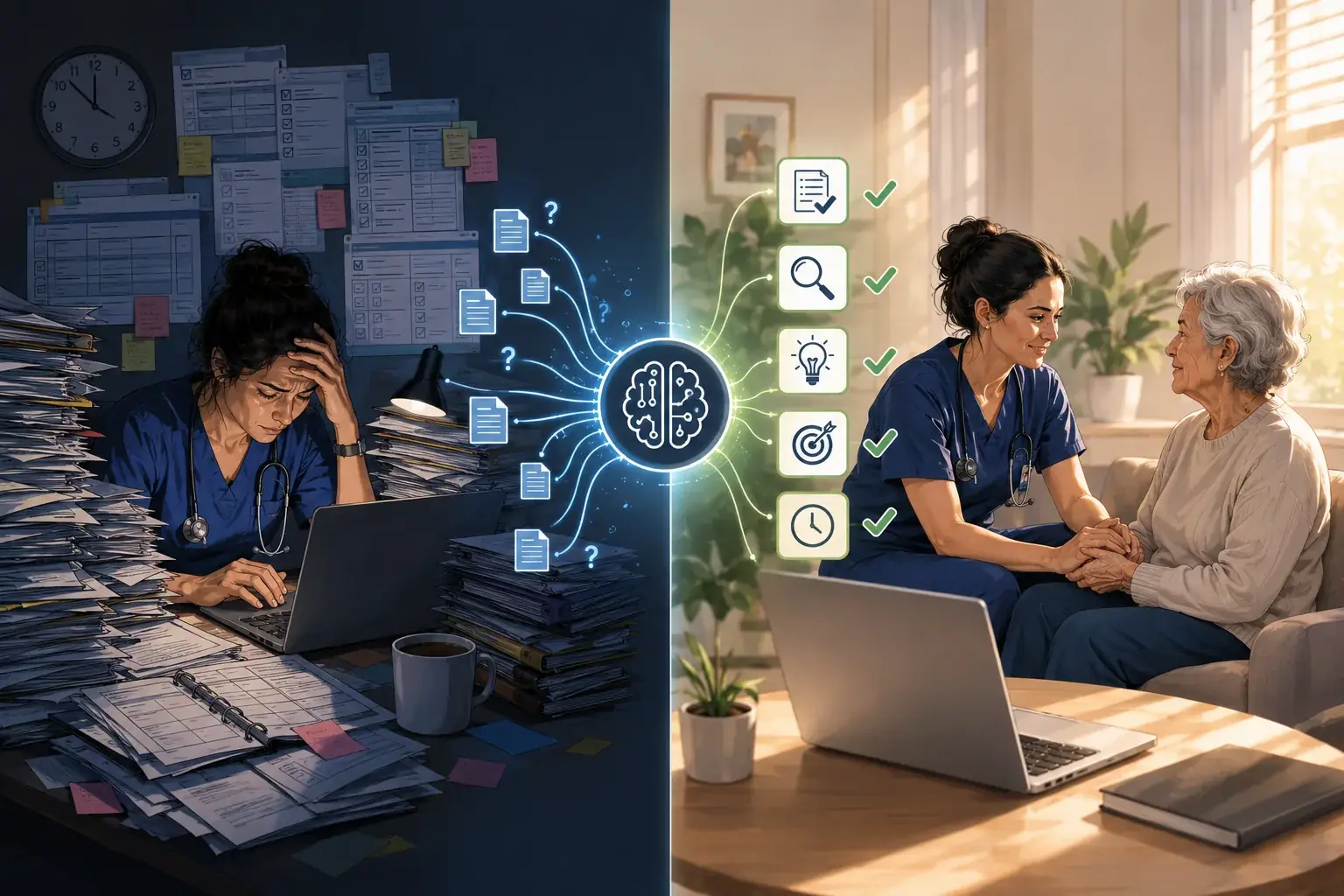
Why Most Healthcare AI Fails: It's Rarely a Technology Problem
Healthcare AI projects usually fail because organizations implement AI before clearly defining the problem they're trying to solve. Success depends on understanding clinical workflows, involving frontline users, aligning business incentives, establishing governance, and designing around patients, not simply deploying more advanced technology.