
Limiting Charge
The limiting charge is the maximum amount a nonparticipating provider may charge a traditional Medicare beneficiary for a covered service when the provider does not accept assignment, capped at 15 percent above the Medicare-approved amount. It does not apply to supplies or equipment.
Definition
The limiting charge is the maximum amount a nonparticipating provider may charge a traditional Medicare beneficiary for a covered service when the provider does not accept assignment, capped at 15 percent above the Medicare-approved amount. It does not apply to supplies or equipment.
Why it matters
It protects beneficiaries from unlimited balance billing and affects out-of-pocket cost when patients see providers who do not accept assignment.
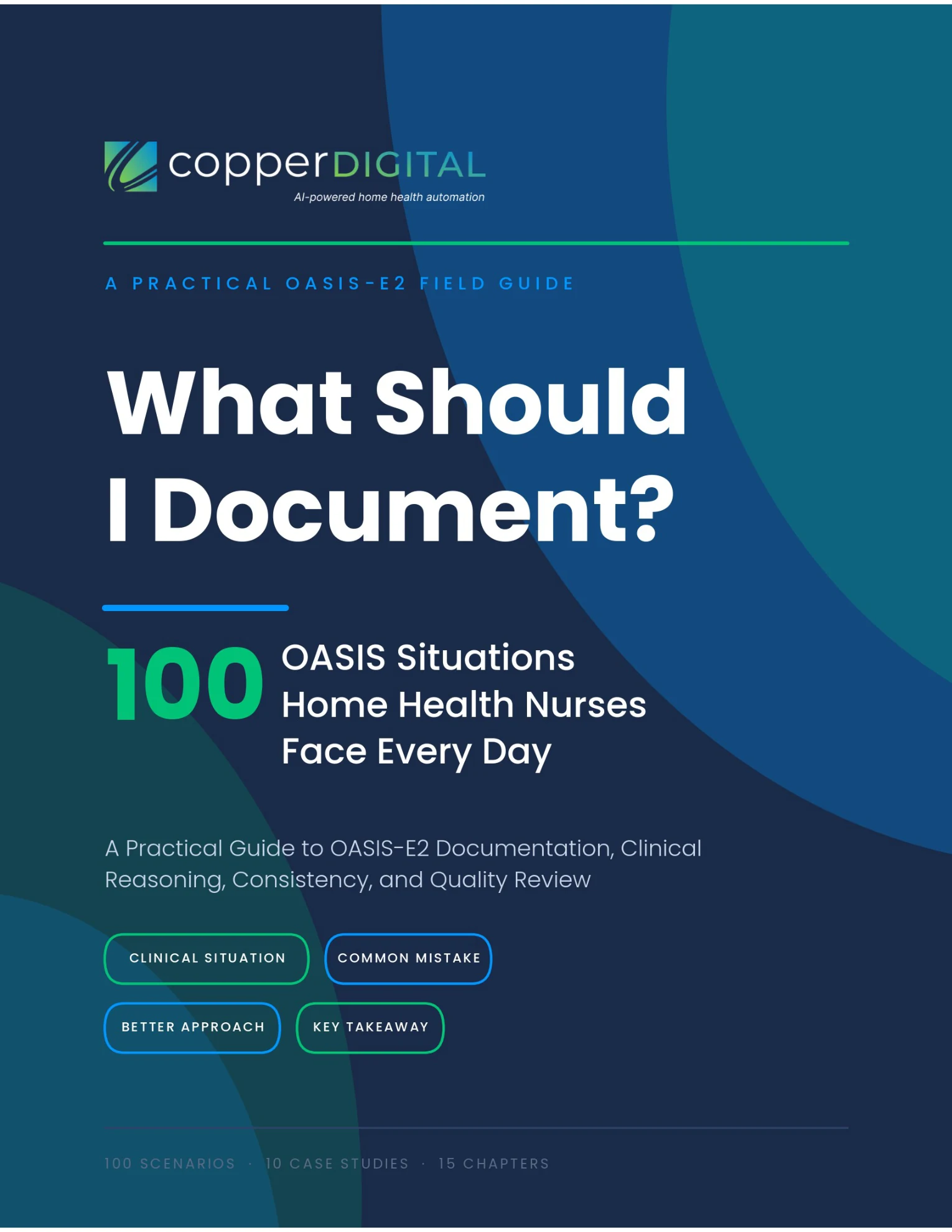
What Should I Document? 100 OASIS Situations Home Health Nurses Face Every Day
100 real OASIS scenarios, worked end to end — clinical situation, common mistake, better approach, and key takeaway. Built around OASIS-E2 (effective April 1, 2026) to turn what you assess into accurate, defensible documentation.
Listen While You Read
Conversations on medicare
Episodes from Inside Home Health that put Limiting Charge in operational context.
 Ep 6
Ep 6 · Mar 30, 2026
What Makes OASIS Documentation So DIFFICULT?
 Kathy DuckettWatch
 Ep 13
Ep 13 · May 18, 2026
Why OASIS Is Every Nurse's Biggest Nightmare
Kathy DuckettWatch  Ep 23
Ep 23 · Aug 17, 2026
The Hidden Spreadsheet Error That's Causing the Nursing Shortage | Robert Wingo
 Robert Wingo, BSN, RN, NI-BCWatch