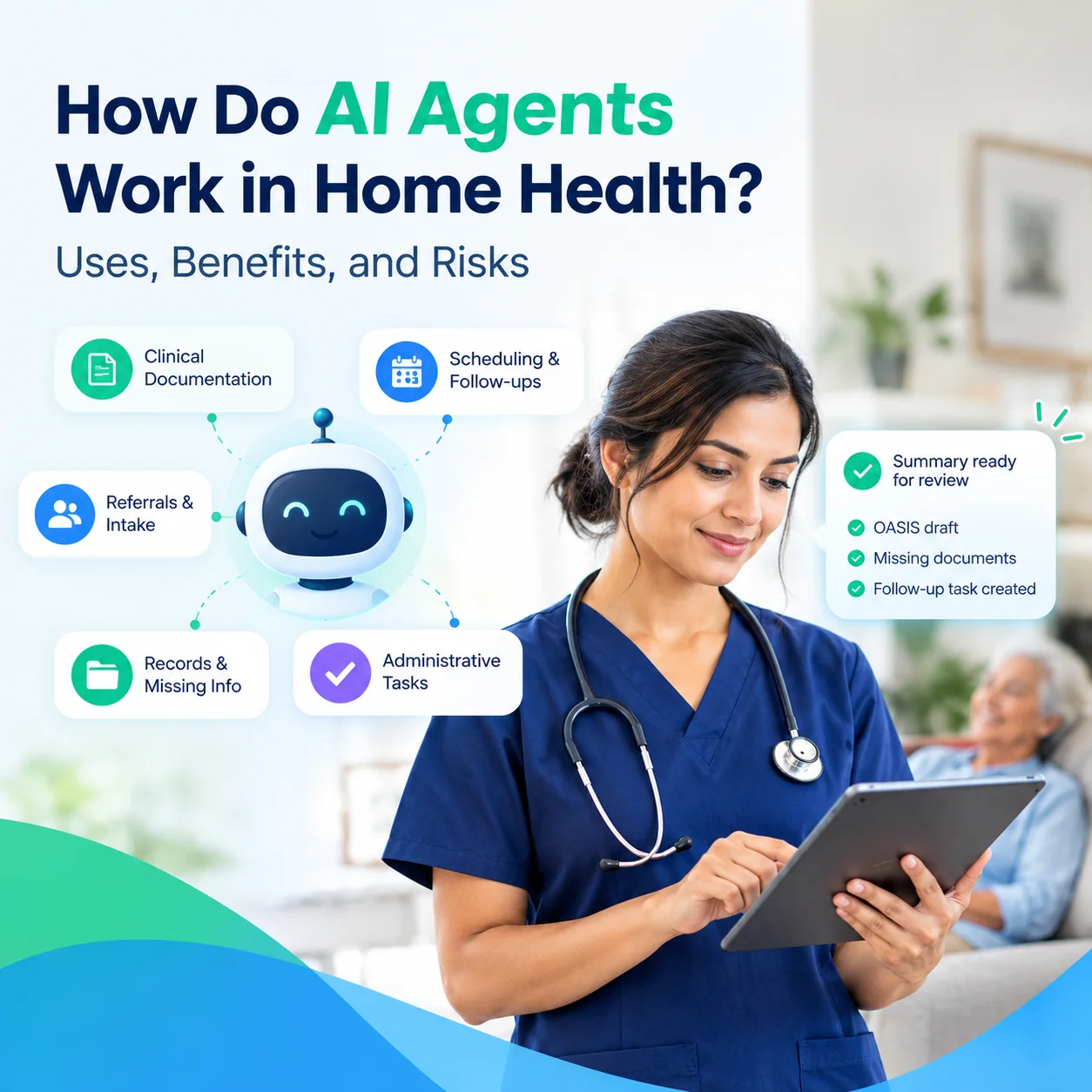
AI is becoming part of everyday business operations, including healthcare. It can summarize records, prepare documentation, identify missing information, support administrative decisions, and help teams complete repetitive tasks.
But as organizations begin relying on AI, two important questions come up:
Why did the AI produce this result? And can we establish exactly what happened during the process?
These questions bring us to two important concepts in AI governance: AI explainability and AI audit trails.
Although they are closely related, they serve different purposes.
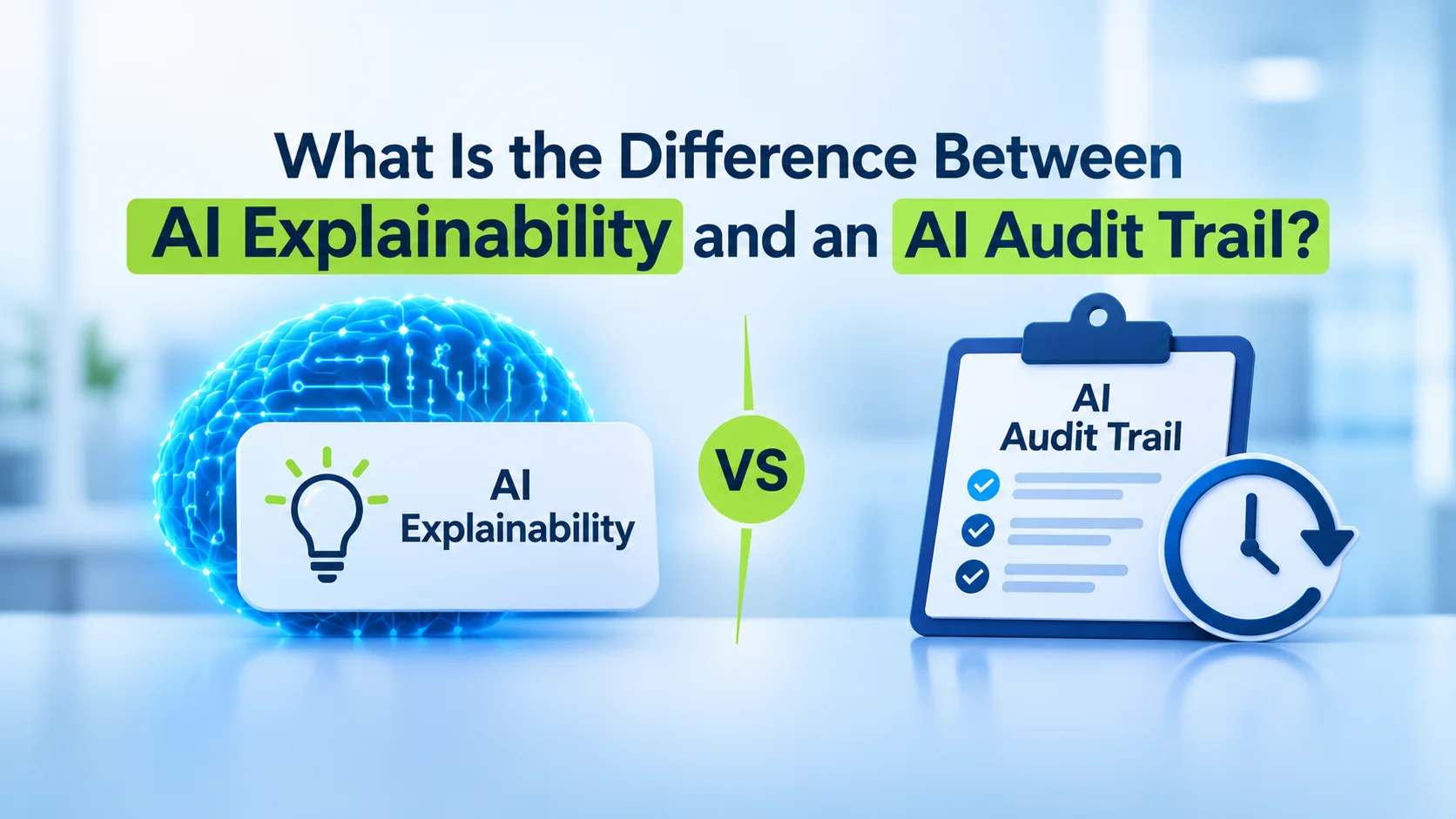
AI explainability helps people understand how an AI system arrived at an output, prediction, or recommendation. An AI audit trail provides a chronological record of the activities and conditions surrounding that output, including relevant system actions and human involvement.
One helps explain the result. The other helps reconstruct the events.
Both are important for investigating errors, supporting accountability, and building trust in AI systems. Neither replaces the other.
What Is AI Explainability?
AI explainability refers to the ability to understand how an AI system works and why it produces a particular output, prediction, or recommendation.
In simple terms, it answers questions such as:
- Why did the AI generate this result?
- Which information influenced its recommendation?
- What factors contributed to the output?
- What limitations might affect the result?
- Can a person understand the basis of the AI's response?
For example, imagine an AI tool reviewing a home health referral packet. It identifies a missing face-to-face encounter document.
An explainable system should help the user understand what led to that flag. Did it fail to locate the document? Was the date outside the required period? Did the information appear inconsistent across two records?
The explanation gives the person reviewing the referral useful context instead of presenting an alert without a reason.
Explainability does not necessarily mean exposing every calculation or technical detail behind a model. It means providing an explanation that is meaningful and appropriate for the person using or evaluating the system.
NIST distinguishes explainability, which concerns the representation of the mechanisms underlying an AI system's operation, from interpretability, which concerns understanding the meaning of an AI system's output in its intended context.
What Techniques Are Used to Make AI Systems Explainable?
AI explainability is not a single technology. Different techniques help developers and users understand how models produce particular outputs.
Some commonly used approaches include:
- SHAP (SHapley Additive Explanations): Estimates how individual input features contribute to a model's prediction.
- LIME (Local Interpretable Model-agnostic Explanations): Approximates a model's behavior around a specific prediction to help explain that individual result.
- Attention visualizations: Show attention patterns in certain model architectures. However, attention weights should not automatically be treated as a complete or reliable explanation of a model's reasoning.
- Natural-language explanations: Present a user-friendly description of why a system generated an output, such as identifying missing information or highlighting factors that influenced a recommendation.
The right technique depends on the AI model and the question being investigated. Methods designed for traditional machine-learning models may not translate directly to large language models or multi-step AI agents.
An important consideration is that an explanation can sound convincing without accurately reflecting how the model reached its output. Organizations should evaluate whether explanations are faithful to the system's actual behavior rather than treating them as proof of correctness.
What Is an AI Audit Trail?
An AI audit trail is a chronological record of activities associated with an AI system, a particular output, or a workflow.
It helps authorized reviewers reconstruct what happened, when it happened, and which users or systems were involved.
Depending on how the AI application is designed, an audit trail may record:
- The date and time a task was initiated.
- The user, application, or AI agent that initiated the task.
- The information or records accessed.
- The model and software version involved.
- The relevant workflow rules, instructions, or configuration versions.
- The AI-generated output or action.
- Changes made to the output.
- Whether a human reviewed, corrected, approved, or overrode it.
- Any errors, exceptions, or escalations.
- The final status of the task.
For example, if an AI tool prepares a clinical visit summary, an audit trail could show when the summary was generated, which source records were accessed, whether a nurse edited it, and when the nurse approved the final version.
This makes it easier to investigate a concern later.
An audit trail is not automatically a complete record of everything an AI system did. Its usefulness depends on what the system captures, how logs are protected, whether relevant data sources are recorded, and how long the records are retained.
What Information Should an AI Audit Trail Capture?
An effective audit trail should capture enough operational context to help authorized reviewers reconstruct important activities.
For AI agents, this is particularly important because a single task may involve multiple steps, connected applications, and automated actions.
Depending on the system and its intended use, useful audit records may include:
- Model version: Which model or system version generated the output?
- Policy and configuration versions: Which instructions, workflow rules, or settings were active?
- Data sources and lineage: Which records or datasets were accessed, and where did the information originate?
- Timestamps: When was the task initiated, processed, reviewed, and completed?
- User and agent identities: Which person, application, or AI agent performed each recorded action?
- Human approvals and overrides: Who reviewed, changed, rejected, or approved the AI-generated result?
- Exceptions and errors: What information was missing, what failed, and when was the issue escalated?
Organizations should also consider whether the logs are protected against unauthorized alteration, whether access is restricted, and whether records can be retrieved when needed.
Not every system captures all these details by default. Healthcare organizations should ask vendors what is actually recorded and whether authorized staff can access and export those records.
What Is the Difference Between AI Explainability and an AI Audit Trail?
The simplest difference is that explainability helps answer why an AI produced an output, while an audit trail helps answer what happened, when it happened, and under what recorded conditions.
| Feature | AI Explainability | AI Audit Trail |
|---|---|---|
| Primary question | Why did the AI produce this result? | What happened, when, and under what controls? |
| Core focus | Model behavior and factors behind an output | Activities, events, and operational history |
| Output type | Feature contributions, explanations, or natural-language rationales | Chronological logs, data lineage, and sign-off records |
| Main audience | End users, affected individuals, clinicians, and developers | Compliance teams, auditors, security teams, and regulators |
| Main purpose | Understanding and evaluating an AI output | Reconstructing and verifying activities |
| Can it exist independently? | Yes. A model may offer explanations without preserving a record of a past interaction. | Yes. A system may log actions and model versions without explaining the model's prediction. |
Consider a home health referral that an AI system flags as incomplete.
Explainability tells you why the referral was flagged. The system may show that it could not locate a required document or verify a particular date.
The audit trail tells you what happened. It may show when the referral arrived, which documents were processed, when the flag was generated, who reviewed it, and what action followed.
One helps make sense of the result. The other helps reconstruct the events around it.
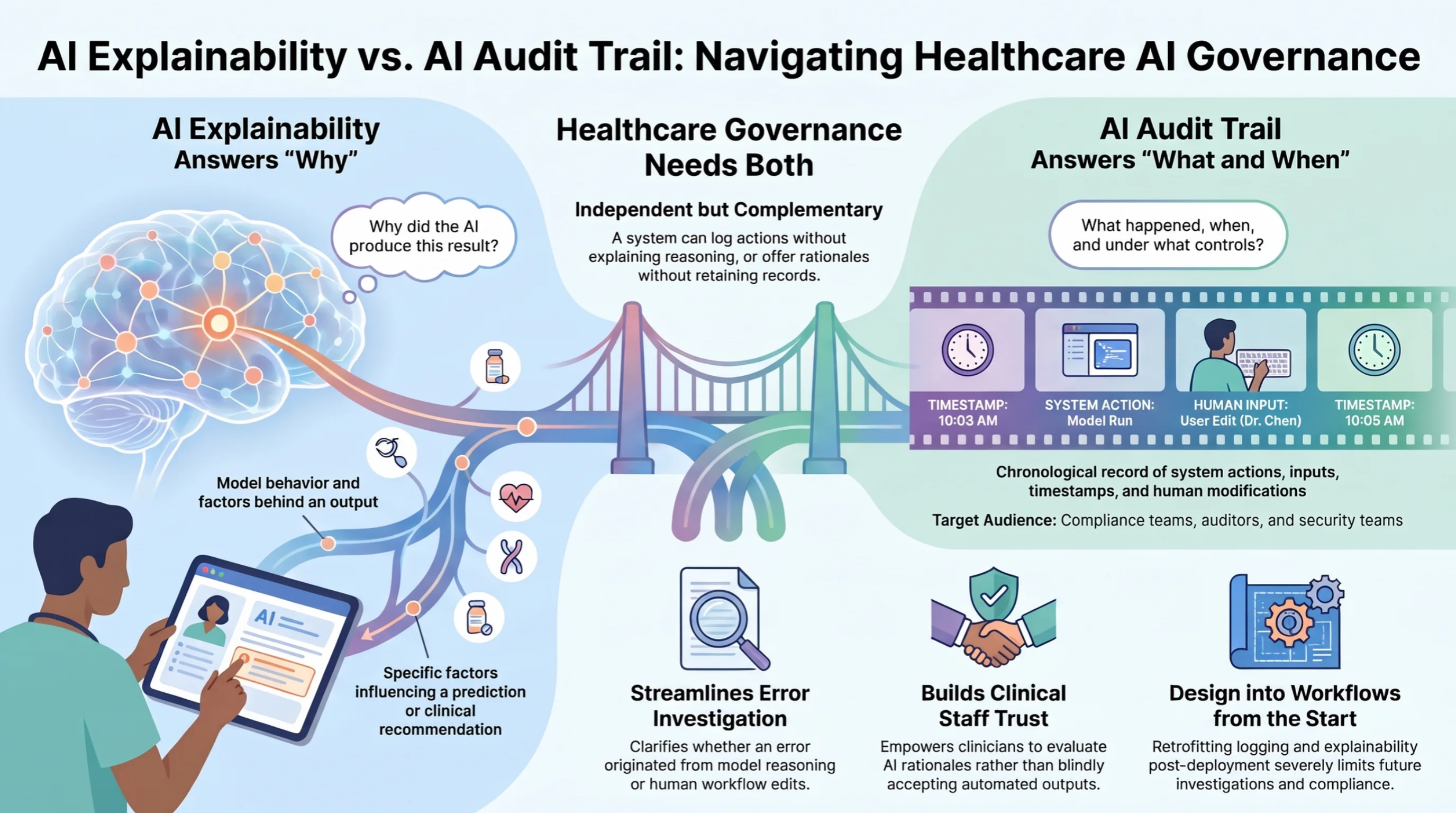
Explainability and audit trails are complementary capabilities. Their usefulness depends on the quality of explanations, recorded events, and workflow controls.
Who Uses AI Explainability and Who Uses an AI Audit Trail?
Although both capabilities support AI governance, they often serve different audiences.
AI explainability is particularly useful for:
- Clinicians reviewing AI-generated summaries or recommendations.
- Employees checking why a system flagged an issue.
- Customers or individuals affected by an AI-supported decision.
- Developers evaluating model behavior and performance.
- Managers assessing whether an AI recommendation is appropriate for a workflow.
AI audit trails are particularly useful for:
- Compliance and risk management teams.
- Internal and external auditors.
- Security teams investigating incidents.
- Administrators reviewing human approvals and system actions.
- Regulators or authorized investigators examining relevant records.
The distinction is not absolute. A clinician may need an audit trail when investigating a documentation issue, and an auditor may need an explanation to understand a particular AI output.
Both capabilities help different people examine the same workflow from different perspectives.
Can AI Explainability and Audit Trails Exist Independently?
Yes. They are separate capabilities, and one does not automatically provide the other.
An AI model may offer explanations for its outputs but fail to preserve a reliable record of a specific past interaction. In that case, users may understand how the model generally works but be unable to reconstruct what happened during a particular task.
Likewise, a system may record every action, timestamp, and model version without explaining why the model produced a particular prediction.
For example, an audit trail might show that an AI system flagged a home health referral at 9:42 AM, using a particular model version, and that an intake coordinator reviewed it at 10:05 AM.
But the log may not explain why the referral was flagged.
That requires a separate explanation of the output.
For meaningful AI governance, organizations should evaluate both capabilities rather than assuming one is a substitute for the other.
Why Do Healthcare Organizations Need Both AI Explainability and Audit Trails?
Healthcare decisions involve patient information, clinical judgment, documentation requirements, and regulatory responsibilities. When AI becomes part of these workflows, organizations need more than a system that simply produces an answer.
They need to understand its outputs and have a reliable way to review its activities.
Here are some reasons both capabilities matter.
How Do Explainability and Audit Trails Improve Accountability?
When an AI-generated result is questioned, organizations need to understand what contributed to it and what happened afterward.
Explainability helps reviewers examine the basis of the output. Audit trails help establish which actions were taken by the system and which were taken by people.
Together, they provide a clearer picture of how a workflow unfolded.
This does not automatically determine legal responsibility. Accountability still depends on the circumstances, the system's intended use, organizational policies, and the responsibilities assigned to each person or organization.
How Do They Help Investigate AI Errors?
Suppose an AI tool prepares a clinical summary, but a nurse notices that one detail does not match the source documentation.
Explainability may help the reviewer understand why the system included that detail. The audit trail may show which information was available, when the summary was generated, and whether anyone edited or approved it.
Without these two capabilities, investigating the issue can become difficult.
Teams may know that an error occurred but struggle to establish where it entered the workflow.
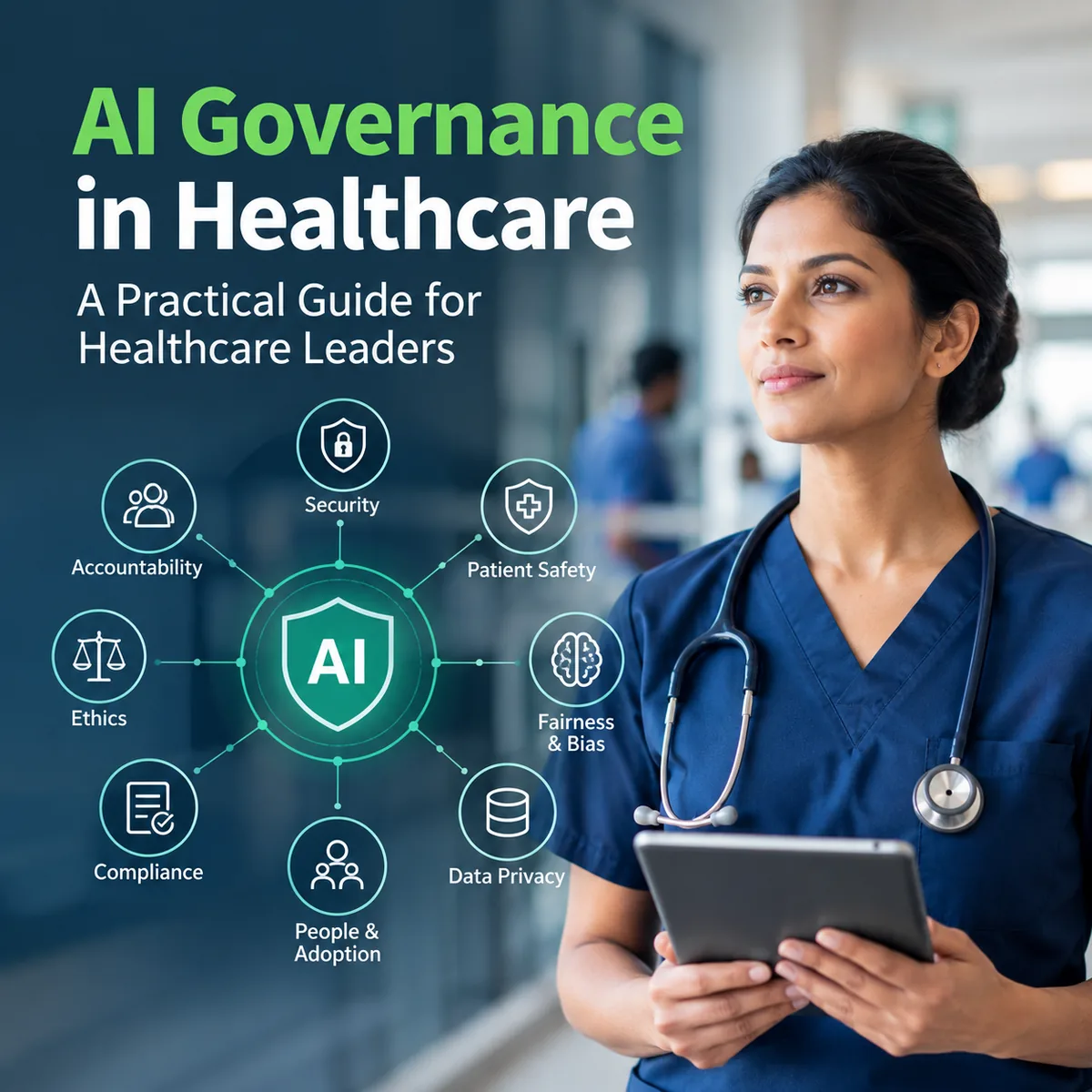
How Do They Support Healthcare AI Governance?
AI governance is not just about choosing an AI vendor or creating a policy.
Organizations need ongoing visibility into how AI systems are used, what they produce, and how people interact with their outputs.
Explainability and audit logs can support monitoring, documentation, testing, and governance. However, organizations also need appropriate access controls, validation, risk assessments, and human oversight.
The NIST AI Risk Management Framework provides a useful structure for considering these responsibilities across the AI lifecycle.
How Do They Build Trust Among Clinicians and Staff?
People are less likely to trust an AI tool when it produces unexplained recommendations or makes changes without a clear record.
Clinicians and administrative teams need to know what the system is doing and when they are expected to step in.
An explanation helps them understand the output. An audit trail helps them review the workflow.
This is particularly important in healthcare, where staff should be able to question an AI-generated result rather than accept it simply because a system produced it.
What Does AI Explainability Look Like in Home Health?
Consider a home health nurse using an AI-powered documentation tool after a patient visit.
The nurse provides visit details through voice input. The AI processes the information and prepares a clinical summary.
Now imagine the summary includes a detail that the nurse does not remember documenting.
What should happen?
An explainable workflow should make it easier to review the information behind that detail. For example, the nurse should be able to compare the generated summary with the source information and identify whether the detail was misinterpreted, inferred, or taken from another available record.
The system should not expect the nurse to accept the output without review.
The same principle applies to referral intake, eligibility checks, authorization requests, and other administrative workflows.
If an AI system flags a referral as incomplete, staff should be able to understand what information is missing and why the system reached that conclusion.
The goal is not to make every technical detail visible to every user. It is to provide the right explanation to the right person at the right point in the workflow.
What Should an AI Audit Trail Capture in Home Health Workflows?
For home health agencies, an audit trail should help reconstruct important activities across clinical and administrative workflows.
For example:
- Referral intake: When a referral was received, which documents were processed, and when missing information was identified.
- Documentation preparation: When an AI-generated note or summary was created and which source records were involved.
- Human review: Who reviewed the output, what changes were made, and whether it was approved.
- Authorization workflows: When an authorization request was prepared or submitted, its status, and any follow-up actions.
- Exceptions: When the system encountered incomplete or conflicting information and routed the issue to a person.
- System changes: Relevant model or software version changes that may affect the workflow.
Not every application captures all these details by default. Agencies should ask vendors what is actually logged, whether the records can be accessed, and how long they are retained.
Patient information must also be protected. Auditability should not become an excuse for unrestricted access to sensitive records.
Can an AI Audit Trail Explain Why an AI Made a Decision?
Not by itself.
An audit trail can show which inputs were accessed, what output was generated, and what actions followed. But that does not necessarily explain the model's reasoning.
For example, a log may show that an AI system flagged a referral at 10:32 AM and that an employee reviewed it at 10:45 AM.
That establishes a sequence of events. It does not necessarily explain why the referral was flagged.
To understand the reason, the system needs to provide an explanation or supporting information about the output.
Similarly, an explanation alone does not prove that the system actually followed the process it describes. The audit trail provides evidence of recorded activities.
This is why both capabilities should be evaluated separately.
Does AI Explainability Guarantee That an AI Output Is Correct?
No.
An AI system can provide an explanation that sounds reasonable and still produce an incorrect result.
Explanations also have limitations. Some methods provide simplified descriptions of complex model behavior. Others identify factors associated with an output without proving that those factors caused it.
Organizations should therefore evaluate explanations rather than assume that a convincing explanation proves correctness.
AI outputs still need validation, appropriate testing, and human review based on the risk of the task.
Does Having an AI Audit Trail Guarantee Compliance?
No.
An audit trail is an important governance and security capability, but having logs does not automatically make an AI system compliant with HIPAA or other applicable requirements.
Healthcare organizations must consider the entire system and its use, including:
- Whether appropriate privacy and security safeguards are in place.
- Who can access patient information.
- Whether vendors and service providers have appropriate contractual arrangements.
- How information is stored, transmitted, and retained.
- Whether access and activity logs are protected and reviewed.
- Whether the AI workflow aligns with organizational policies and applicable requirements.
A well-maintained audit trail can support investigations and demonstrate recorded activities. It cannot replace a broader compliance program.
Which Regulations and Frameworks Make AI Explainability and Auditability Important?
Different regulations and frameworks address transparency, documentation, accountability, and recordkeeping in different ways. Their requirements depend on the organization, system, use case, and jurisdiction.
Some relevant examples include:
- EU AI Act: For systems classified as high-risk, the Act includes requirements relating to transparency, technical documentation, automatic logging, and human oversight. Article 12 addresses record-keeping, while Articles 13 and 14 address transparency and human oversight. These requirements are not automatically applicable to every AI tool.
- GDPR: Article 22 addresses certain decisions based solely on automated processing that produce legal effects or similarly significant effects for individuals. It should not be interpreted as a universal right to receive a complete technical explanation of every AI output. Other GDPR provisions also address transparency and access to information.
- Equal Credit Opportunity Act (ECOA): In the United States, creditors must provide specific and accurate reasons for adverse credit actions. The Consumer Financial Protection Bureau has clarified that using complex algorithms or AI does not remove this obligation.
- NIST AI Risk Management Framework: This voluntary framework provides guidance for identifying, assessing, managing, and monitoring AI risks, including transparency, explainability, and accountability.
For healthcare organizations, applicable requirements also depend on the use case, the type of information processed, and the regulatory obligations of the organization and its vendors.
The important point is that explainability and auditability are not interchangeable regulatory checkboxes. Organizations need to understand which obligations apply to their particular AI system.
What Questions Should Healthcare Organizations Ask AI Vendors About Explainability and Audit Trails?
Before introducing an AI tool into a healthcare workflow, organizations should look beyond a product demonstration.
Ask vendors practical questions such as:
- Can the system explain why it generated a particular output or flagged an issue?
- Can users see the source information behind an AI-generated summary?
- Does the system record when an output is created, edited, reviewed, and approved?
- Can the organization identify which user or system performed each recorded action?
- Are relevant model, software, and policy versions captured?
- Can authorized staff access and export audit records?
- How are errors, exceptions, and conflicting information handled?
- What happens when the AI system is uncertain or lacks sufficient information?
- How are logs protected, and what are the retention policies?
- Can the vendor demonstrate these capabilities using a realistic workflow?
The most useful way to evaluate these answers is to ask for a live demonstration of a complete workflow, including an error or exception.
A vendor should be able to explain not just what the AI can do, but also how its outputs can be reviewed and how its activities can be traced.
Why Should Explainability and Audit Trails Be Designed Into AI From the Beginning?
It is tempting to treat explainability and audit trails as features to add after an AI system is deployed.
That can create problems.
If an application does not capture the right events from the beginning, reconstructing what happened later may be difficult or impossible. Similarly, if explanations are not designed around the needs of actual users, they may be too technical to help anyone make a better decision.
Organizations should consider these capabilities throughout the AI lifecycle:
- Before deployment: Define what users need to understand and what activities must be recorded.
- During development: Build appropriate explanations, logging, access controls, and escalation paths into the workflow.
- During testing: Check whether explanations are accurate and whether logs capture the events needed for investigation.
- After deployment: Monitor performance, review exceptions, examine incidents, and update controls as the workflow changes.
The NIST AI Risk Management Framework provides a useful structure for considering these responsibilities across the design, development, deployment, and use of AI systems.
What Is the Bottom Line: Does Healthcare AI Need Explainability, an Audit Trail, or Both?
It needs both.
AI explainability helps healthcare professionals and administrators understand why a system produced a particular output. An AI audit trail helps organizations reconstruct what happened around that output.
One supports understanding. The other supports verification.
A system can keep detailed logs without making its outputs understandable. It can also provide explanations without maintaining a reliable record of what happened.
As AI becomes more involved in healthcare workflows, organizations should expect both capabilities from systems handling important information or tasks.
The goal should not be to make AI operate without questions. It should be to make AI use easier to understand, review, and hold accountable.
At the end of the day, trust in healthcare AI does not come from the output alone. It comes from being able to understand the output, review the process, and know when a human needs to step in.
Sources and Further Reading
- NIST AI Risk Management Framework – Explainable and Interpretable AI.
- NIST AI Risk Management Framework – Measure Function.
- NIST Computer Security Resource Center – Audit Trail Definition.
- EU AI Act – Article 12: Record-Keeping.
- EU AI Act – Article 13: Transparency and Provision of Information to Deployers.
- European Commission – AI Regulatory Framework.
- European Union – GDPR, Article 22.
- Consumer Financial Protection Bureau – Adverse Action Notifications and Complex Algorithms.
This article is intended for general educational purposes and is not legal, regulatory, or compliance advice.