
Clinical Documentation
Written record of patient care and condition.
Definition
Written record of patient care and condition.
Why it matters
Clinical Documentation is part of the Documentation vocabulary used across home health operations, documentation, and revenue cycle. Understanding it helps clinicians, QA leads, and administrators stay aligned on care quality and compliance.
Home Health Documentation Playbook
The complete guide to OASIS-E, Medicare compliance, PDGM, and AI-assisted documentation. Learn how top agencies reduce documentation time without sacrificing compliance.
Related terms
Listen While You Read
Conversations on documentation
Episodes from Inside Home Health that put Clinical Documentation in operational context.






Related Blogs
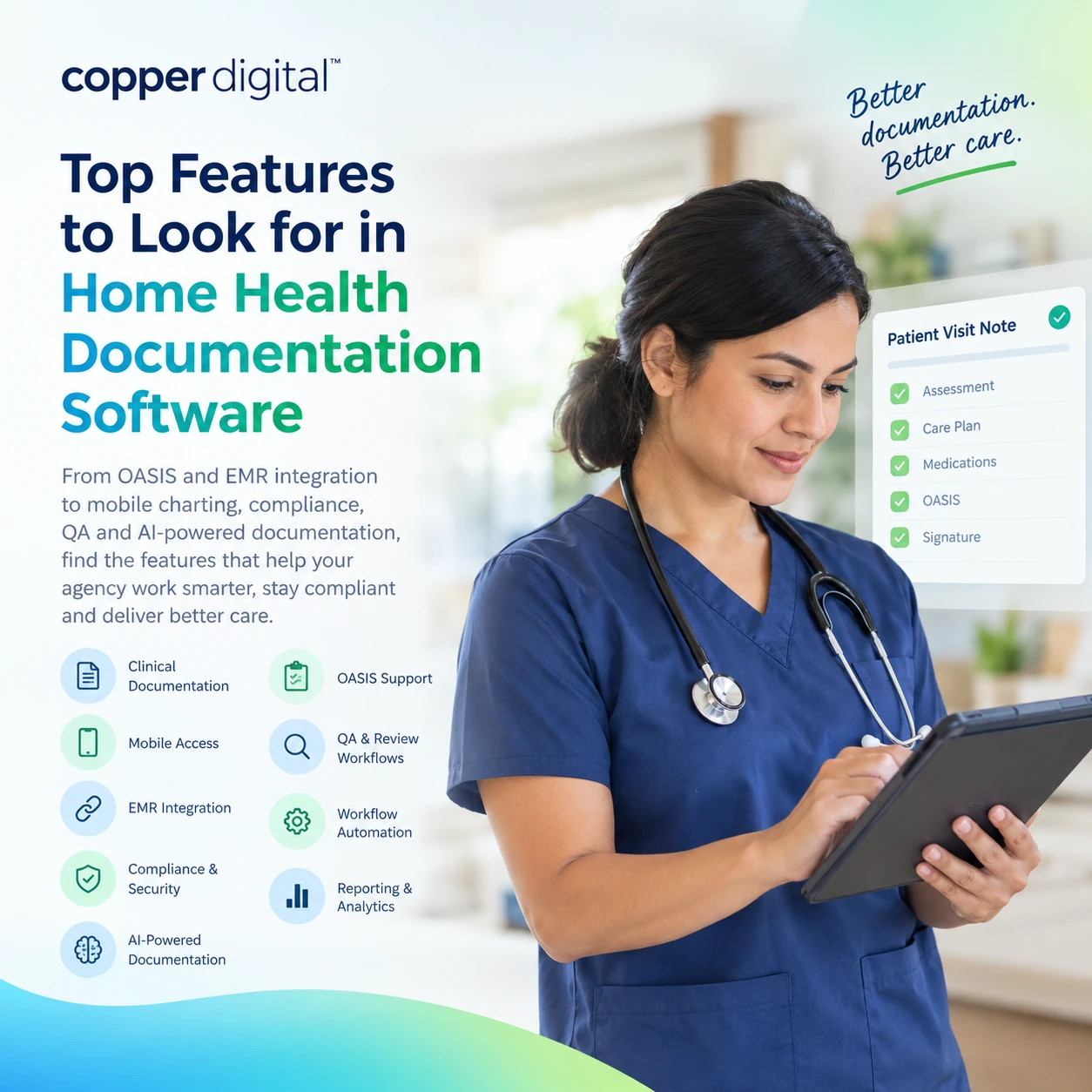
Top Features to Look for in Home Health Documentation Software
A practical guide to evaluating home health documentation software, including OASIS support, mobile charting, EMR integration, QA, security, workflow automation, and clinician-reviewed AI.
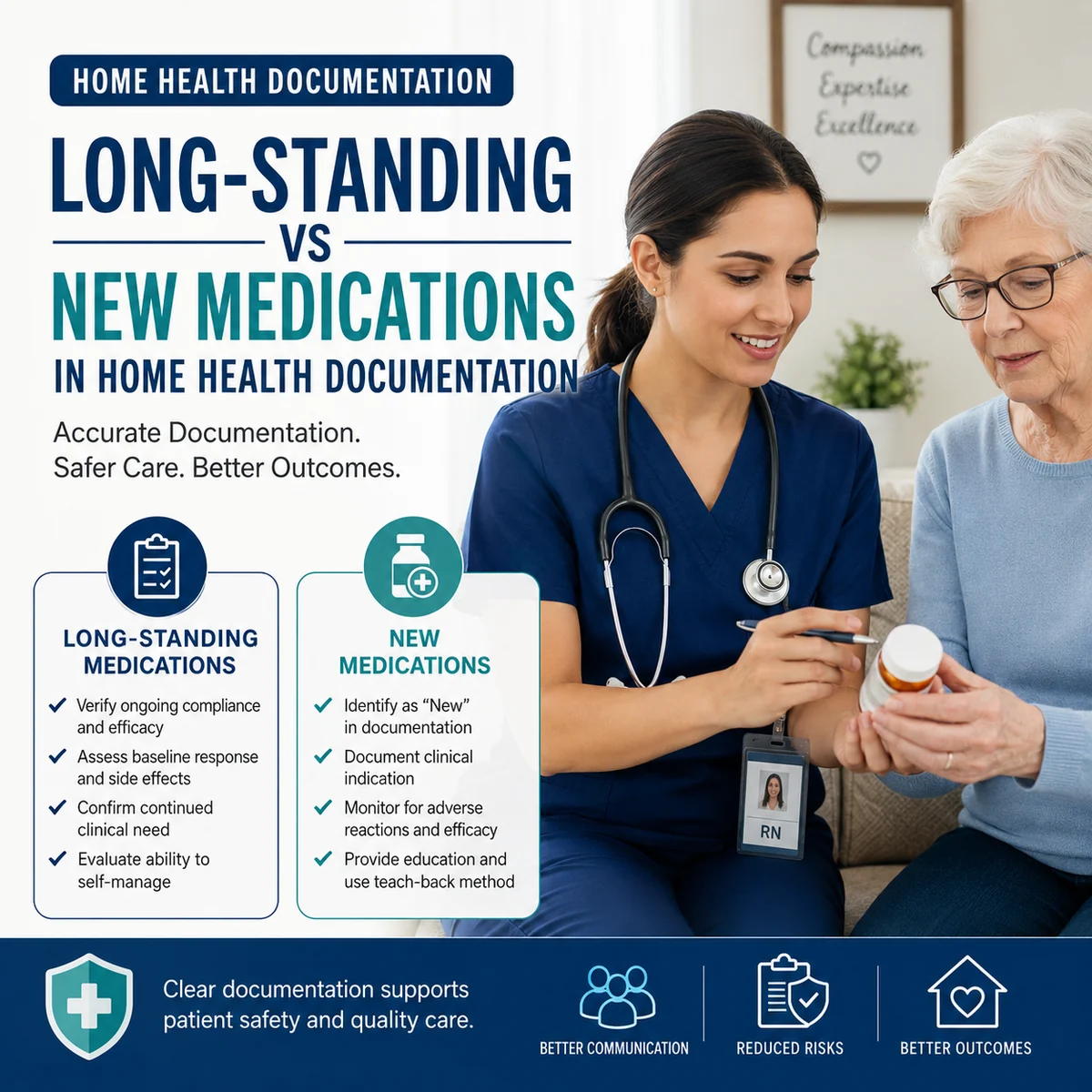
Long-Standing vs. New Medications in Home Health Documentation: What Nurses Need to Know
A patient's medication list often mixes drugs they've taken for years with brand-new prescriptions from a recent hospital stay, and the two need very different documentation. This guide breaks down what to document for long-standing vs. new medications, how to reconcile the regimen, and how to use teach-back to confirm understanding.
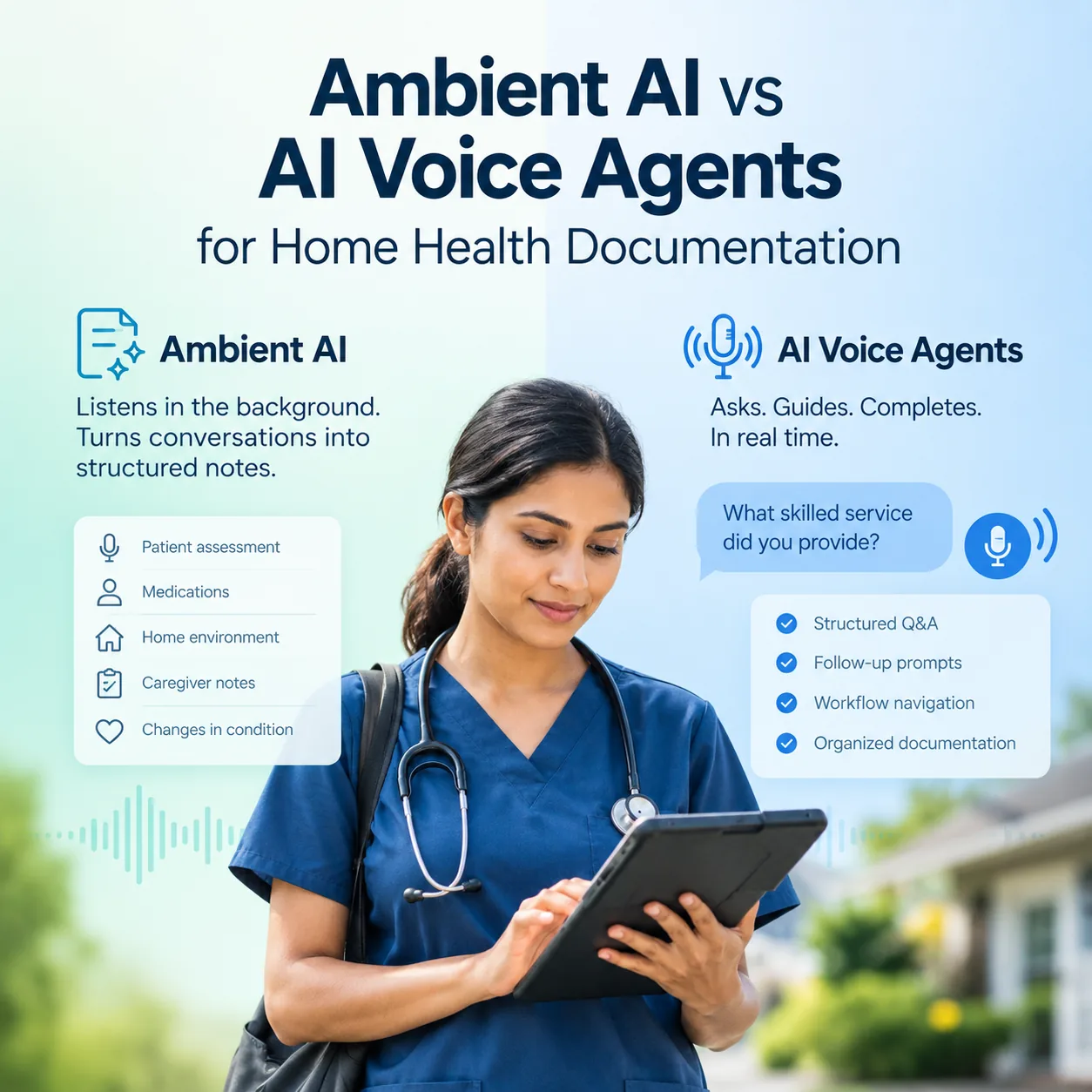
Ambient AI vs. AI Voice Agents for Home Health Documentation
Ambient AI listens and structures natural visit conversations, while AI voice agents actively ask, guide, and complete targeted workflows. The strongest home health documentation design may combine both, with the clinician reviewing every final record.
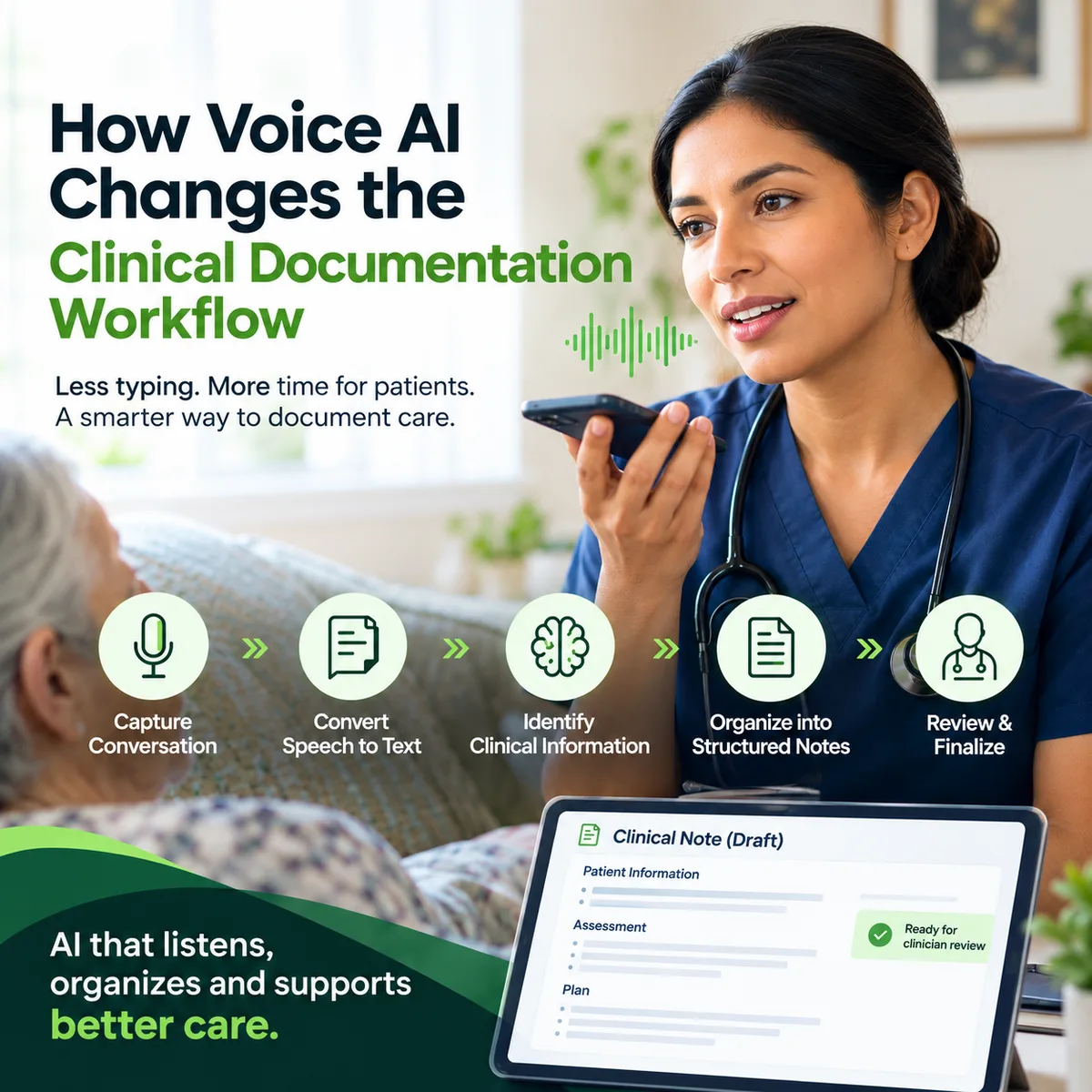
How Voice AI Changes the Clinical Documentation Workflow
Voice AI can turn a natural clinical conversation into a structured draft, identify missing information, and support QA and EMR workflows. The goal is not to remove the clinician; it is to reduce repetitive documentation work while keeping clinical judgment and final approval with the healthcare professional.
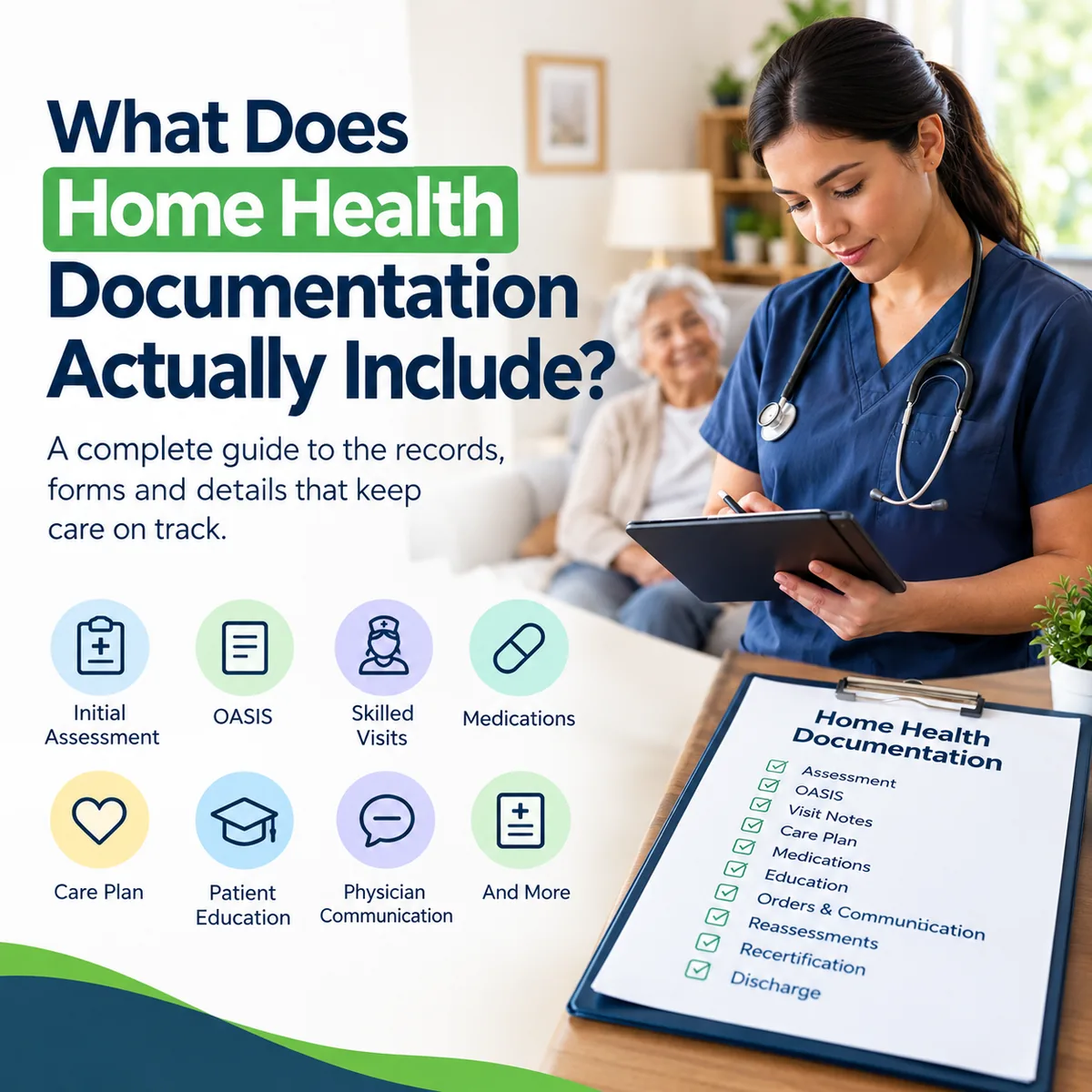
What Does Home Health Documentation Actually Include?
Home health documentation is much more than a visit note. Across an episode it spans the initial assessment, OASIS, skilled visits, medications, the care plan, education, physician communication, orders, reassessments, recertification, and discharge: each piece is part of the patient's larger story of care.