
Section GG
The OASIS section that scores a patient's self-care and mobility, both current ability and the level of assistance needed.
Definition
Section GG is the standardized OASIS assessment section that measures a patient's functional abilities in self-care (such as eating, oral hygiene, toileting, and dressing) and mobility (such as bed mobility, transfers, and walking). Each item captures the patient's usual performance and the amount of assistance required, coded on a standardized 6-point scale.
Why it matters
Section GG scores drive functional impairment levels under PDGM case-mix and are a frequent target of ADR review, so inconsistent or unsupported GG coding can lead to payment adjustments and denials.
Home Health Documentation Playbook
The complete guide to OASIS-E, Medicare compliance, PDGM, and AI-assisted documentation. Learn how top agencies reduce documentation time without sacrificing compliance.
Listen While You Read
Conversations on oasis
Episodes from Inside Home Health that put Section GG in operational context.
 Ep 17
Ep 17Ep 17 · Jun 23, 2026
Most Healthcare AI Startups Are Building the Wrong Product | Dr. Sarah Matt
 Dr. Sarah MattWatch
  Ep 20
Ep 20Ep 20 · Jul 13, 2026
The Real Cost of Ignoring Nurse Burnout | Jennifer Johnson
 Jennifer JohnsonWatch
  Ep 19
Ep 19Ep 19 · Jul 6, 2026
AI Won't Replace Nurses, But Nurses Using AI Will | Timi Abiola
 Timi AbiolaWatch
Related Blogs
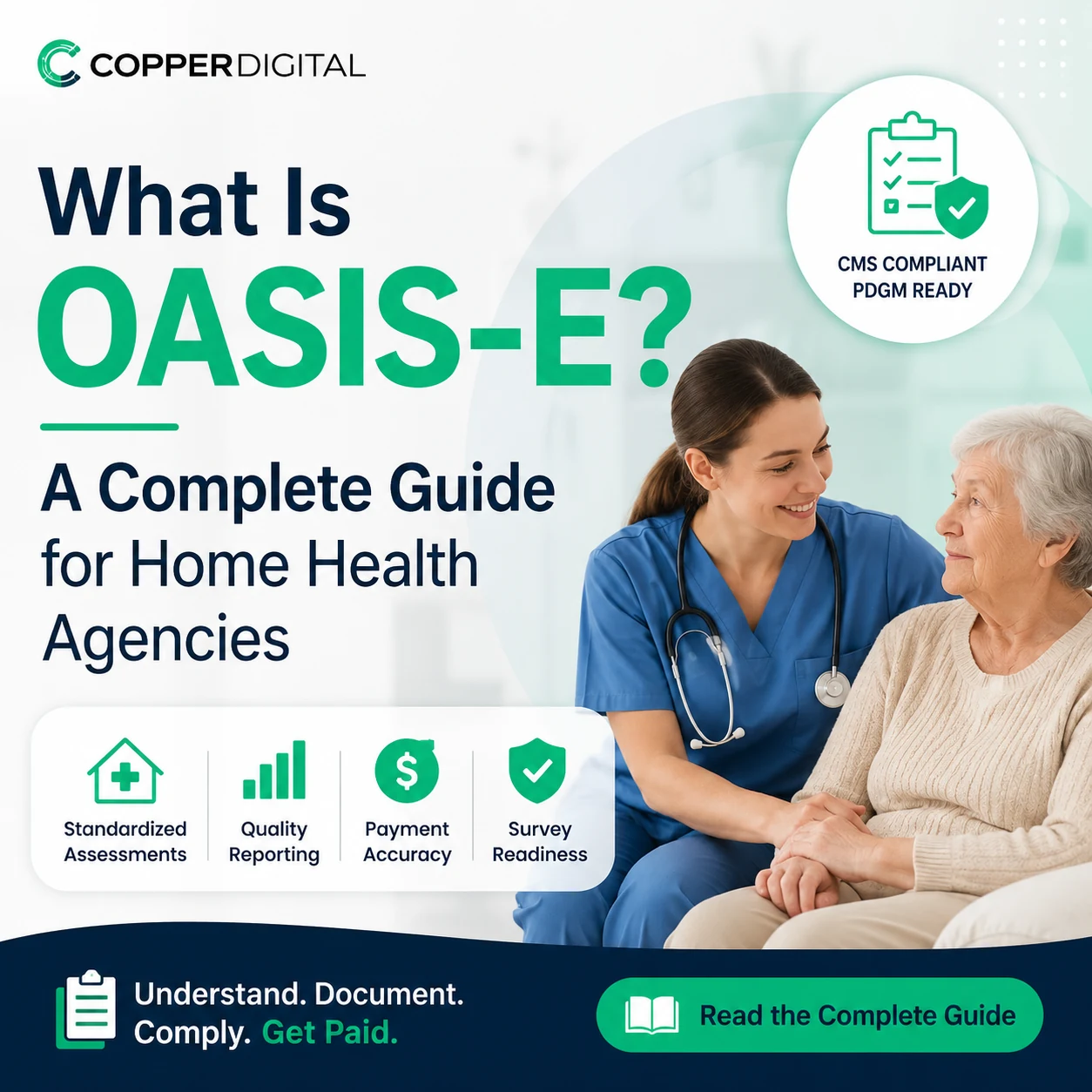
What Is OASIS-E? The Complete Guide for Home Health Agencies (2026)
OASIS-E is the CMS-required standardized assessment behind home health reimbursement, quality, and compliance. This complete guide covers what OASIS-E is, how it differs from D1/E1/E2, the five assessment time points, Section GG, PDGM impact, and documentation best practices.
OASIS-E1 vs OASIS-E2: A Complete Side-by-Side Comparison for Home Health Agencies
Wondering what changed between OASIS-E1 and OASIS-E2? OASIS-E2 is an incremental update, not a redesign. The framework, five time points, and PDGM methodology stay the same, while CMS refines Section GG, cognitive and behavioral items, SDOH, and SPADEs. This guide compares both versions side by side and gives you a transition plan and checklist.

Common OASIS Documentation Mistakes That Lead to Payment Delays
Common OASIS documentation mistakes, such as incomplete assessments, incorrect diagnosis coding, inaccurate Section GG scoring, medication and homebound-status errors, weak skilled-need documentation, and missing physician signatures, are among the biggest causes of home health payment delays. Because OASIS data drives PDGM reimbursement, most of these errors are preventable with point-of-care charting, strong QA, and AI-powered documentation validation.
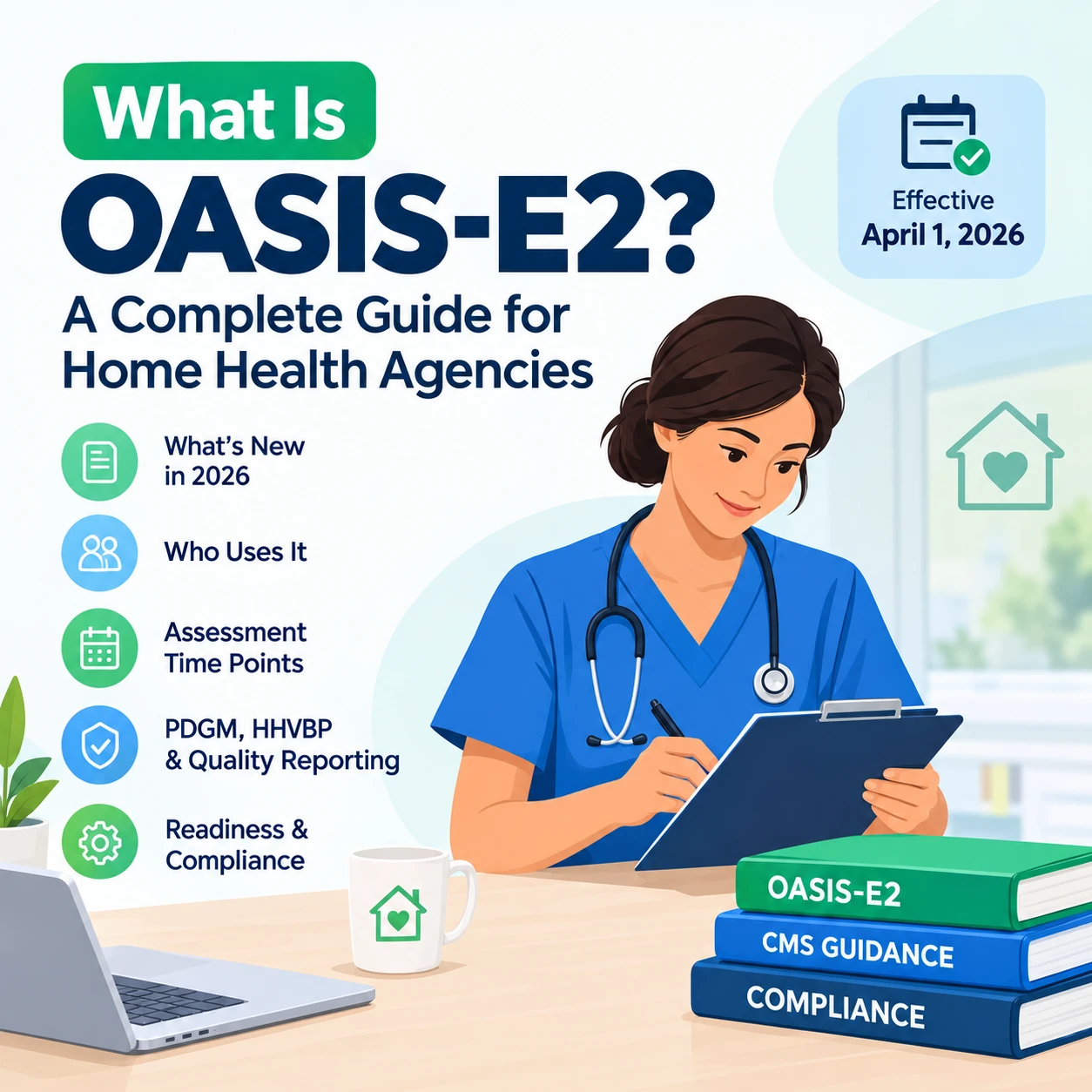
What Is OASIS-E2? A Complete Guide for Home Health Agencies
A practical guide to OASIS-E2: assessment changes, time points, quality and payment uses, EHR and iQIES readiness, and AI support that keeps clinicians in control.
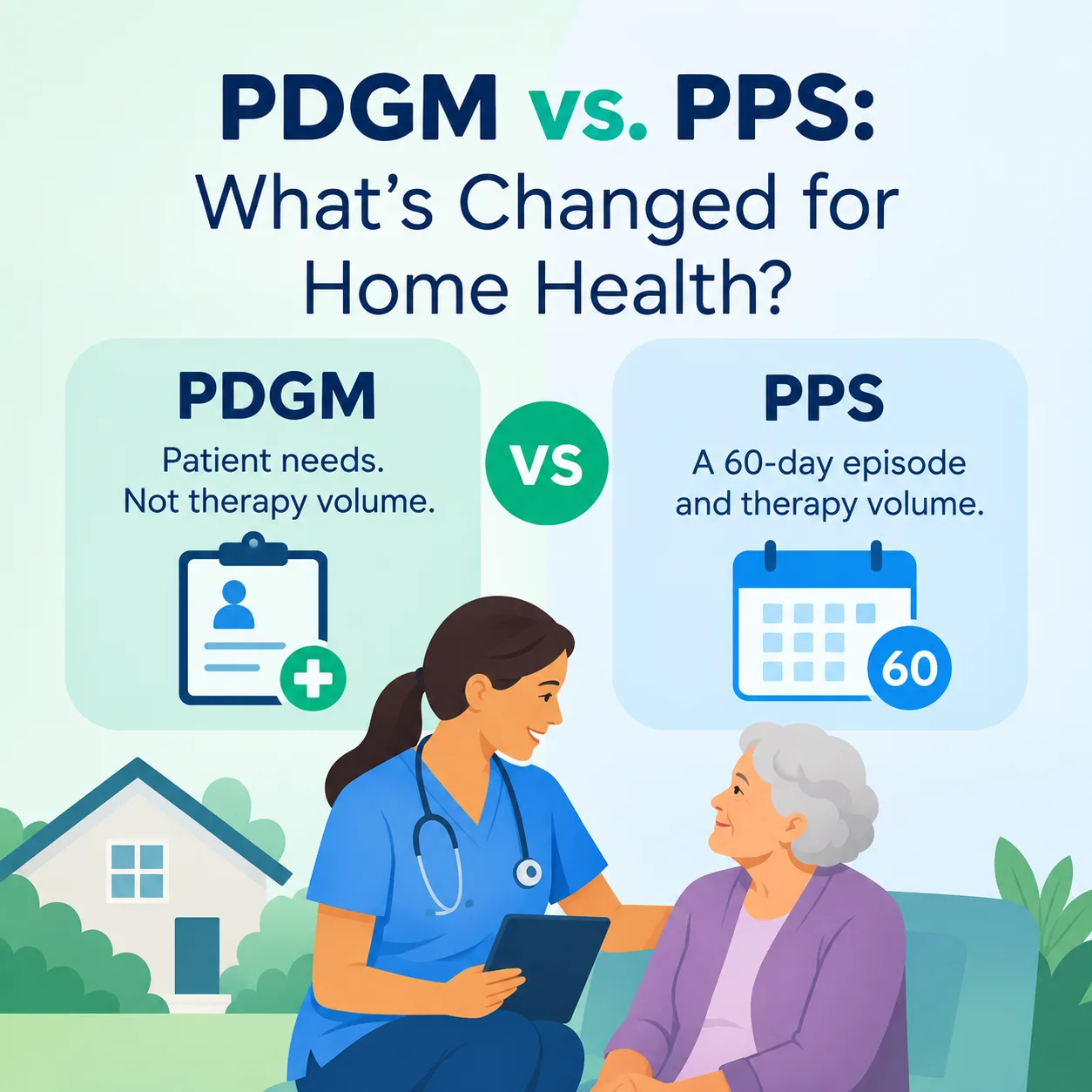
PDGM vs. PPS: What's Changed for Home Health?
PDGM did not replace Medicare's Home Health Prospective Payment System. It changed the case-mix methodology inside HH PPS, and reshaped payment periods, coding, OASIS, LUPA monitoring, billing, and cash flow.