
Plan of Care (POC)
Physician-approved document outlining the patient's diagnoses, goals, frequency of visits.
Definition
The Plan of Care (POC) is the physician-approved document outlining the patient's diagnoses, goals, frequency of visits, ordered disciplines, treatments, and expected outcomes for the home health episode.
Why it matters
All home health services should follow the approved plan of care to ensure compliance and reimbursement.
Home Health Documentation Playbook
The complete guide to OASIS-E, Medicare compliance, PDGM, and AI-assisted documentation. Learn how top agencies reduce documentation time without sacrificing compliance.
Listen While You Read
Conversations on lupa & pdgm
Episodes from Inside Home Health that put Plan of Care (POC) in operational context.
 Ep 24
Ep 24Ep 24 · Sep 16, 2026
83% of Healthcare AI Has NO Governance (Here's Why That's Dangerous) | Dr. Lendra James
 Dr. Lendra James, DNP, MS, RN, NE-BCWatch
  Ep 21
Ep 21Ep 21 · Jul 20, 2026
Why Nurses Stop Using AI Tools After 90 Days | Jennifer Ngure
 Jennifer NgureWatch
  Ep 14
Ep 14Ep 14 · Jun 1, 2026
AI vs Intuition: What Nurses Know Before the Monitors Do
 Desiree PaigeWatch
Related Blogs
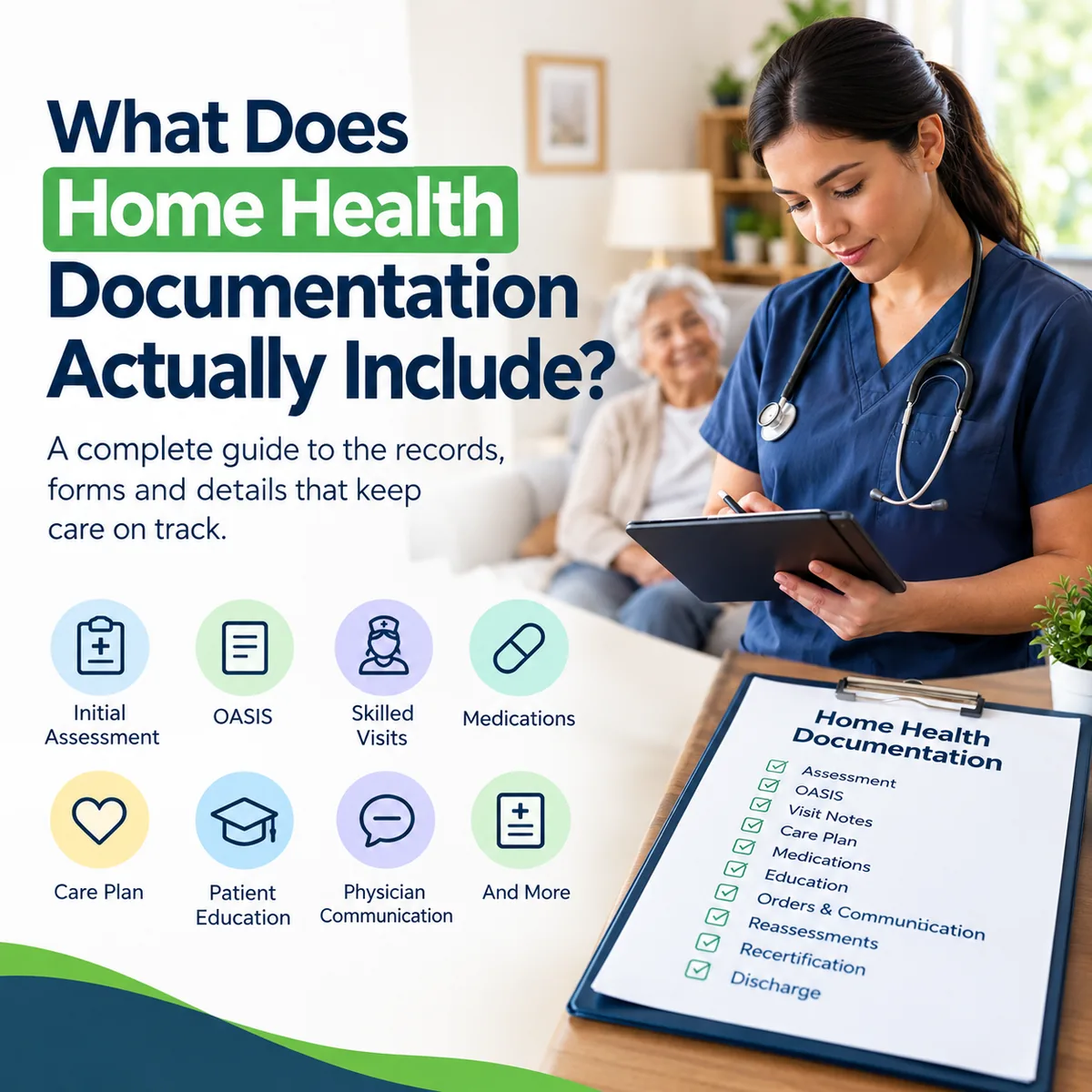
What Does Home Health Documentation Actually Include?
Home health documentation is much more than a visit note. Across an episode it spans the initial assessment, OASIS, skilled visits, medications, the care plan, education, physician communication, orders, reassessments, recertification, and discharge: each piece is part of the patient's larger story of care.
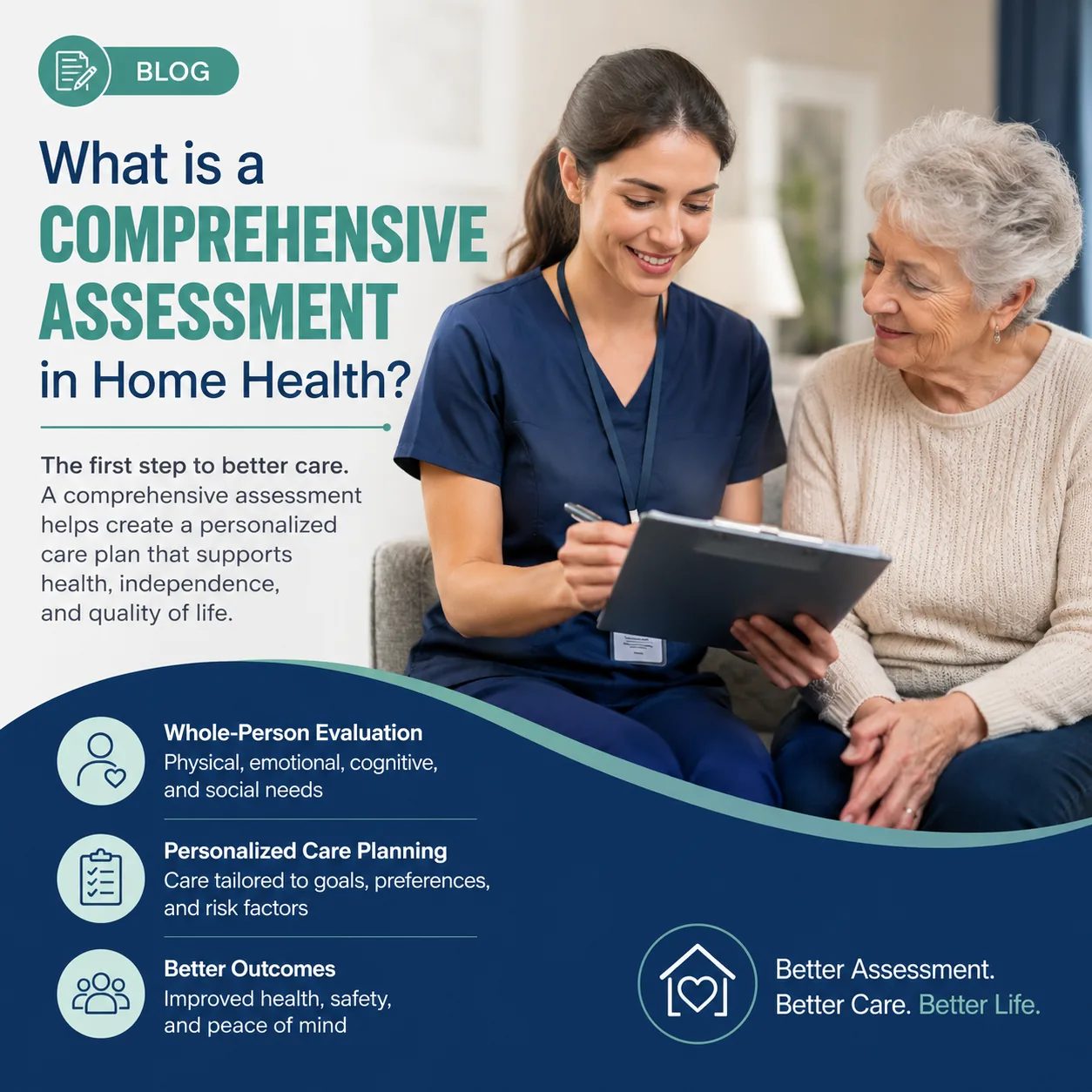
What Is a Comprehensive Assessment in Home Health?
A complete guide to comprehensive assessments in home health: required content, current Medicare timing, OASIS-E2, clinician responsibility, care planning, documentation errors, and a practical checklist.
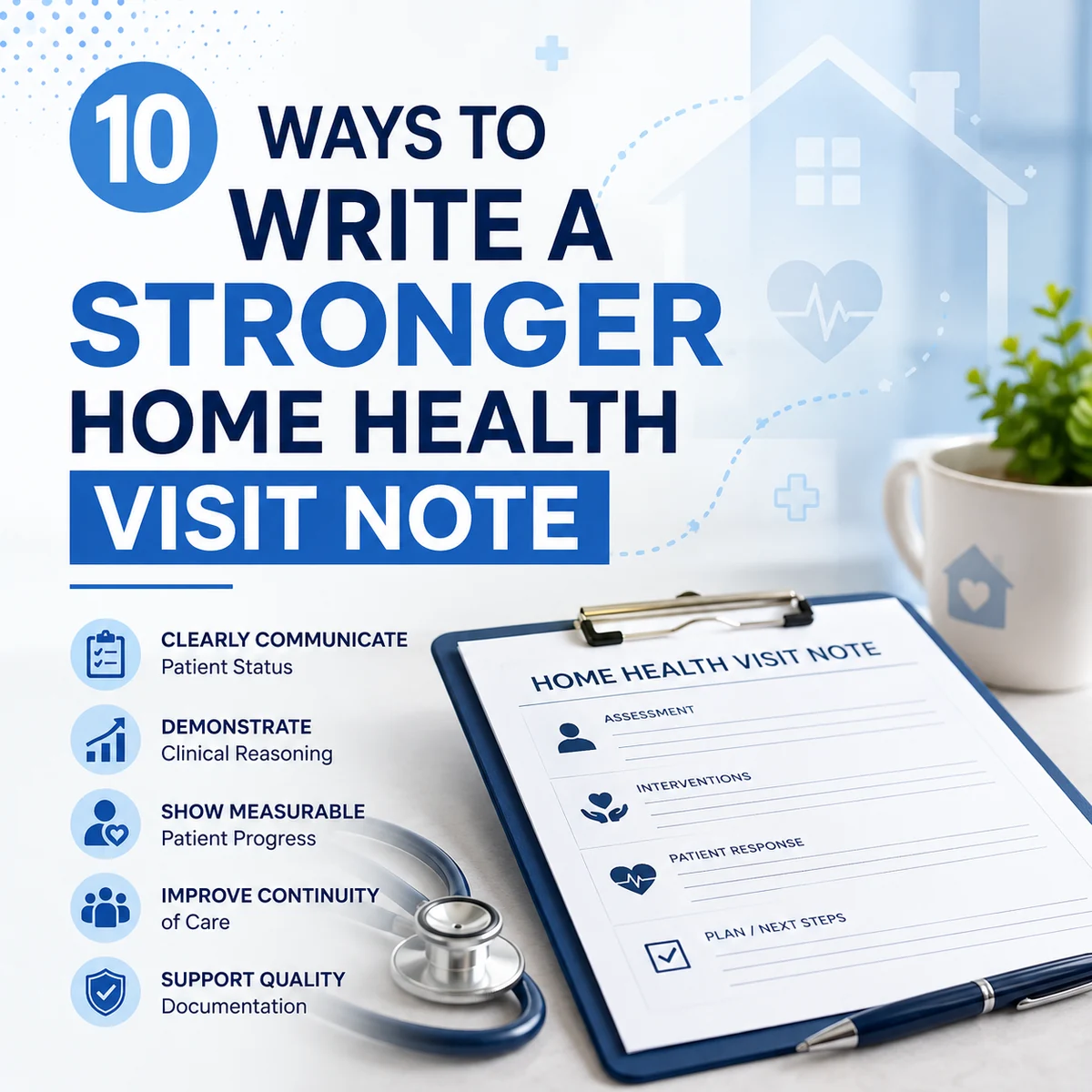
10 Ways to Write a Stronger Home Health Visit Note
A strong home health visit note creates a clear clinical narrative, what was assessed, what changed, what skilled care was provided and why, how the patient responded, and what happens next, not just a record that a task was completed. This guide gives 10 practical ways to write stronger notes, weak-vs-strong examples across nursing, therapy, and education, common mistakes to avoid, and a simple Assess → Interpret → Intervene → Evaluate → Plan framework.