
Revenue Cycle
Process from service delivery to payment collection.
Definition
Process from service delivery to payment collection.
Why it matters
Revenue Cycle is part of the Revenue Cycle vocabulary used across home health operations, documentation, and revenue cycle. Understanding it helps clinicians, QA leads, and administrators stay aligned on care quality and compliance.
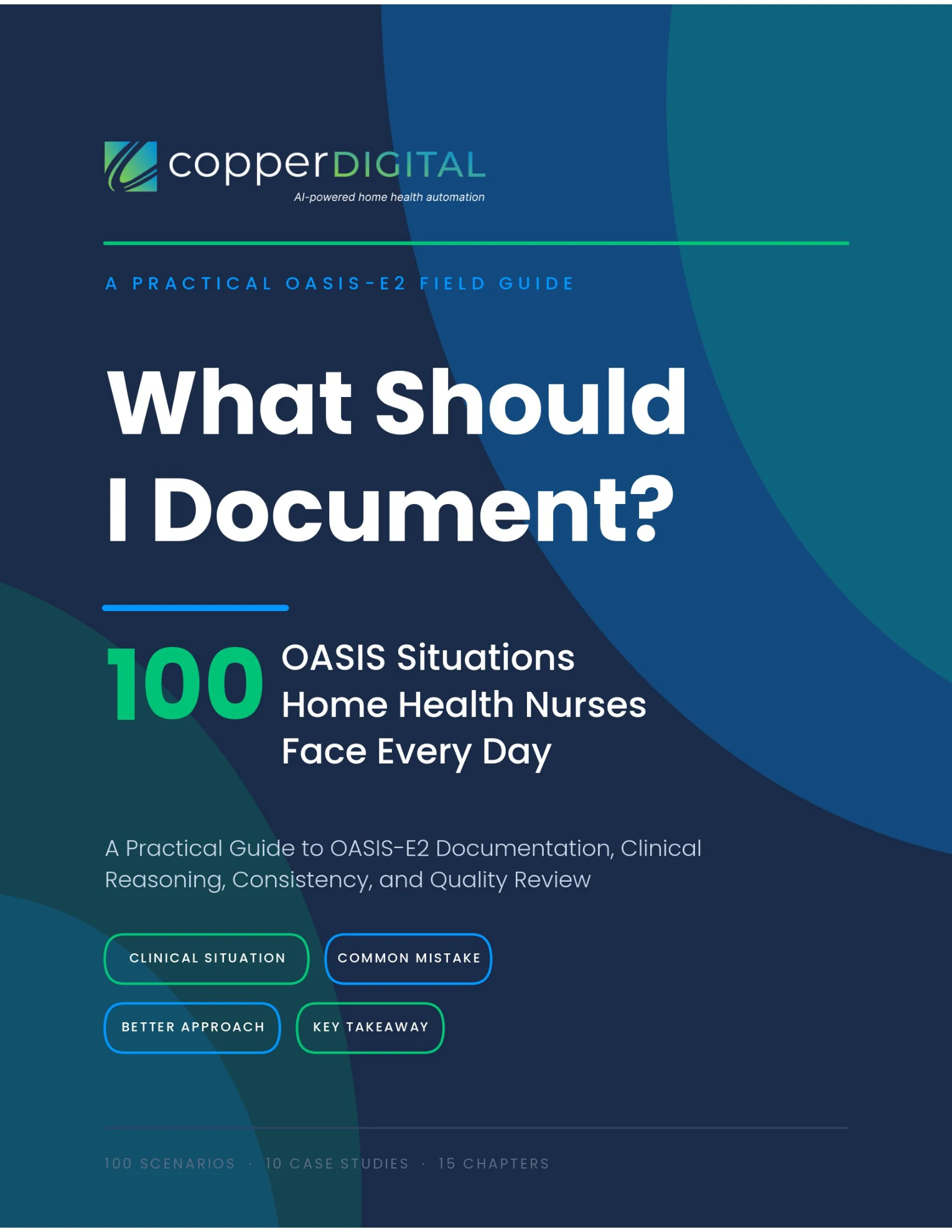
What Should I Document? 100 OASIS Situations Home Health Nurses Face Every Day
100 real OASIS scenarios, worked end to end — clinical situation, common mistake, better approach, and key takeaway. Built around OASIS-E2 (effective April 1, 2026) to turn what you assess into accurate, defensible documentation.
Related terms
Listen While You Read
Conversations on revenue cycle
Episodes from Inside Home Health that put Revenue Cycle in operational context.
 Ep 13
Ep 13Ep 13 · May 18, 2026
Why OASIS Is Every Nurse's Biggest Nightmare
 Kathy DuckettWatch
  Ep 23
Ep 23Ep 23 · Aug 17, 2026
The Hidden Spreadsheet Error That's Causing the Nursing Shortage | Robert Wingo
 Robert Wingo, BSN, RN, NI-BCWatch
  Ep 15
Ep 15Ep 15 · Jun 8, 2026
The Biggest Mistake Healthcare Makes About Nurses
 Luke AdamsWatch
Related Blogs
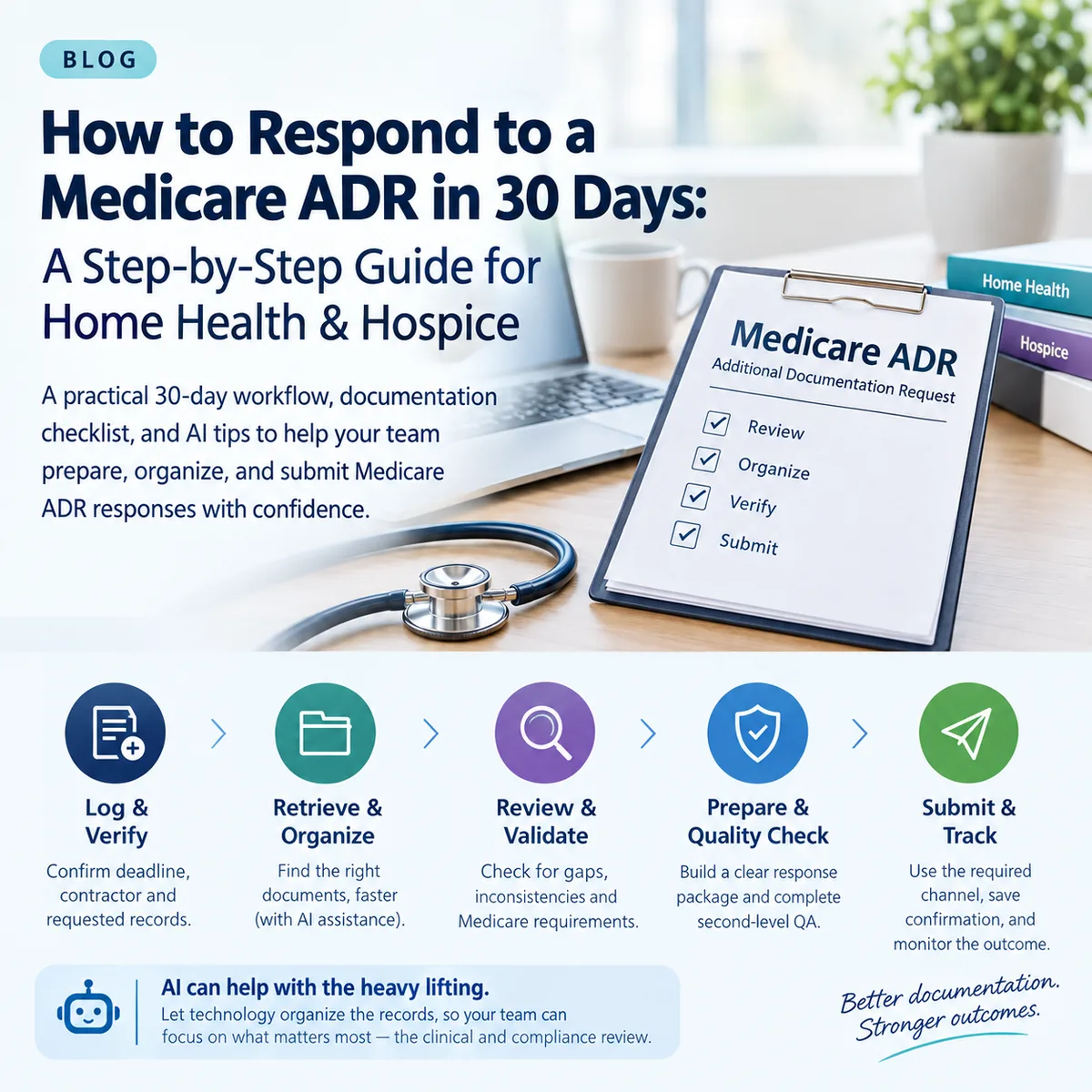
How to Respond to a Medicare ADR in 30 Days: A Step-by-Step Guide for Home Health & Hospice
A Medicare ADR turns an ordinary claim into a time-sensitive compliance project. Not every ADR is due in 30 days, so the goal isn't to "respond in 30 days" but to have a process that moves quickly, consistently, and defensibly. Here's a practical day-by-day workflow for home health and hospice, plus where AI can help.
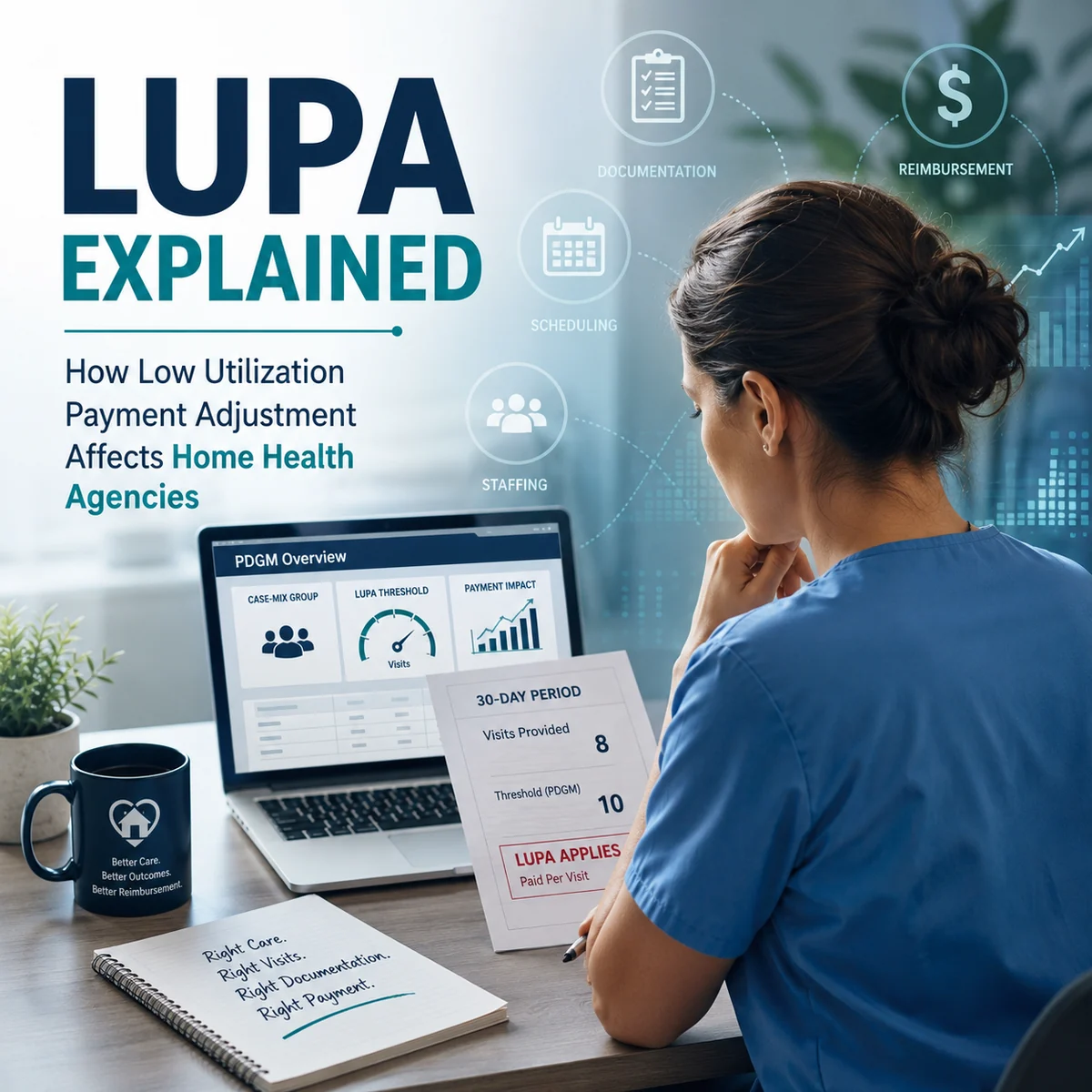
LUPA Explained: How Low Utilization Payment Adjustment Affects Home Health Agencies
LUPA (Low Utilization Payment Adjustment) kicks in when a 30-day home health period falls below its PDGM visit threshold, shifting payment from the case-mix-adjusted 30-day rate to per-visit. This guide explains how thresholds work, what causes avoidable LUPAs, and how to manage LUPA risk without chasing visits.
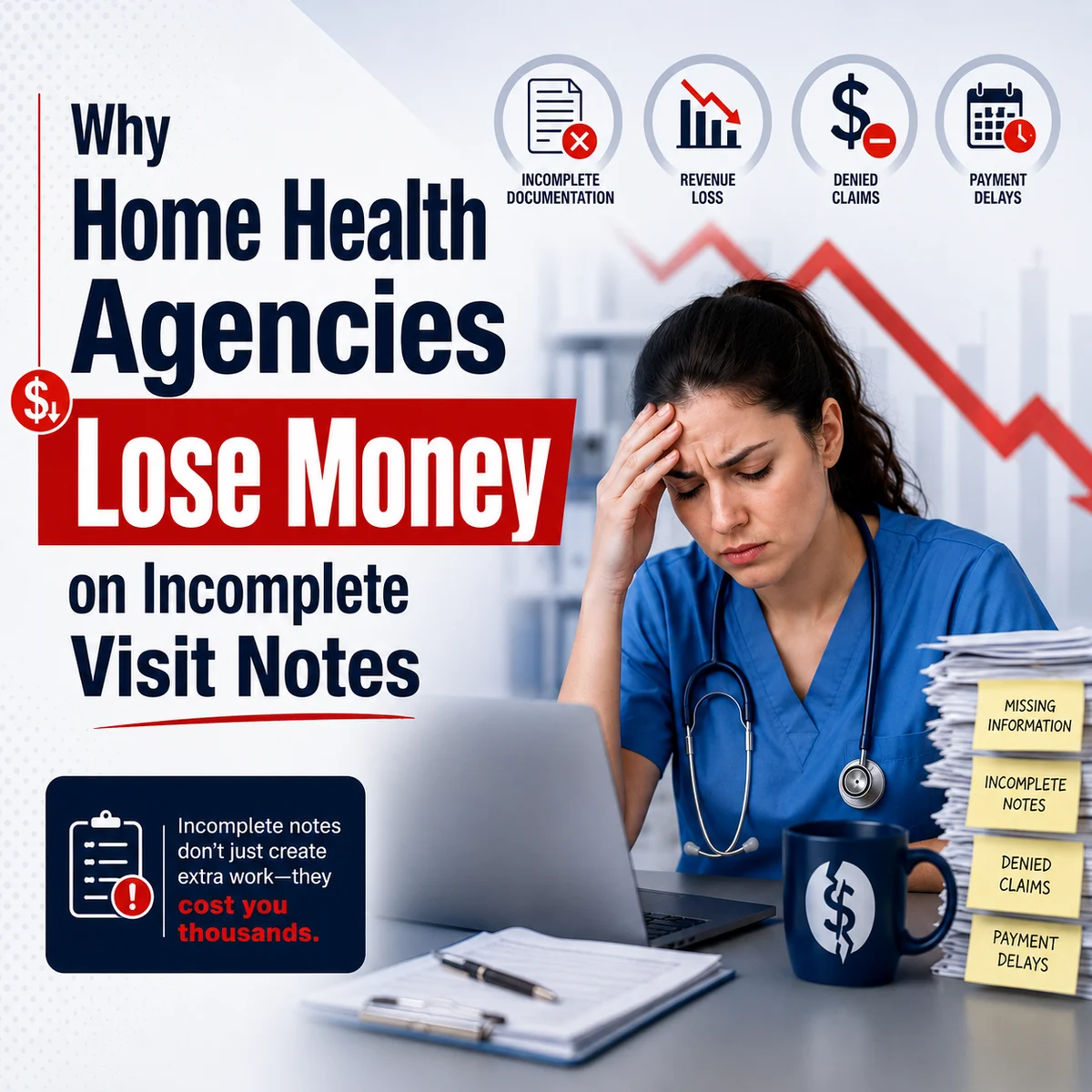
Why Home Health Agencies Lose Money on Incomplete Visit Notes
An incomplete visit note rarely creates just one problem, it moves downstream into QA rework, billing holds, denials, and audit risk. This guide breaks down the 7 most common documentation gaps, how they drain revenue, and the workflow (frameworks, real-time QA, prompts, and clinician-reviewed AI) that helps nurses finish accurate notes the first time.
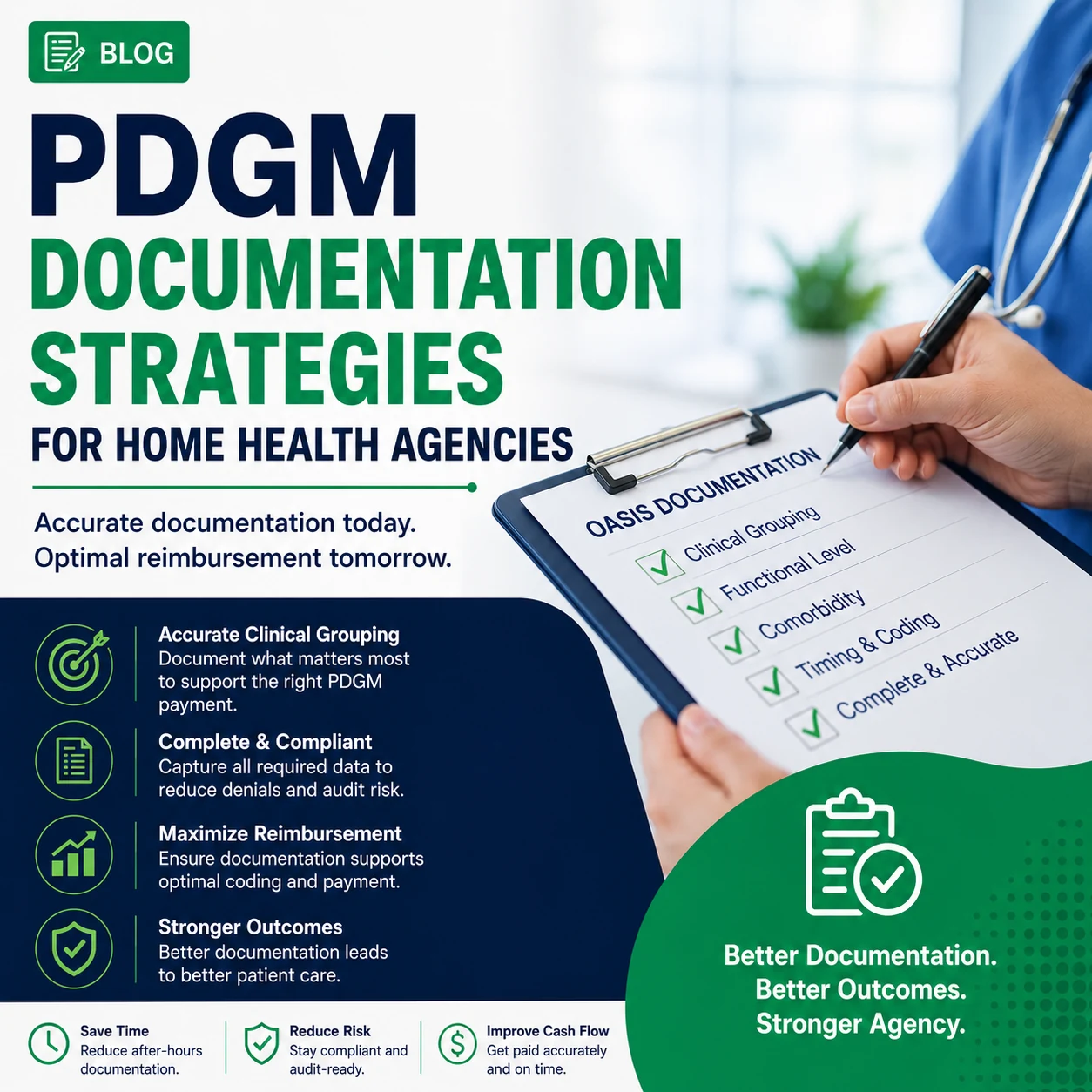
PDGM Documentation Strategies for Home Health Agencies
Under PDGM, documentation establishes the clinical picture that supports classification, medical necessity, coding, and payment. This guide breaks down 15 PDGM documentation strategies, a documentation-to-payment framework, weak-vs-strong examples, and a closed-loop workflow to keep charts consistent and audit-ready.
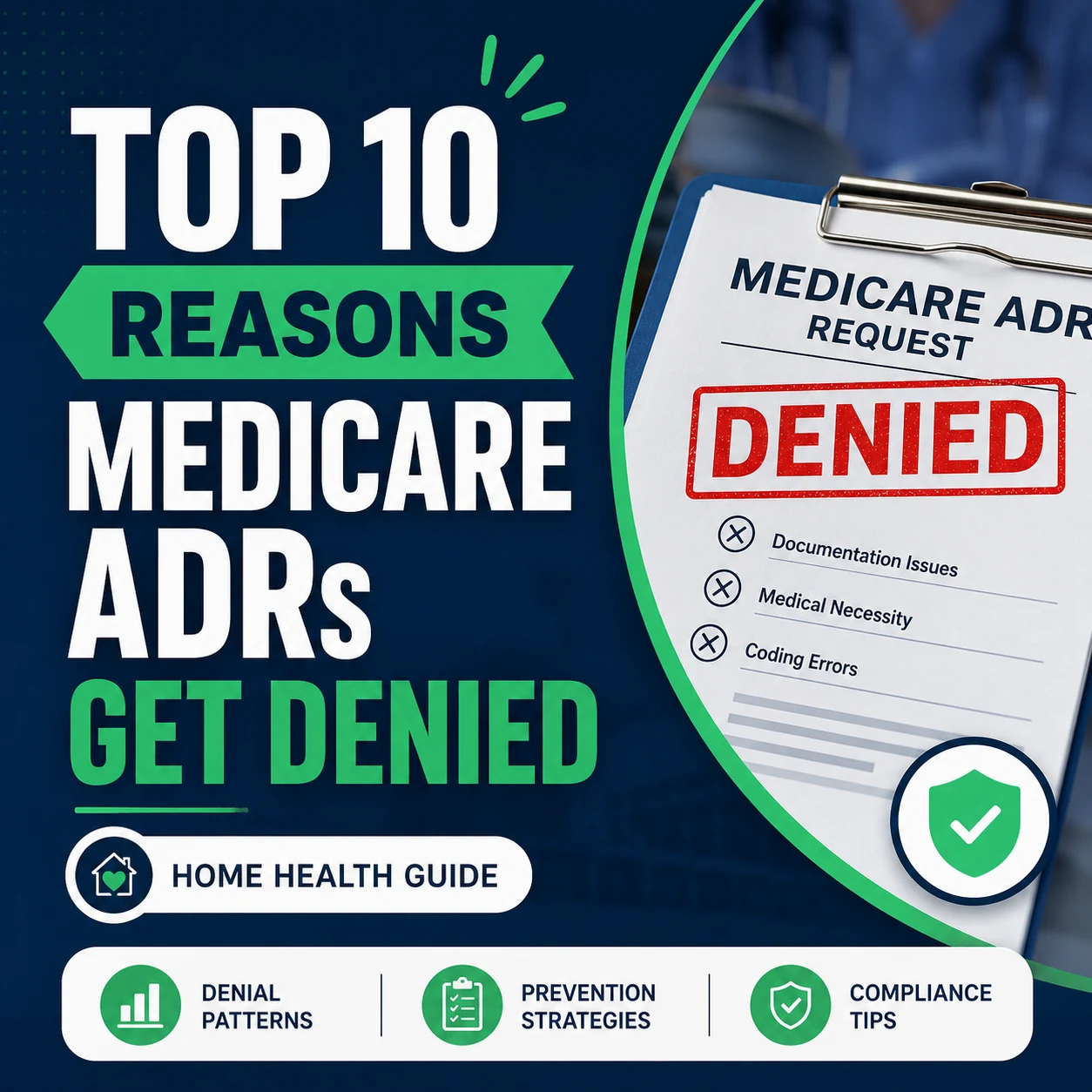
Top 10 Reasons Medicare ADRs Get Denied and How to Prevent Them
A Medicare ADR can turn a routine claim into a major administrative project, and the problem usually isn't the care, it's the documentation. This guide breaks down the 10 most common Medicare ADR denial patterns for home health and hospice, with a practical prevention strategy for each.