
Visit Threshold
Minimum number of billable skilled visits required during a PDGM 30-day payment period.
Definition
A Visit Threshold is the minimum number of billable skilled visits required during a PDGM 30-day payment period to avoid a LUPA adjustment. CMS assigns a threshold ranging from 2 to 6 visits, depending on the patient's payment group.
Why it matters
Knowing the threshold helps agencies schedule visits appropriately while meeting patient needs and avoiding unnecessary payment reductions.
What Should I Document? 100 OASIS Situations Home Health Nurses Face Every Day
100 real OASIS scenarios, worked end to end — clinical situation, common mistake, better approach, and key takeaway. Built around OASIS-E2 (effective April 1, 2026) to turn what you assess into accurate, defensible documentation.
Listen While You Read
Conversations on lupa & pdgm
Episodes from Inside Home Health that put Visit Threshold in operational context.
 Ep 24
Ep 24Ep 24 · Sep 16, 2026
83% of Healthcare AI Has NO Governance (Here's Why That's Dangerous) | Dr. Lendra James
 Dr. Lendra James, DNP, MS, RN, NE-BCWatch
  Ep 23
Ep 23Ep 23 · Aug 17, 2026
The Hidden Spreadsheet Error That's Causing the Nursing Shortage | Robert Wingo
 Robert Wingo, BSN, RN, NI-BCWatch
  Ep 19
Ep 19Ep 19 · Jul 6, 2026
AI Won't Replace Nurses, But Nurses Using AI Will | Timi Abiola
 Timi AbiolaWatch
Related Blogs
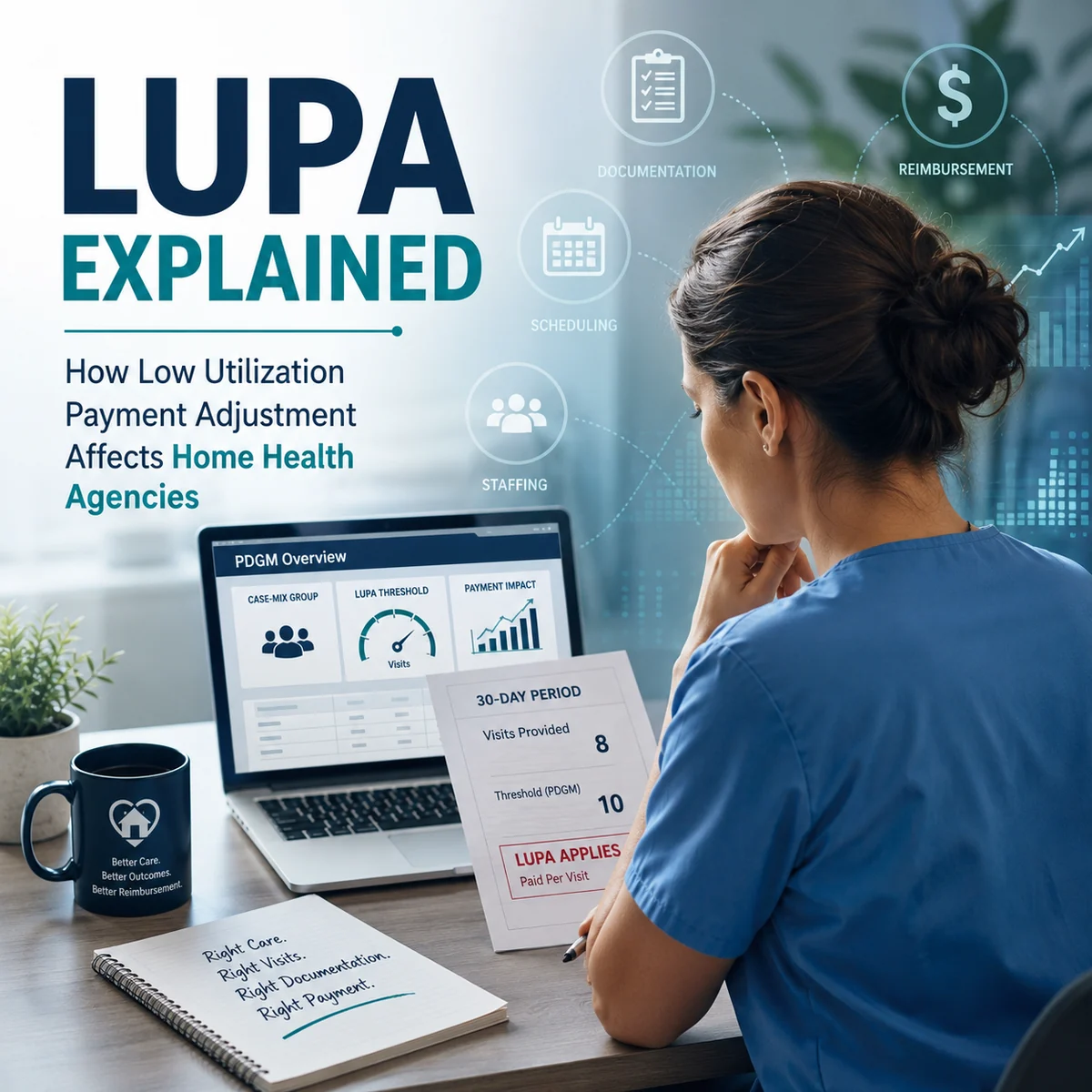
LUPA Explained: How Low Utilization Payment Adjustment Affects Home Health Agencies
LUPA (Low Utilization Payment Adjustment) kicks in when a 30-day home health period falls below its PDGM visit threshold, shifting payment from the case-mix-adjusted 30-day rate to per-visit. This guide explains how thresholds work, what causes avoidable LUPAs, and how to manage LUPA risk without chasing visits.
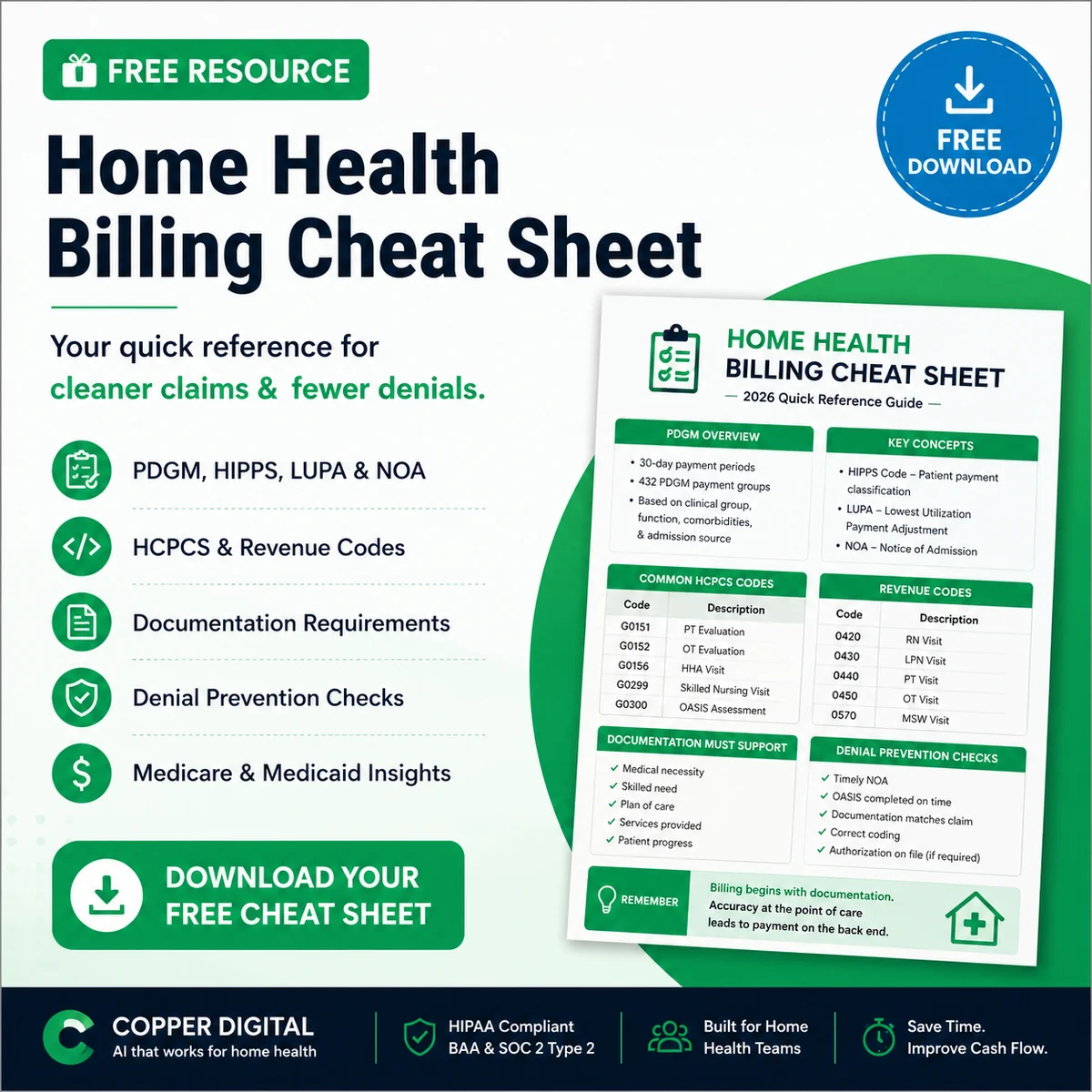
Free Home Health Billing Cheat Sheet
Home health billing gets complicated fast: PDGM, HIPPS, OASIS, NOA, LUPA, HCPCS and revenue codes, and payer rules all have to line up with the documentation. This guide walks through the essentials and gives you a free, downloadable cheat sheet your billing and clinical teams can actually use.

Common OASIS Documentation Mistakes That Lead to Payment Delays
Common OASIS documentation mistakes, such as incomplete assessments, incorrect diagnosis coding, inaccurate Section GG scoring, medication and homebound-status errors, weak skilled-need documentation, and missing physician signatures, are among the biggest causes of home health payment delays. Because OASIS data drives PDGM reimbursement, most of these errors are preventable with point-of-care charting, strong QA, and AI-powered documentation validation.

Why OASIS Documentation Is Burning Out Your Nurses
OASIS documentation is the CMS-required Outcome and Assessment Information Set that home health nurses complete for Medicare patients. With more than 100 data elements and a Start of Care assessment that takes 60 to 90 minutes, it often follows nurses home as after-hours 'pajama time,' making it a leading cause of home health nurse burnout. AI-powered documentation with human-in-the-loop review can cut charting time and give nurses their evenings back.
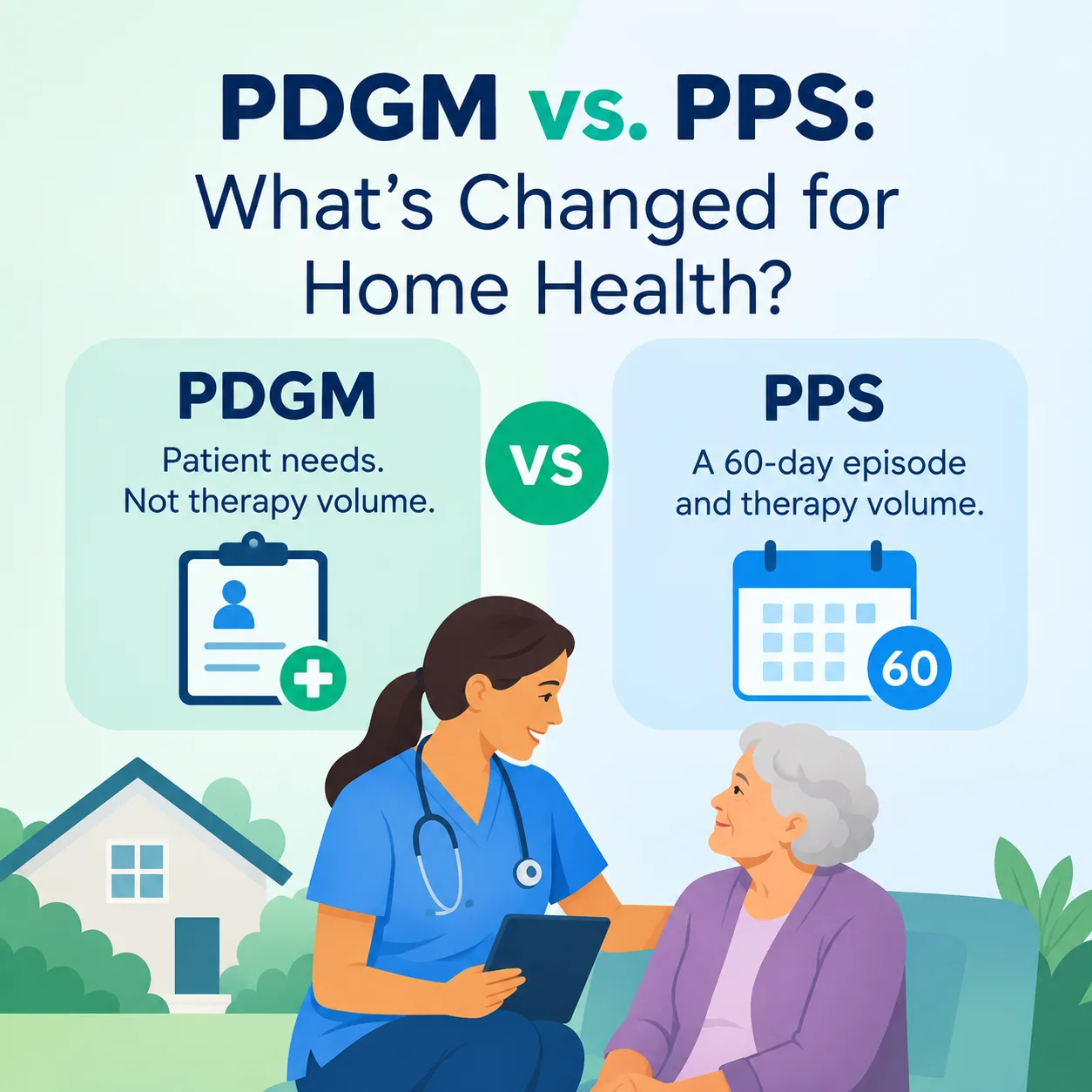
PDGM vs. PPS: What's Changed for Home Health?
PDGM did not replace Medicare's Home Health Prospective Payment System. It changed the case-mix methodology inside HH PPS, and reshaped payment periods, coding, OASIS, LUPA monitoring, billing, and cash flow.