Artificial intelligence is becoming part of everyday healthcare work. Home health coders are exploring it to clarify diagnoses, understand coding guidelines, and work through complex documentation. Nurses and administrators are using AI to organize information, draft communications, and reduce repetitive tasks.
But there is a question home health leaders need to ask:
Is your team using ChatGPT to help with medical coding, and could that be exposing your agency to HIPAA risk?
The concern is real. When a coder copies patient information from a medical record into an AI tool that is not approved to handle protected health information (PHI), the agency may be creating an unauthorized disclosure risk without realizing it.
The solution is not to avoid AI altogether. It is to understand which tools can handle patient information, what safeguards are required, and how to use AI without compromising privacy or coding accuracy.
Let's look at what home health agencies need to know.
Can Home Health Agencies Use ChatGPT for Medical Coding?
Yes, but the answer depends on what information is being entered and which ChatGPT product or configuration is being used.
A coder might use ChatGPT to:
- Understand the meaning of a clinical term.
- Research general coding concepts.
- Explore differences between diagnosis categories.
- Draft a coding query for clarification.
- Organize non-patient-specific coding guidance.
- Summarize general coding rules.
These activities can be performed without sharing identifiable patient information.
The situation changes when a coder copies an actual patient record, referral, assessment, or visit note into an AI chatbot and asks it to suggest a diagnosis code.
That information may contain PHI. If the service processes it on behalf of the agency without the required contractual arrangements and safeguards, the agency could face HIPAA compliance issues.
The important distinction is not whether ChatGPT is being used for coding. It is whether the specific service and workflow are approved to handle the patient information involved.
When Does Using ChatGPT for Medical Coding Create a HIPAA Risk?
HIPAA protects individually identifiable health information held or transmitted by covered entities and their business associates.
In home health, PHI can appear in almost every part of the documentation and coding process.
For example:
- A referral packet containing a patient's name, diagnosis, and date of birth.
- A medical record number alongside clinical notes.
- An OASIS assessment containing patient-specific information.
- A physician's order with identifying details.
- A visit note describing a patient's condition and treatment.
- A discharge summary containing clinical and personal information.
Consider this situation.
A home health coder receives a referral packet and is unsure which diagnosis code is supported by the documentation. To save time, the coder copies a paragraph from the patient's record into a personal ChatGPT account and asks for the most appropriate code.
The intention may be to get a second opinion. But the coder has shared patient information with an external service.
If that service is not covered by the appropriate BAA and safeguards, the agency may have created an impermissible disclosure.
The same concern applies to uploading documents, sharing screenshots, or using AI tools to summarize identifiable patient records.
What Information Qualifies as Protected Health Information Under HIPAA?
PHI is broader than many healthcare employees realize.
It includes individually identifiable health information that relates to a person's past, present, or future health condition, healthcare, or payment for healthcare.
HIPAA's Safe Harbor de-identification method identifies 18 categories of identifiers, including:
- Names.
- Geographic details smaller than a state, subject to specified exceptions.
- Dates directly related to an individual, except year.
- Telephone and fax numbers.
- Email addresses.
- Social Security numbers.
- Medical record numbers.
- Health plan beneficiary numbers.
- Account numbers.
- Certificate and license numbers.
- Vehicle identifiers.
- Device identifiers and serial numbers.
- Web URLs and IP addresses.
- Biometric identifiers.
- Full-face photographs and comparable images.
- Other unique identifying numbers, characteristics, or codes.
A patient's name associated with a diagnosis is PHI. A medical record number associated with a treatment note is PHI.
Removing a patient's name does not automatically make a document safe to share. Other details may still identify the individual.
HHS recognizes two methods for de-identifying PHI under HIPAA: Safe Harbor and Expert Determination. Agencies should not assume that simply replacing a name with initials or removing a medical record number is sufficient.
For more information, refer to HHS guidance on de-identification of protected health information.
Is Personal ChatGPT Safe to Use With Patient Information?
Agencies should not assume that a personal ChatGPT account is appropriate for handling PHI.
A paid subscription does not automatically provide HIPAA coverage. Neither does a user's decision to disable model training or adjust privacy settings.
OpenAI identifies specific HIPAA-eligible products and functionality that can be used under an executed BAA. These currently include:
- ChatGPT for Healthcare.
- ChatGPT for Enterprise with Regulated Workspace.
- ChatGPT FedRAMP.
- ChatGPT for Clinicians.
- API with Modified Retention.
- API FedRAMP with Modified Retention.
ChatGPT Business does not offer a BAA.
There is another important detail: not every feature in an eligible workspace is necessarily covered. OpenAI specifies which functionality is included under its BAA and identifies features that are excluded. Organizations must check the exact product, feature, configuration, and agreement before processing PHI.
For current details, review OpenAI's HIPAA-eligible products and functionality.
The practical rule for agencies is straightforward:
Do not enter patient information into a personal or unapproved AI account simply because it is convenient or because the account is paid.
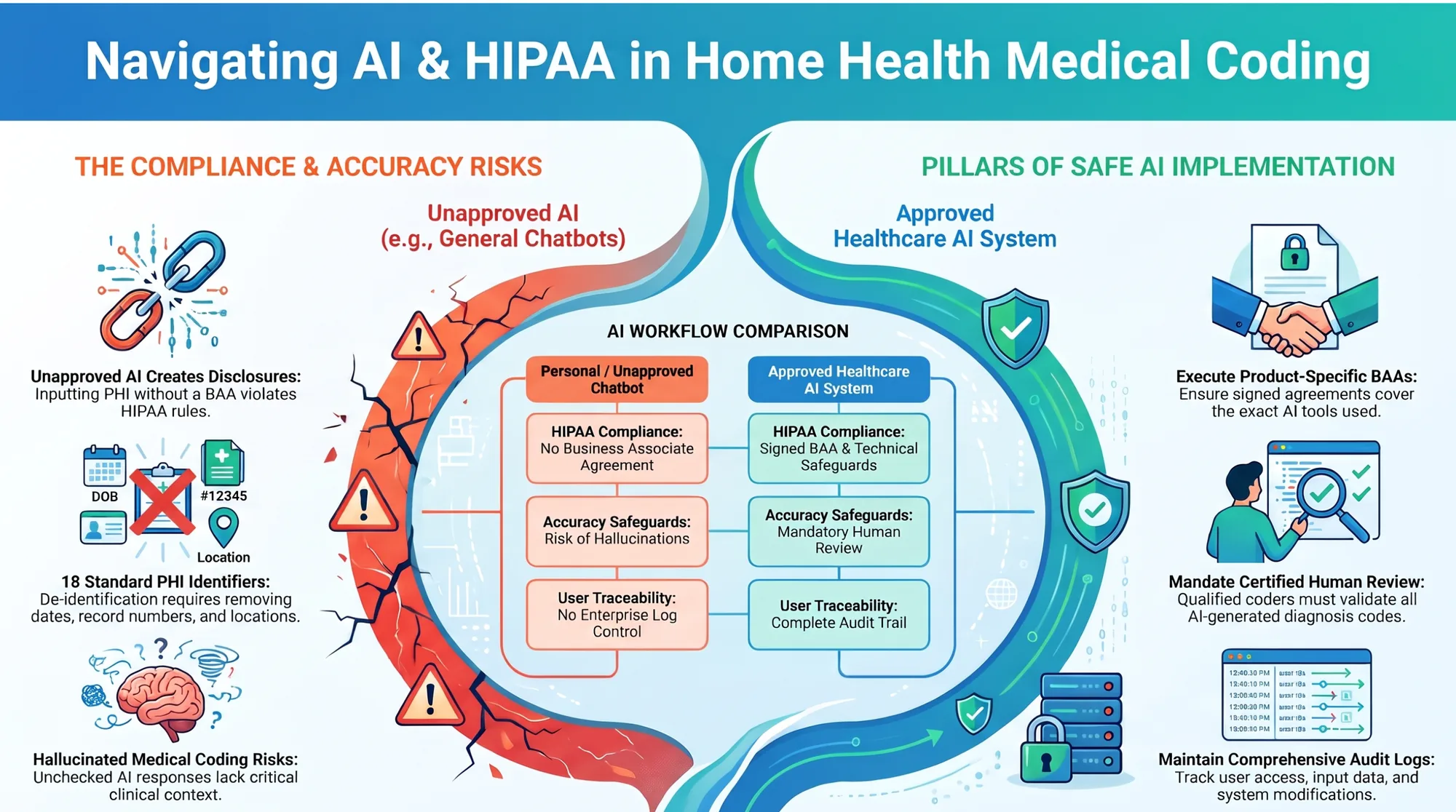
Unapproved chatbots create disclosure, accuracy, and traceability risks. Approved healthcare AI depends on product-specific BAAs, qualified human review, and comprehensive audit logs.
Does a Business Associate Agreement Make ChatGPT HIPAA Compliant?
A Business Associate Agreement (BAA) is an important requirement when a third-party service creates, receives, maintains, or transmits PHI on behalf of a covered entity or business associate.
The agreement establishes the vendor's responsibilities for handling and safeguarding PHI.
However, signing a BAA does not automatically make the agency's entire AI workflow HIPAA compliant.
The agency remains responsible for its own compliance obligations, including:
- Conducting an appropriate risk analysis.
- Establishing access controls.
- Limiting PHI use and disclosure to permitted purposes.
- Training employees.
- Maintaining appropriate security safeguards.
- Reviewing vendor configurations and integrations.
- Monitoring how employees use AI.
- Managing and investigating potential incidents.
For example, an agency may have an appropriate BAA with an AI provider, but employees could still create unnecessary exposure by sharing patient records with unauthorized third-party applications or enabling features that are not covered by the agreement.
HHS explains that organizations using cloud services to process electronic PHI must have the appropriate BAA and still conduct their own risk analysis and risk management.
Read the HHS guidance on HIPAA and cloud computing.
Why Are Home Health Coders Using ChatGPT Despite the Risks?
Most employees are not trying to bypass compliance requirements.
They are trying to get their work done.
Home health coding can involve complex clinical records, incomplete documentation, conflicting information, and time-consuming research. Coders may have to review multiple documents before determining whether a diagnosis is sufficiently supported.
When a general-purpose AI chatbot provides a quick response, it can feel like a convenient way to resolve a routine question.
The problem is that copying a chart excerpt into a chatbot does not feel like sharing patient information with an external party.
But that is exactly what may be happening.
This is one reason Shadow AI is becoming a concern in healthcare. Employees adopt tools independently because they believe those tools will help them work faster, often without understanding the organization's privacy, security, or governance requirements.
Simply telling employees not to use AI may not solve the underlying problem.
Healthcare leaders need to understand why employees are turning to these tools and provide approved alternatives that address their actual workflow needs.
Why Is AI-Generated Medical Coding Not Always Reliable?
HIPAA compliance is only one part of the problem. Coding accuracy is another.
General-purpose AI chatbots are designed to respond to a wide range of questions. They can explain medical terminology, summarize text, and suggest possible answers. But a confident-sounding response does not guarantee that a diagnosis code is correct or supported by the medical record.
Consider a coder asking an AI tool to identify a diagnosis from a short clinical note.
The tool may suggest a specific code without having enough context about:
- The provider's actual documentation.
- The patient's clinical history.
- Whether the diagnosis is established or only suspected.
- Applicable coding conventions and sequencing requirements.
- Documentation requirements for the relevant setting.
- Current official coding guidance.
An AI tool may also omit an important qualification, misinterpret an abbreviation, or suggest a code that sounds plausible but is not supported by the documentation.
This creates several risks.
Unsupported coding: The suggested code may go beyond what the provider documented.
Missing context: The AI may not have access to the complete medical record or relevant supporting documentation.
Outdated guidance: The model may not reflect the latest applicable coding updates.
Hallucinated explanations: The tool may produce a convincing explanation that is inaccurate or unsupported.
Limited traceability: A general-purpose chatbot may not provide a reliable link between its suggestion, the source documentation, and the final coding decision.
For home health agencies, the distinction between a plausible code and a defensible code matters.
AI can assist with coding research and documentation review, but the final coding decision must be validated against the record and applicable coding requirements by qualified personnel.
What Does Responsible AI in Home Health Medical Coding Actually Require?
A responsible AI workflow needs more than a privacy statement or a vendor's assurance that its product is secure.
It requires the right contractual arrangements, technical safeguards, internal policies, and human oversight.
Here are the key elements agencies should evaluate.
1. Does the AI Vendor Sign a Business Associate Agreement?
If the vendor handles PHI on behalf of the agency and qualifies as a business associate, the appropriate BAA must be in place.
Confirm that the specific product and services being used are covered. Do not assume that a BAA for one product automatically covers every application, feature, or integration offered by the vendor.
2. Does the Tool Protect PHI Throughout the Workflow?
Understand how patient information is received, processed, stored, and transmitted.
Ask about:
- Encryption and access controls.
- Data retention and deletion.
- User authentication.
- Role-based permissions.
- Third-party integrations.
- Subcontractor arrangements.
- Incident response procedures.
A vendor should be able to explain how its safeguards apply to the specific workflow your agency intends to use.
3. Are Audit Logs and Traceability Available?
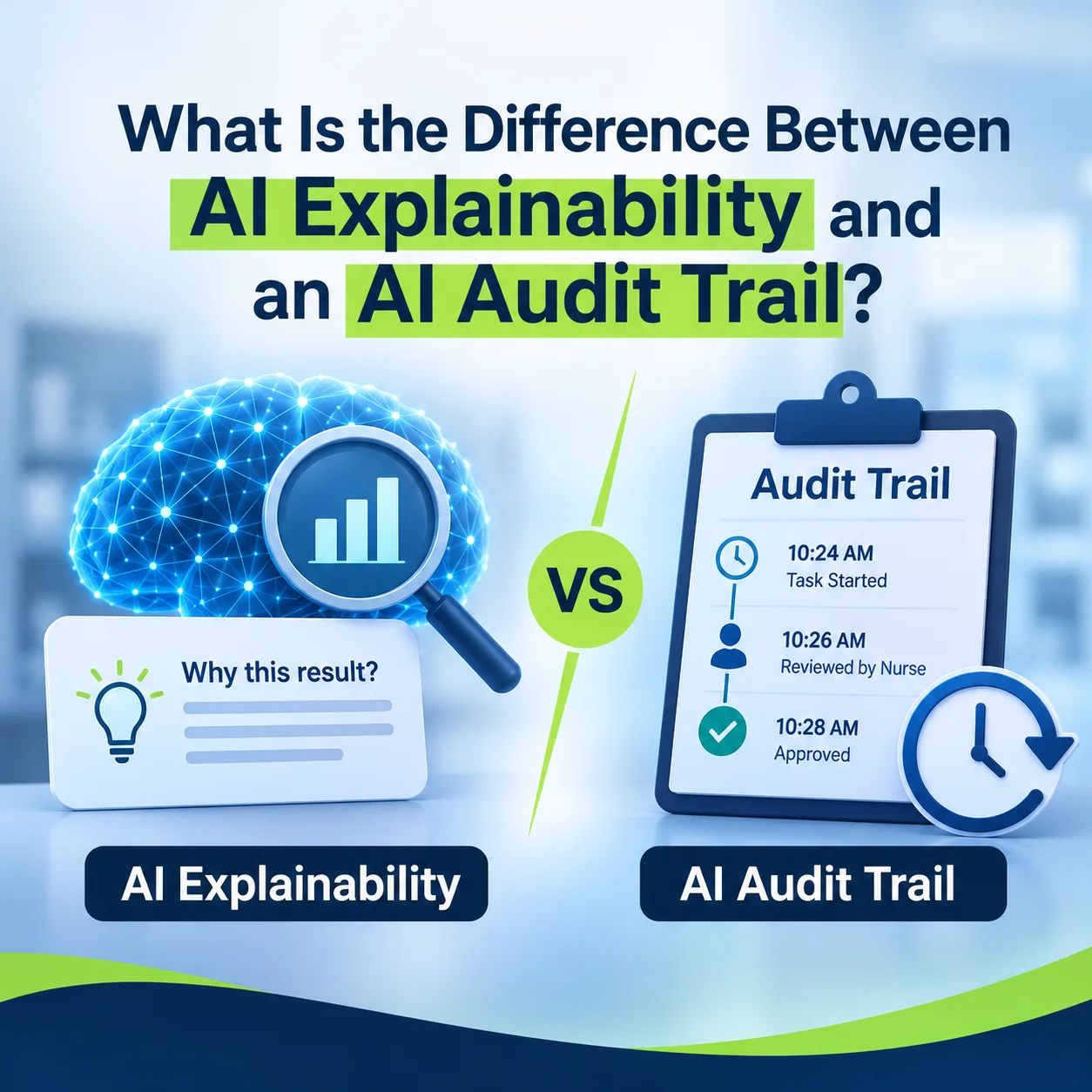
Agencies should be able to investigate how patient information was handled and how AI-generated content was used.
Depending on the system, useful records may include:
- User identity and access history.
- Dates and times of activity.
- Source documents or data references.
- AI-generated suggestions.
- Changes made by staff.
- Review and approval records.
- Relevant system or configuration changes.
Audit logging supports accountability, but agencies should verify what is actually recorded, how long records are retained, and whether the logs meet their operational and compliance needs.
4. Is Human Review Built Into the Coding Workflow?
AI should not be treated as the final authority on diagnosis coding.
Qualified coding personnel should review AI suggestions, confirm that the documentation supports the code, resolve inconsistencies, and follow applicable coding guidelines.
The system should make it clear which content was generated by AI and which decisions were made or approved by a human.
5. Are Employees Trained on Approved AI Use?
Employees need to know which tools are approved, what information they can share, and what to do when they are unsure.
Training should include realistic examples involving:
- Patient records.
- Referral documents.
- OASIS assessments.
- Clinical notes.
- Diagnosis coding.
- Screenshots and uploaded files.
A clear policy should make the approved process easier to follow than the unofficial workaround.
How Can Home Health Agencies Use AI Without Sharing PHI With Unapproved Tools?
Agencies can still benefit from general-purpose AI tools for many tasks that do not involve PHI.
Examples include:
- Drafting general staff communications.
- Creating non-patient-specific training materials.
- Explaining general coding concepts.
- Developing internal checklists.
- Brainstorming workflow improvements.
- Summarizing publicly available coding guidance.
- Creating fictional examples for employee training.
For patient-specific work, use only services and workflows that have been reviewed and approved for the information being processed.
If an agency uses de-identified information, it should ensure the information meets an applicable HIPAA de-identification method rather than relying on informal removal of names or identifiers.
What Should Home Health Agencies Ask Before Choosing an AI Coding Tool?
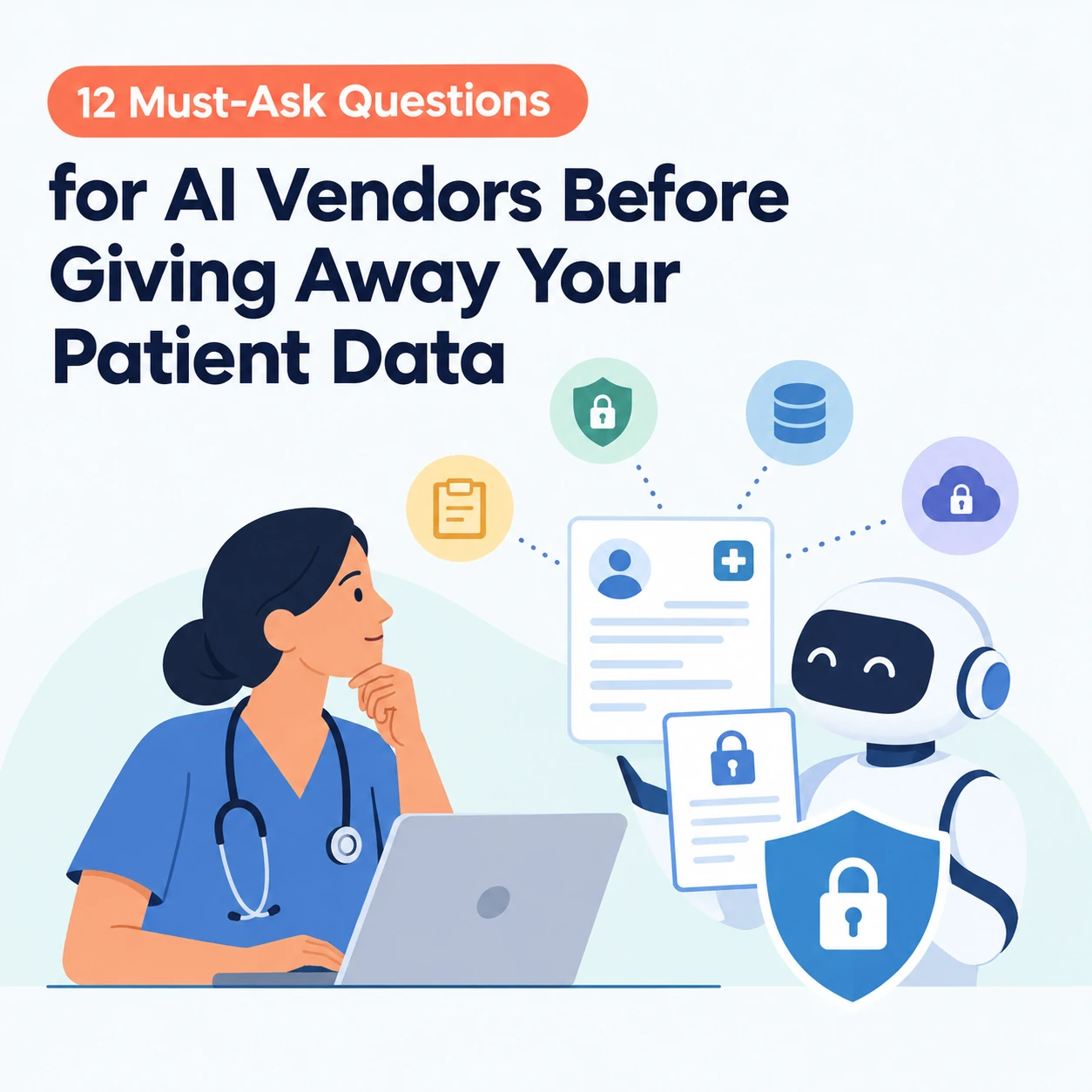
Before allowing an AI vendor to handle patient information or support coding workflows, leaders should ask:
- Does the vendor sign a BAA for the specific product?
- Which features and integrations are covered by that agreement?
- How is PHI stored, processed, and transmitted?
- What data retention and deletion controls are available?
- Can access be restricted by role?
- Are audit logs available?
- Can the system identify the source of its coding suggestions?
- How does it handle incomplete or conflicting documentation?
- Does it flag uncertainty rather than presenting every answer as definitive?
- Who reviews and approves the final coding output?
- How are errors and security incidents reported?
- What happens to agency data when the contract ends?
These questions help distinguish a general-purpose chatbot from an AI solution designed and governed for healthcare workflows.
What Should an Agency Do If an Employee Has Already Entered PHI Into ChatGPT?
If an employee has entered identifiable patient information into an unapproved AI tool, the agency should not assume that deleting the conversation resolves the issue.
The agency should follow its incident response procedures.
Appropriate steps may include:
- Stop further sharing of PHI through the tool.
- Notify the privacy or security officer.
- Document what information was entered, when, by whom, and into which service.
- Preserve relevant records and investigate the circumstances.
- Determine whether the disclosure was permissible and whether a breach has occurred.
- Evaluate applicable HIPAA notification requirements.
- Address the underlying policy, training, or technology gap.
Not every impermissible disclosure automatically results in the same breach-notification outcome. HIPAA requires a fact-specific assessment, including consideration of applicable exceptions and the required risk assessment.
Agencies should involve their privacy officer and qualified legal or compliance professionals when evaluating a potential incident.
How Can Home Health Agencies Benefit From Responsible AI Without Compromising Patient Privacy?
The answer is not to stop using AI. It is to choose tools and workflows that address real operational problems while protecting patient information.
Home health agencies can use AI to support documentation, referral processing, administrative coordination, and coding-related tasks. But the technology must be evaluated for its intended use, data handling, accuracy, and level of human oversight.
At Copper Digital, we believe AI should help home health teams spend less time managing paperwork and more time supporting patient care.
That means building around actual home health workflows, keeping clinicians involved in reviewing and approving clinical documentation, and treating privacy, security, and accountability as essential parts of the solution.
The goal should never be automation at any cost.
The right AI should make work easier without making patient information less safe.
Sources and Further Reading
- OpenAI: HIPAA-eligible products and functionality: current eligible products, covered features, and exclusions.
- OpenAI: Getting a Business Associate Agreement for the API: API BAA eligibility and the distinction between API and ChatGPT agreements.
- HHS: HIPAA and Cloud Computing: BAA and agency risk-management responsibilities.
- HHS: De-identification of PHI: Safe Harbor and Expert Determination.
Disclaimer: This article is for general educational purposes and is not legal or coding advice. HIPAA obligations depend on the organization, information, service arrangement, and intended use. Consult your privacy officer, qualified healthcare counsel, and coding compliance professionals before deploying AI for patient-specific work.