
How Can You Prepare for a Home Health Visit?
A home health visit is easier and more useful when the patient has accurate medication information, recent records, symptom notes, questions, and a safe path through the home ready. This guide explains what to prepare without staging a perfect home or hiding real needs.

Key Takeaways
- Confirm who is visiting, why they are coming, and whether a caregiver should join.
- Gather medication bottles or an accurate list, allergies, recent discharge papers, provider contacts, and relevant equipment information.
- Write down new symptoms, falls, medication changes, and recent emergency or hospital visits before the appointment.
- Make the home safe to enter, but do not hide mobility problems or deep-clean away conditions the clinician needs to understand.
- Ask what to do between visits, which warning signs require a call, and who to contact when the patient's condition changes.
- For emergencies, seek emergency medical care instead of waiting for the next scheduled home health visit.
✓ Quick answer: Before a home health visit, confirm the appointment and purpose, gather medication information and recent medical paperwork, write down health changes and questions, make needed equipment accessible, and clear a safe path for the clinician. You do not need a perfect home. The clinician needs an accurate picture of the patient's health, function, routine, and living environment.
A home health visit brings skilled care into the place where a person actually lives. Depending on the plan of care, the visitor may be a nurse, physical therapist, occupational therapist, speech-language pathologist, social worker, or home health aide.
The appointment may focus on an initial assessment, medication management, wound care, rehabilitation, education, safety, or follow-up after a hospitalization.
Preparation does not mean deep-cleaning the house or trying to look healthier than usual. It means making accurate information easy to find, identifying important changes, and helping the clinician understand what the patient can safely do on a normal day.
How Should You Prepare Before the First Home Health Visit?
Start with the basic details. Confirm the date and time, the name or discipline of the person visiting, and the purpose of the appointment.
Ask whether a family caregiver should attend and whether the agency needs any documents available when the clinician arrives.
- Confirm the appointment time and the agency's arrival-window policy.
- Ask who is visiting and what type of assessment or treatment is planned.
- Keep the agency's phone number available in case access or timing changes.
- Arrange for an involved caregiver to join when appropriate.
- Make sure the clinician can enter the home safely and reach the spaces needed for care.
Medicare explains that after a referral, the home health agency schedules an appointment to discuss the patient's needs and health, then communicates with the ordering provider about the care plan. The official Medicare home health guide also explains that patients have the right to participate in decisions about that plan.
What Information Should Be Ready for a Home Health Visit?
- A current medication list and, when practical, the actual prescription and over-the-counter containers.
- Medication allergies and other important allergies.
- Hospital discharge instructions, procedure information, or recent test summaries.
- Names and contact information for physicians, pharmacies, and other involved providers.
- Insurance information requested by the agency.
- A list of current symptoms, recent changes, falls, and urgent-care or hospital visits.
- Details about walkers, oxygen, wound supplies, or other relevant equipment.
- Advance-directive information, when applicable.
- The name and contact information of the primary caregiver or representative.
Do not worry if every record is not available. Begin with the most recent and accurate information you have.
Tell the clinician when something is uncertain rather than guessing.
How Should You Prepare Your Medication List?
Medication reconciliation is a common part of home health care. Include prescription medicines, over-the-counter products, vitamins, supplements, inhalers, injections, eye drops, topical products, and medicines taken only as needed.
For each item, record the name, strength, dose, route, frequency, and reason it is taken when known.
- Note medicines that were started, stopped, or changed recently.
- Keep discontinued bottles separate so they are not confused with active medicines.
- Mention missed doses, side effects, refill problems, and difficulty opening or organizing containers.
- Show the clinician how medicines are actually stored and managed when that is relevant to the visit.
! Do not stop, restart, or change a medication simply to prepare for the assessment. Follow instructions from the appropriate healthcare professional and tell the visiting clinician about questions or concerns.
Should a Caregiver Be Present?
A caregiver can be especially helpful when they manage medications, assist with daily activities, provide transportation, perform wound or equipment-related tasks, or have noticed changes the patient may not remember. The caregiver can share observations, learn the care instructions, and ask questions about what to monitor between visits.
Caregiver participation should still respect the patient's preferences, privacy, and decision-making rights. Medicare states that a home health patient has the right to receive a copy of the care plan, participate in care decisions, and name a family member or guardian to act for them if needed.
These protections are summarized on Medicare's home health patient rights page.
Do You Need to Clean the House Before a Home Health Visit?
No deep cleaning is required. Basic access and safety matter, but the clinician also needs to see the environment the patient navigates every day.
Rugs, stairs, narrow paths, lighting, bathroom access, pets, and the location of commonly used items can all affect mobility and fall risk.
Clear immediate hazards, secure pets if they may interrupt care, provide adequate lighting, and make relevant equipment accessible. Do not temporarily remove every real-life obstacle or add assistance the patient does not usually have.
An authentic view helps the clinician develop practical recommendations.
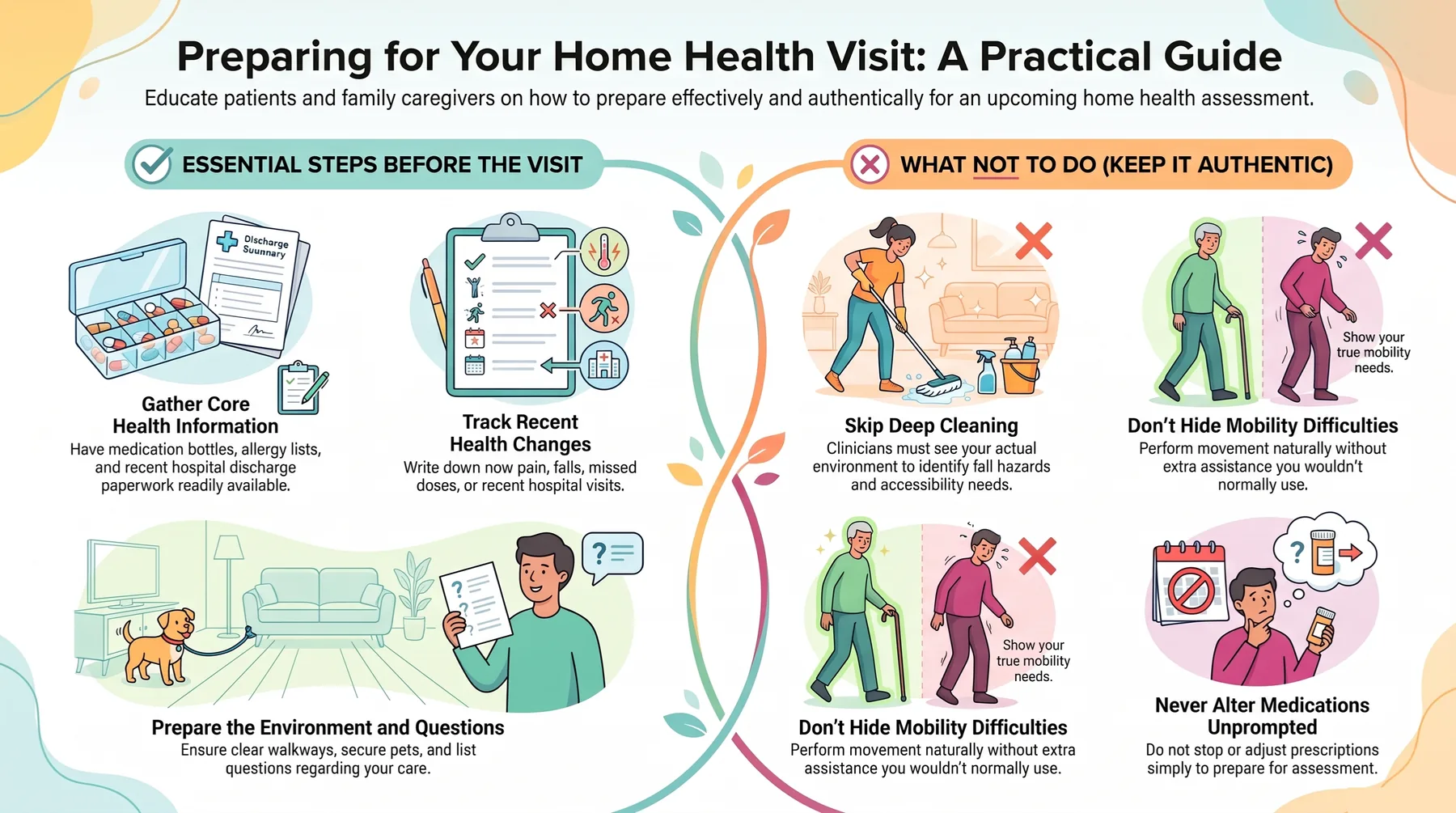
Prepare accurate information and safe access, but keep the visit authentic so the clinician can understand the patient's usual needs and environment.
What Should You Tell the Home Health Clinician?
Tell the clinician what has changed since the referral, discharge, or last visit. Small changes may matter when considered together.
If possible, note when each change began, what makes it better or worse, and how it affects normal activities.
- New or worsening pain, shortness of breath, dizziness, swelling, weakness, or confusion.
- Falls, near-falls, or new difficulty walking, transferring, bathing, dressing, eating, or using the bathroom.
- Changes in appetite, sleep, mood, memory, skin, wounds, or bowel and bladder patterns.
- New medication instructions, side effects, missed doses, or uncertainty about the regimen.
- Emergency department visits, urgent-care visits, hospitalizations, procedures, or provider appointments.
- New caregiver challenges, equipment problems, or changes in the home setup.
Avoid minimizing difficulties because you want to appear independent. Demonstrate how you normally move and complete tasks.
Accurate information helps the clinician identify risks, document skilled needs, and recommend realistic goals and support.
What Questions Should You Ask During the Visit?
- What are the main goals of home health care for me?
- Which disciplines will visit, and how often are visits currently planned?
- What should I or my caregiver do between visits?
- Which symptoms or warning signs should prompt a call?
- Who should I contact during business hours and after hours?
- How will progress be measured and shared with my provider?
- Do I need different equipment, supplies, or changes to the home setup?
- How will I know when home health services are nearing completion?
Federal home health guidance requires agencies to provide written information that includes the visit schedule, medication instructions, treatments the patient or caregiver will perform, and contact information for a clinical manager. CMS's Home Health Agency survey guidance explains these requirements in detail.
What Happens During the First Home Health Visit?
The first visit is often longer and more comprehensive than a routine follow-up. The exact process depends on the clinician's discipline, the referral, payer requirements, and the patient's needs.
- Review health history, recent hospital or provider information, current diagnoses, and the reason for home health.
- Reconcile medications and identify questions or discrepancies that need follow-up.
- Assess symptoms, vital signs, cognition, function, mobility, skin or wounds, and other clinically relevant areas.
- Observe the home environment, equipment, caregiver support, and safety risks that affect care.
- Discuss patient-centered goals, education needs, and the services included in the plan of care.
- Explain the next steps, planned visits, agency contact process, and what to do if the condition changes.
The Medicare home health coverage page explains that a qualifying patient must need part-time or intermittent skilled services, meet the applicable homebound criteria, have care ordered by a doctor or allowed practitioner, and receive services from a Medicare-certified home health agency. Coverage and visit frequency depend on individual eligibility and the ordered care plan.
What Should You Do Between Home Health Visits?
Follow the agreed instructions, track symptoms and changes, complete recommended exercises or activities when applicable, and keep the next appointment. Store the agency's contact information somewhere easy to find.
Ask before the clinician leaves whom to call for clinical questions, scheduling changes, and after-hours concerns.
! Home health does not replace emergency care. If the patient may be experiencing a medical emergency, call 911 or seek emergency medical care rather than waiting for the agency's next visit.
A Simple Home Health Visit Checklist
Before the Visit
- Confirm the appointment, visitor, and purpose.
- Gather medications, allergies, recent medical information, and provider contacts.
- Write down symptoms, changes, falls, hospital visits, and questions.
- Make relevant equipment accessible and clear a safe path.
- Ask an involved caregiver to join when appropriate.
During the Visit
- Describe changes honestly and demonstrate usual function.
- Review medication questions and recent instructions.
- Participate in goals and decisions about the care plan.
- Ask what to do between visits and which warning signs matter.
- Confirm whom to contact with concerns.
After the Visit
- Follow the agreed care instructions and keep the next appointment.
- Track symptoms, functional changes, and medication concerns.
- Complete recommended activities or exercises when applicable.
- Contact the appropriate team when the patient's condition changes.
How Can Home Health Agencies Help Clinicians Arrive Prepared?
Preparation is not only the patient's responsibility. Agencies need accurate referral intake, timely records, medication information, clear orders, coordinated scheduling, and an updated plan of care.
Clinicians should know the visit purpose, recent transitions, major risks, caregiver situation, and any missing information that needs clarification.
AI-assisted workflows can help organize authorized records, surface recent changes, prepare a structured visit brief, and turn clinician-captured information into a draft note. The clinician must still assess the patient, verify the information, use clinical judgment, correct the draft, and approve the final documentation.
Technology should support the visit, not make decisions for the patient or replace the clinician.
Official Resources
- Medicare: Home Health Services Coverage.
- Medicare & Home Health Care.
- Medicare: Your Rights.
- CMS State Operations Manual, Appendix B: Home Health Agencies.
This article provides general educational information and is not medical advice. Follow the individualized instructions from the patient's home health agency, ordering provider, and other qualified healthcare professionals.
What Should I Document? 100 OASIS Situations Home Health Nurses Face Every Day
100 real OASIS scenarios, worked end to end — clinical situation, common mistake, better approach, and key takeaway. Built around OASIS-E2 (effective April 1, 2026) to turn what you assess into accurate, defensible documentation.
Bottom Line
The best preparation for a home health visit is accurate information, an honest view of the patient's usual function and home environment, a short list of questions, and a clear plan for what to do after the clinician leaves.
Inside Home Health Podcast
Watch: Aging in America Is Broken, and What Families Should Know

Arvind Sarin is the founder of Copper Digital. He works inside home health agencies to build AI documentation workflows that help clinicians finish OASIS and visit notes sooner, with a nurse reviewing and approving every note. He writes about home health documentation, Medicare compliance, and applying AI responsibly in clinical workflows.
Frequently asked
Frequently asked questions
Confirm the appointment and purpose, gather medication information and recent medical paperwork, write down symptoms and questions, and make sure the nurse can safely reach the areas and equipment needed for the visit.
Join the conversation
Leave a comment
No comments yet. Be the first to share your thoughts.
Related reading
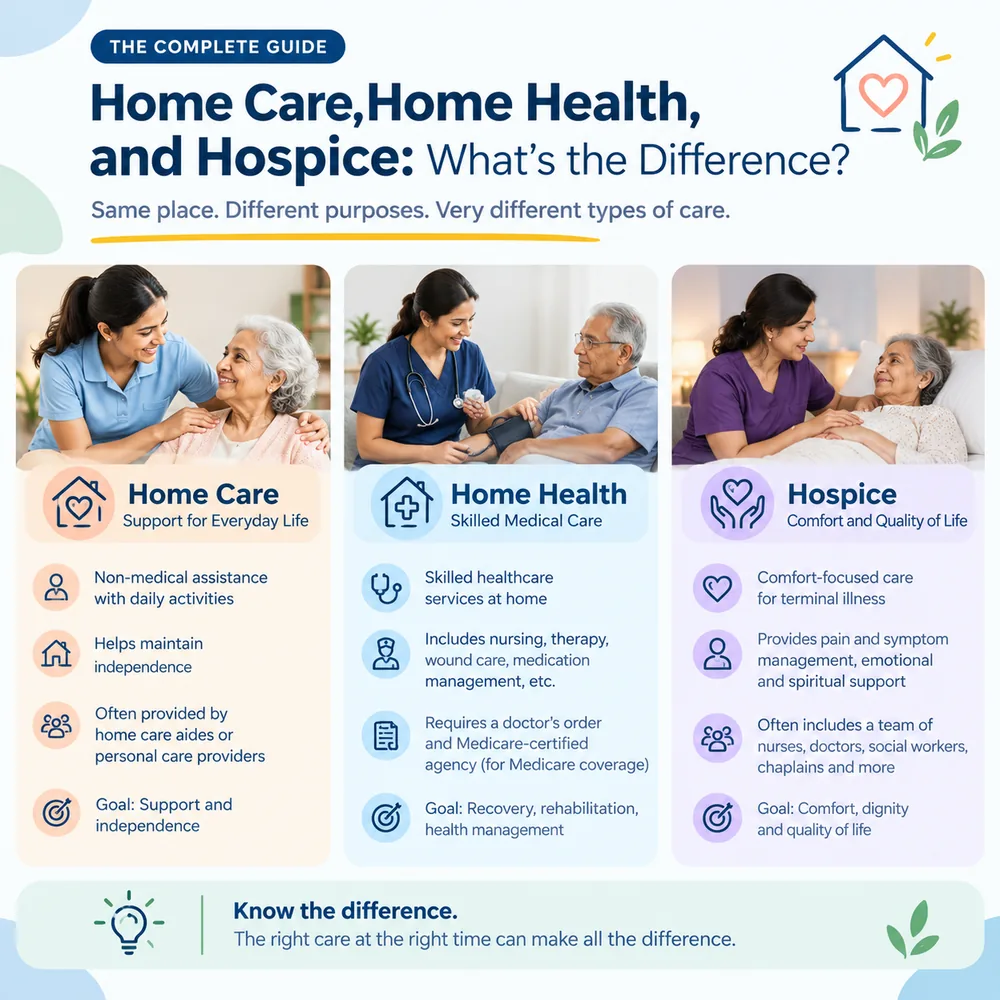
Home Care, Home Health, and Hospice: What's the Difference?
Home care supports daily life, home health provides skilled healthcare, and hospice focuses on comfort for terminal illness. Compare the services, eligibility, coverage, and goals of each model.

Why Is Home Health More Complex Than It Looks?
Nurse Alice Benjamin joins Arvind Sarin to explore the hidden clinical, operational, and caregiver demands of care at home, and how technology can support nurses without replacing clinical judgment.
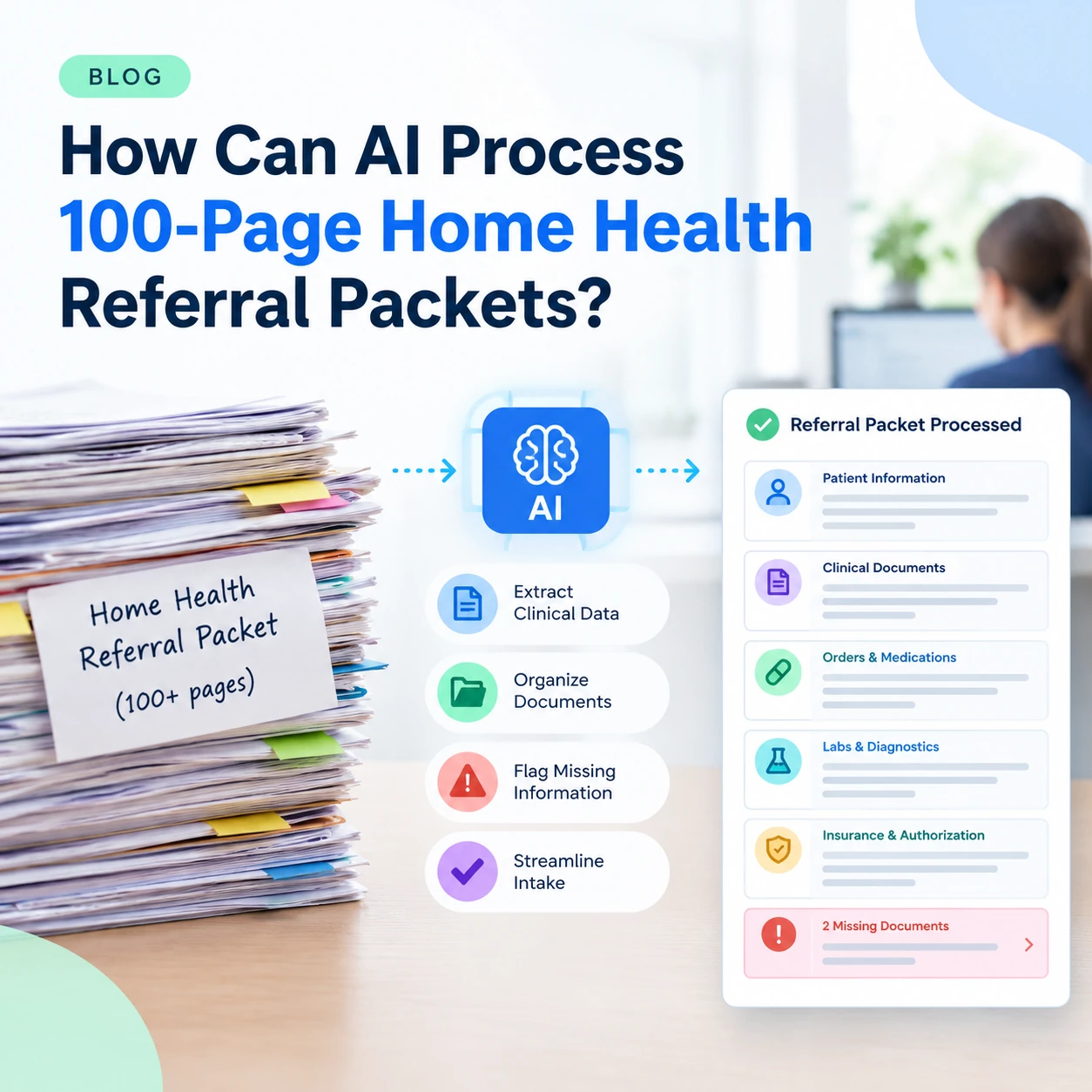
How Can AI Process 100-Page Home Health Referral Packets?
How AI can organize 100-page referral packets, extract clinical information, flag missing records, and support source-linked review across a six-stage intake workflow.