
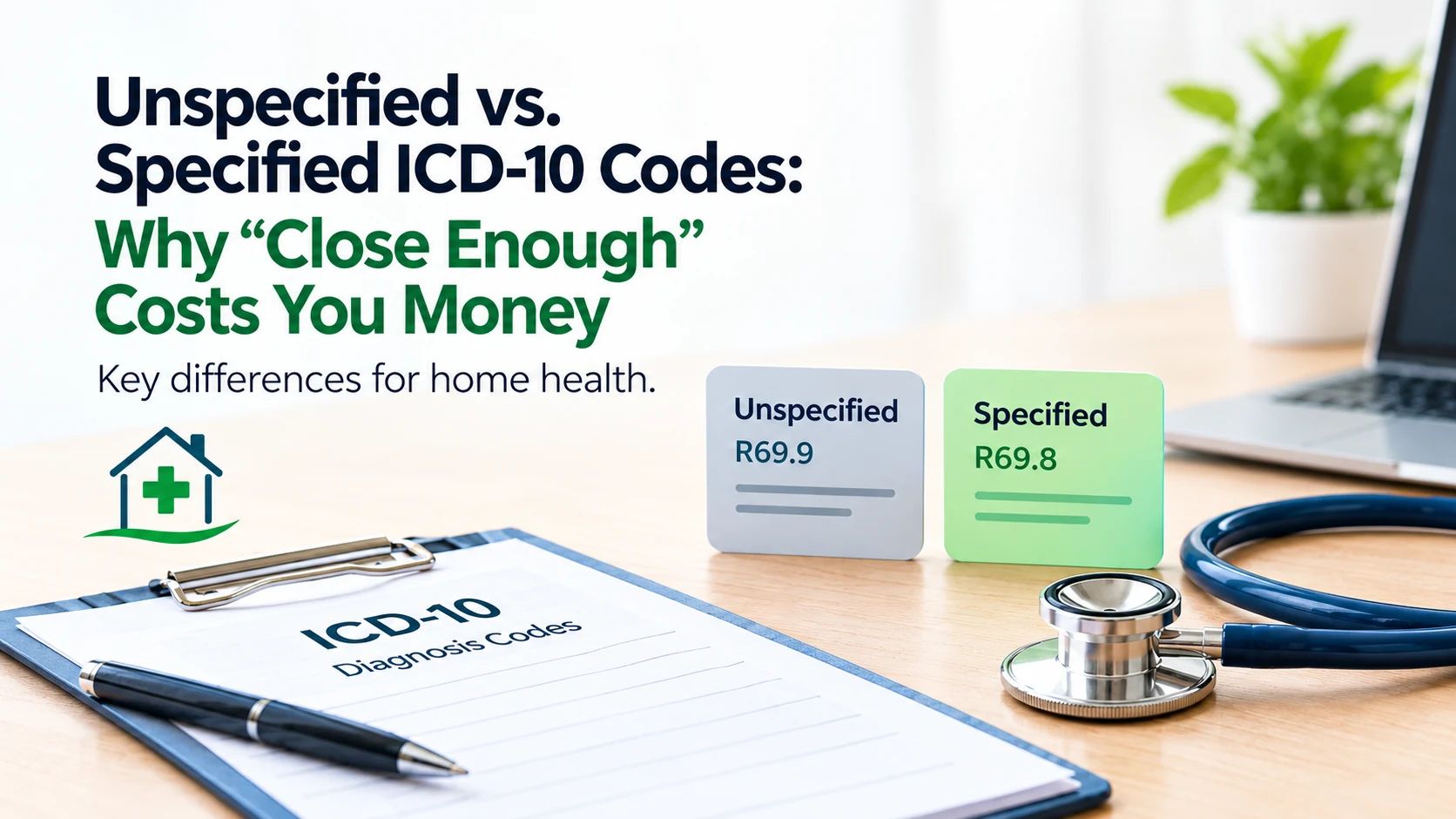
Unspecified vs. Specified ICD-10 Codes: Key Differences for Home Health
Learn when unspecified ICD-10-CM codes are appropriate, how documented specificity can affect PDGM classification, and how home health agencies can close avoidable coding gaps.
Key Takeaways
- Unspecified codes can be appropriate when the record does not support a more specific diagnosis.
- Coding specificity must follow the medical record and applicable ICD-10-CM guidelines.
- Principal diagnoses determine PDGM clinical groups; qualifying secondary diagnoses may affect comorbidity adjustments.
- A more specific code does not automatically increase reimbursement.
- Full-record reviews, compliant provider queries, and pre-billing checks help address recurring coding gaps.
An unspecified ICD-10-CM code isn't automatically wrong. But when a patient's medical record supports a more specific diagnosis, and that detail gets missed, the consequences can extend beyond documentation quality.
For home health agencies, coding gaps can affect clinical grouping, qualifying comorbidity adjustments, claim accuracy, and compliance.
The problem isn't that every unspecified code costs money. It's that agencies may miss legitimate coding opportunities when documentation isn't reviewed carefully, relevant details aren't captured, or gaps aren't resolved before billing.
Here's what that can look like in practice, why it matters under the Patient-Driven Groupings Model (PDGM), and how agencies can close the gap without asking clinicians to write unnecessarily long notes.
Why Unspecified Codes Happen in the First Place
Nobody sits down intending to undercode a patient. Unspecified codes often appear because the documentation available to the coder doesn't support a more detailed choice, or because relevant information is scattered across the record and never gets reviewed together.
Sometimes the clinician's note is genuinely general. Sometimes a relevant diagnosis is documented elsewhere but isn't captured in the coding workflow.
In other cases, the code is selected before the team has resolved a documentation inconsistency.
Under time pressure, an unspecified code can seem like the simplest option. It may be appropriate, too.
But when the record supports a more specific code, failing to capture that detail can leave the claim less accurate than it should be.
The distinction matters: the goal isn't to eliminate unspecified codes. It's to eliminate avoidable unspecified coding when the documentation and applicable coding rules support a more precise choice.
Example One: Diabetes With Chronic Kidney Disease
Consider a patient with type 2 diabetes and documented chronic kidney disease (CKD).
E11.9 is the ICD-10-CM code for type 2 diabetes mellitus without complications. E11.22 represents type 2 diabetes mellitus with diabetic chronic kidney disease.
These codes communicate different clinical information. But the decision isn't as simple as choosing the more detailed code whenever both diabetes and CKD appear in a chart.
ICD-10-CM includes a coding convention that generally presumes a relationship between diabetes and certain associated conditions, including chronic kidney disease, unless the classification instructions or documentation indicate otherwise. Coders must apply the current official guidelines and review the complete record rather than assume that an explicit statement linking the conditions is always required.
For a home health agency, the practical question is whether the diagnoses are documented and coded correctly under the applicable rules.
Why does that matter financially? Under PDGM, qualifying secondary diagnoses can contribute to a low or high comorbidity adjustment when they meet the model's criteria.
A missed, documented diagnosis may therefore affect payment when it changes the applicable comorbidity classification.
However, E11.22 does not automatically produce a higher payment than E11.9. The outcome depends on the full claim, including the principal diagnosis, qualifying secondary diagnoses, and applicable PDGM grouping rules.
The patient's condition hasn't changed. The agency's opportunity is to make sure the claim accurately reflects the clinical information already supported by the record.
Example Two: Heart Failure
Heart failure presents a similar documentation challenge.
I50.9 represents heart failure, unspecified. I50.22 represents chronic systolic (congestive) heart failure.
If the medical record supports chronic systolic heart failure, using an unspecified heart failure code may fail to communicate the documented level of detail. But a coder cannot assign I50.22 simply because it is more specific or appears more clinically complex.
The record must support the diagnosis and its relevant characteristics.
The reimbursement impact also requires careful review. PDGM assigns a clinical group based on the principal diagnosis and may apply a comorbidity adjustment based on qualifying secondary diagnoses.
A more detailed heart failure code does not, by itself, guarantee a higher case-mix weight or payment.
The right approach is to verify the documented diagnosis, follow the applicable coding instructions, and determine whether the correct code changes the claim's actual classification.
This is where a structured coding review can make a difference. It helps the agency distinguish between a genuinely unspecified diagnosis and a documentation or coding gap that deserves further review.
Why This Can Add Up Faster Than Agencies Expect
A single unspecified code on one chart may not attract much attention. But when the same documentation or coding issue appears repeatedly, the cumulative effect can become significant.
If an agency regularly misses qualifying secondary diagnoses, fails to capture documented specificity, or doesn't resolve recurring documentation gaps, it may overlook legitimate reimbursement opportunities across multiple periods of care.
The financial impact isn't identical for every chart. Some corrections may not change the PDGM grouping or payment at all.
Others may affect clinical grouping or a qualifying comorbidity adjustment. Some issues may create compliance concerns rather than a reimbursement difference.
That is why agencies should measure the actual impact instead of assuming every unspecified code represents lost revenue.
For example, Olli identified a customer that was unintentionally undercoding. According to the customer example shared by Olli, the agency had been missing approximately $160 in reimbursement per chart before working with Olli.
By identifying the pattern and improving coding precision, the customer reported capturing an additional $1.5 million in annual revenue that had previously been left on the table.
Those figures illustrate the potential scale of a recurring coding problem, but they should be understood as a specific customer result, not a typical outcome or a guarantee of what another agency will recover. The financial impact depends on the customer's claim data, the coding issues identified, and the payment effects of the corrections.
The larger lesson is that agencies need visibility into the patterns behind their claims. Without that visibility, a recurring issue can remain hidden across a large census.
What Actually Closes the Gap?
Closing this gap rarely means asking clinicians to write longer notes or encouraging coders to choose more detailed codes regardless of the evidence.
It means making it easier to capture relevant clinical information, identify missing details, and resolve coding questions before claims are submitted.
1. Review the full record before defaulting to an unspecified code
Relevant information may appear across clinical assessments, physician documentation, medication records, and other parts of the patient record. Coders should review the documentation required for the coding decision and apply the relevant ICD-10-CM conventions.
A more specific code should be assigned only when supported by the record and applicable guidelines.
2. Identify recurring documentation gaps
Look for patterns across coding audits and claim reviews.
Are certain diagnoses frequently left unspecified? Do clinicians repeatedly use broad descriptions when more detail is clinically known?
Are coders missing relevant information elsewhere in the record? Are certain documentation questions repeatedly delaying claim completion?
Tracking these patterns helps agencies address the root cause rather than treating every issue as an isolated coding error.
3. Use a compliant provider-query process
When required clinical detail is missing, unclear, or conflicting, follow an appropriate provider-query process.
The purpose is to clarify the clinical record, not to steer the provider toward a diagnosis that would increase reimbursement. A query should be clinically appropriate, neutral, and compliant with applicable documentation and coding guidance.
If the record does not support greater specificity after review, an appropriate unspecified code may be the correct choice.
4. Add a coding review step before billing
A pre-billing review can help identify unsupported code choices, missed documented diagnoses, conflicting information, and potential gaps in the claim.
The most useful review process focuses on issues that could affect code accuracy, PDGM classification, compliance, or claim acceptance. It should also distinguish between a coding error and a valid unspecified code so staff don't spend time correcting something that isn't wrong.
5. Use technology to flag opportunities, not invent diagnoses
AI-assisted documentation and coding tools can help surface relevant details, identify inconsistencies, and flag cases that may need human review.
For example, a system might identify that diabetes and chronic kidney disease are both documented and prompt a qualified reviewer to examine the applicable coding conventions. It should not automatically infer an unsupported diagnosis or change a code solely because a more specific option exists.
Technology is most useful when it reduces the effort required to find relevant information and brings potential gaps to the attention of the right person.
The final coding decision must follow current guidelines and be supported by the record. Clinical judgment, compliant provider clarification, and human review remain essential.
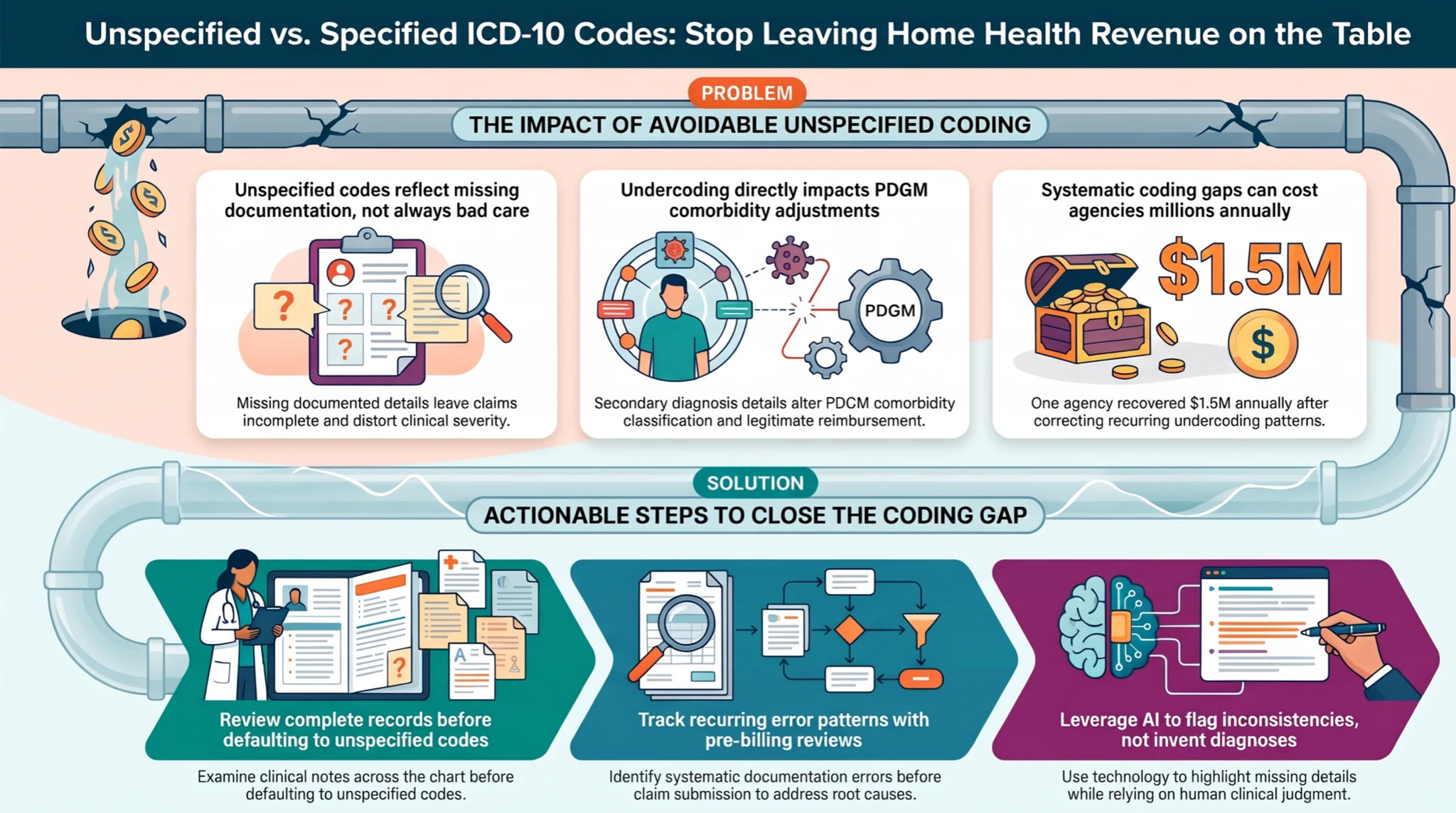
The revenue example reflects a specific customer result described in the article, not a typical or guaranteed outcome.
The Bottom Line: Specificity When Supported, Accuracy Always
Unspecified ICD-10-CM codes aren't inherently bad. The risk arises when an agency repeatedly misses details that are already documented or fails to resolve gaps that could affect coding accuracy and reimbursement.
For home health agencies operating under PDGM, accurate coding matters because the principal diagnosis determines the clinical group, while qualifying secondary diagnoses can affect comorbidity adjustments. But no single code guarantees a higher payment, and more specific coding must never come at the expense of accuracy or compliance.
The practical starting point is simple: review the patterns in your claims, identify where documentation or coding workflows are falling short, and address those gaps before billing.
You don't need clinicians to write longer notes for the sake of it. You need the right clinical information captured, the right coding rules applied, and a review process that catches avoidable errors before they become recurring problems.
References and further reading
CMS: ICD-10-CM code files and official coding guidelines
CMS: Home Health Patient-Driven Groupings Model
CMS: Home Health PPS Grouper Software
FY 2027 ICD-10-CM Official Guidelines for Coding and Reporting
Home Health Documentation Playbook
The complete guide to OASIS-E, Medicare compliance, PDGM, and AI-assisted documentation. Learn how top agencies reduce documentation time without sacrificing compliance.
Inside Home Health Podcast
Disrupt or Be Disrupted | The Future of Healthcare AI | Paulo Machado

Arvind Sarin is the founder of Copper Digital. He works inside home health agencies to build AI documentation workflows that help clinicians finish OASIS and visit notes sooner, with a nurse reviewing and approving every note. He writes about home health documentation, Medicare compliance, and applying AI responsibly in clinical workflows.
Frequently asked
Frequently asked questions
Many unspecified ICD-10-CM codes are valid, billable codes. Whether a claim is payable depends on the specific code, the documentation, the service, and applicable coverage and payer requirements. A code being billable does not guarantee reimbursement.
Join the conversation
Leave a comment
No comments yet. Be the first to share your thoughts.
Related reading
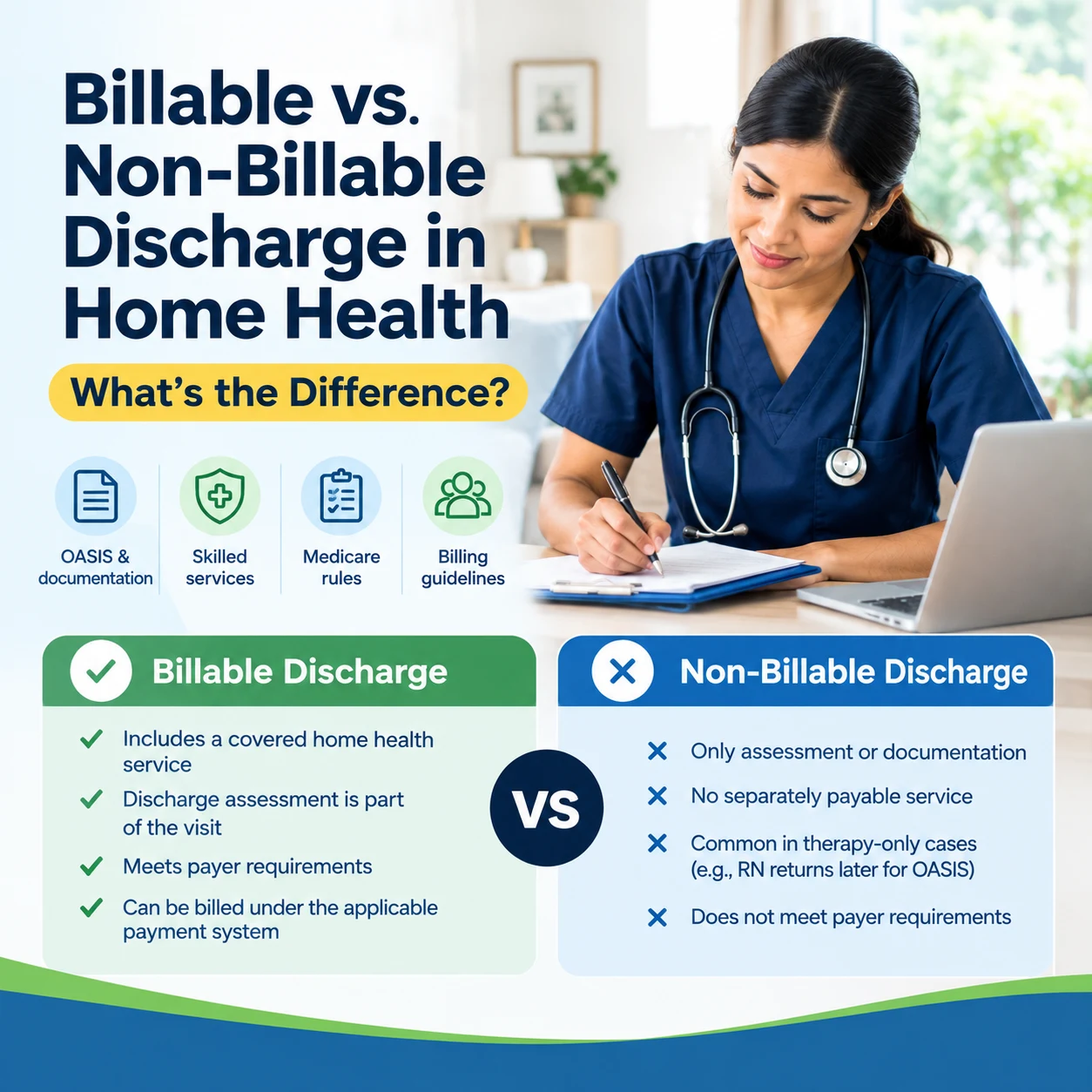
Billable vs. Non-Billable Discharge in Home Health: What's the Difference?
A discharge OASIS does not automatically make a home health visit billable. Learn how covered skilled services, payer rules, documentation, and the final clinician determine whether a discharge encounter may be payable.
What Is an ABN in Home Health & Hospice? Complete Guide With Billing Instructions
A patient wants to continue care, but Medicare may not pay for it. Who owes the bill? That's where the Advance Beneficiary Notice of Noncoverage (ABN), Form CMS-R-131, comes in. Here's when it's required in home health and hospice, what makes it valid, the beneficiary's three choices, and how to bill it correctly.
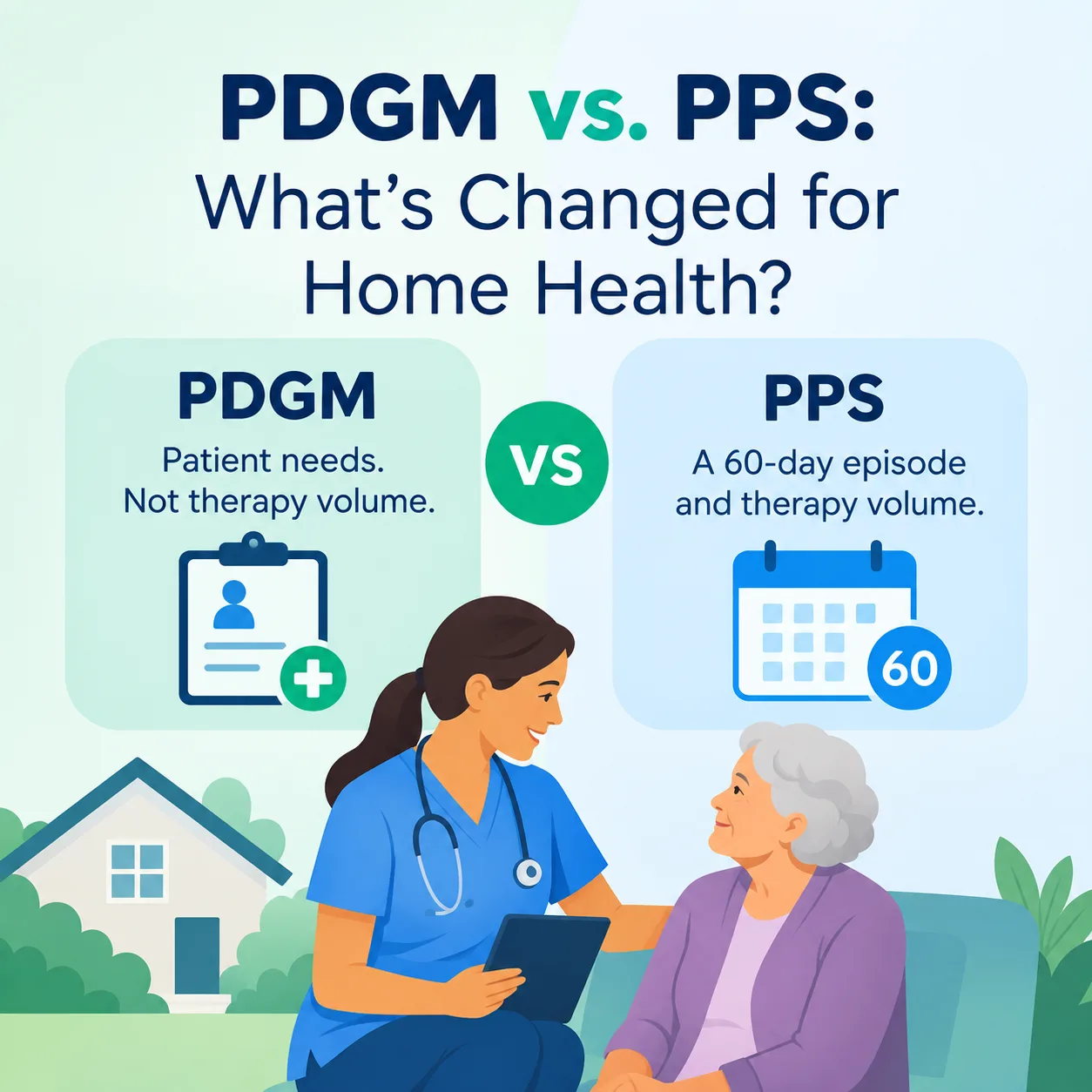
PDGM vs. PPS: What's Changed for Home Health?
PDGM did not replace Medicare's Home Health Prospective Payment System. It changed the case-mix methodology inside HH PPS, and reshaped payment periods, coding, OASIS, LUPA monitoring, billing, and cash flow.