
Electronic Health Record (EHR)
Comprehensive digital health record designed to securely share patient information across.
Definition
An Electronic Health Record (EHR) is a comprehensive digital health record designed to securely share patient information across multiple healthcare organizations and providers.
Why it matters
EHR interoperability improves care coordination, supports smoother transitions of care, and provides more complete clinical information for home health agencies.
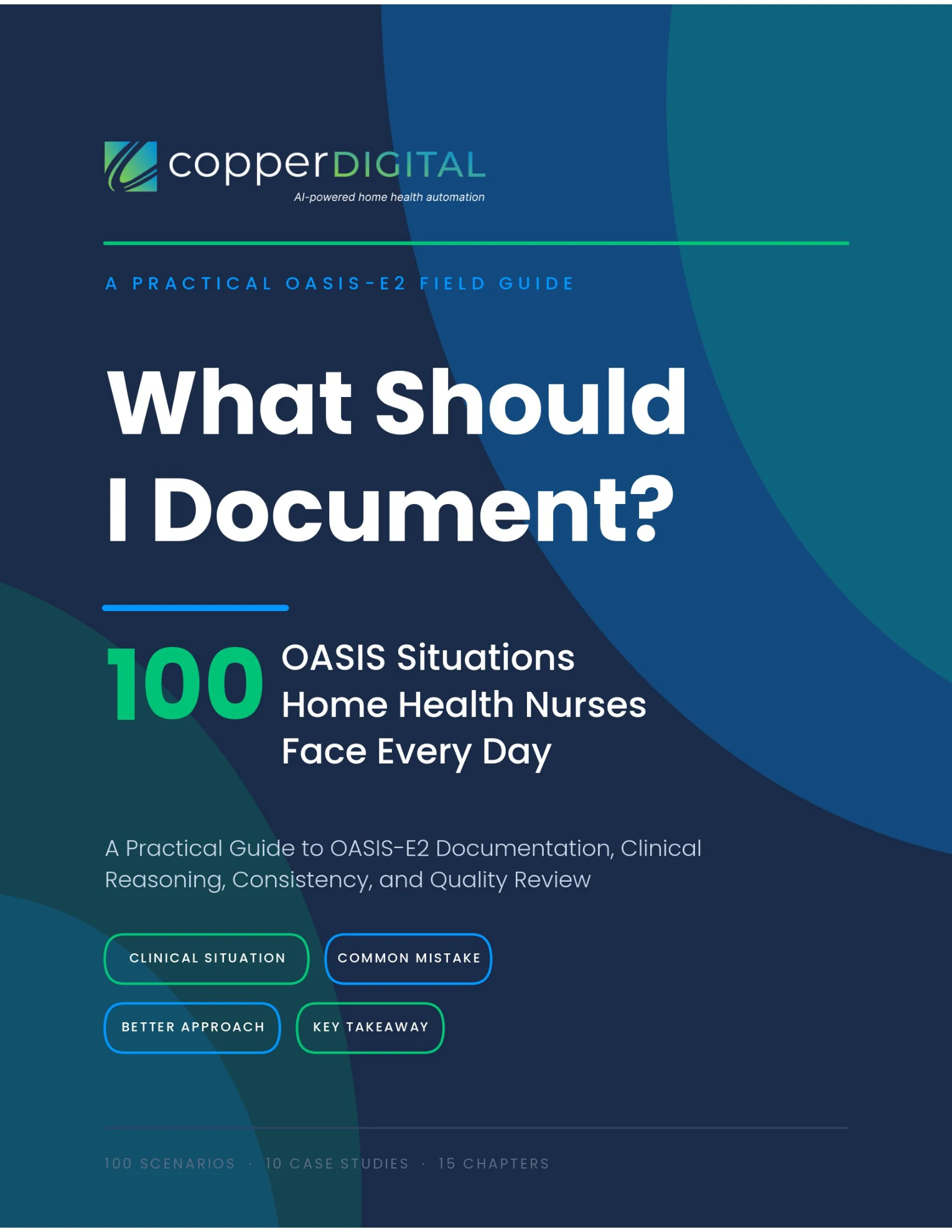
What Should I Document? 100 OASIS Situations Home Health Nurses Face Every Day
100 real OASIS scenarios, worked end to end — clinical situation, common mistake, better approach, and key takeaway. Built around OASIS-E2 (effective April 1, 2026) to turn what you assess into accurate, defensible documentation.
Listen While You Read
Conversations on lupa & pdgm
Episodes from Inside Home Health that put Electronic Health Record (EHR) in operational context.
 Ep 24
Ep 24Ep 24 · Sep 16, 2026
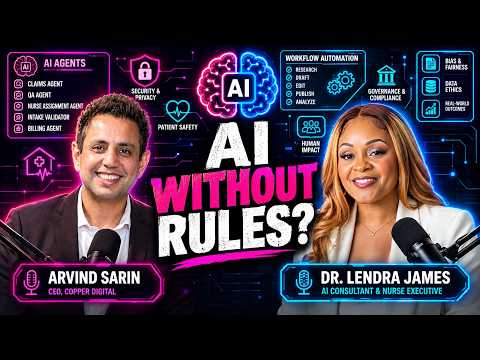
83% of Healthcare AI Has NO Governance (Here's Why That's Dangerous) | Dr. Lendra James
 Dr. Lendra James, DNP, MS, RN, NE-BCWatch
  Ep 23
Ep 23Ep 23 · Aug 17, 2026
The Hidden Spreadsheet Error That's Causing the Nursing Shortage | Robert Wingo
 Robert Wingo, BSN, RN, NI-BCWatch
  Ep 14
Ep 14Ep 14 · Jun 1, 2026
AI vs Intuition: What Nurses Know Before the Monitors Do
 Desiree PaigeWatch
Related Blogs
Homecare Homebase vs WellSky (Kinnser) vs Axxess: Which Home Health EMR Is Best for Documentation?
Choosing a home health EMR shapes how nurses document, how fast claims go out, and how efficiently your agency runs. Homecare Homebase, WellSky (Kinnser), and Axxess all support OASIS-E and Medicare compliance, but they differ in usability, scalability, and workflow design. This guide compares all three across documentation, OASIS-E, mobile, compliance, AI, and agency size to help you choose.
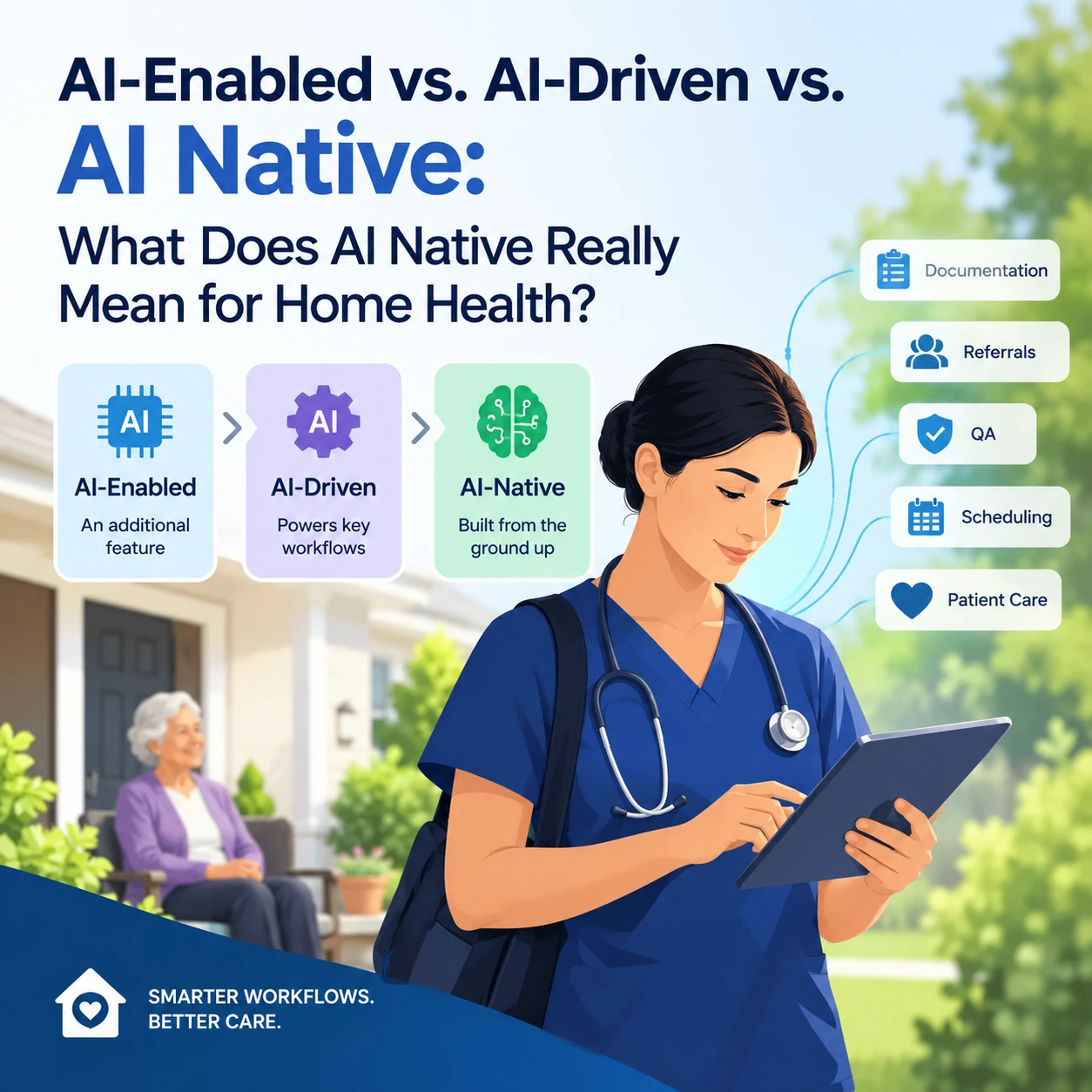
AI-Enabled vs. AI-Driven vs. AI Native: What Does AI Native Really Mean for Home Health?
Understand the difference between AI-enabled, AI-driven, and AI-native home health software—and how to evaluate architecture, connected workflows, governance, and real work reduction.
WellSky Documentation Tips Every Home Health Nurse Should Know
Home health documentation isn't about filling in fields; it's about telling the clinical story. These WellSky documentation tips help nurses show skilled need, document wounds and homebound status clearly, and use AI to reduce charting work without losing clinical judgment.
How Much of a Nursing Shift Is Actually Spent on Documentation?
Research commonly places nursing documentation at roughly 25% to 40% of a shift. The real burden spans structured fields, medications, observations, admissions, handover, and end-of-shift synthesis, not only narrative notes.

The Biggest Documentation Challenges Home Health Nurses Face
Home health nurses face heavy documentation challenges: delayed point-of-care charting, excessive administrative time, clunky EHRs, OASIS complexity, strict reimbursement rules, working in isolation, endless QA corrections, and after-hours charting that drives burnout. Reducing documentation burden is now essential for clinician retention, patient outcomes, and agency financial performance.