
Home Health Charting
Home Health Charting is the ongoing process of documenting patient assessments, treatments, skilled interventions, education, physician communications, and patient responses across the episode.
Definition
Home Health Charting is the ongoing process of documenting patient assessments, treatments, skilled interventions, education, physician communications, and patient responses across the episode.
Why it matters
Home Health Charting is part of the Documentation vocabulary used across home health operations, documentation, and revenue cycle. Understanding it helps clinicians, QA leads, and administrators stay aligned on care quality and compliance.
What Should I Document? 100 OASIS Situations Home Health Nurses Face Every Day
100 real OASIS scenarios, worked end to end — clinical situation, common mistake, better approach, and key takeaway. Built around OASIS-E2 (effective April 1, 2026) to turn what you assess into accurate, defensible documentation.
Related terms
Listen While You Read
Conversations on documentation
Episodes from Inside Home Health that put Home Health Charting in operational context.






Related Blogs
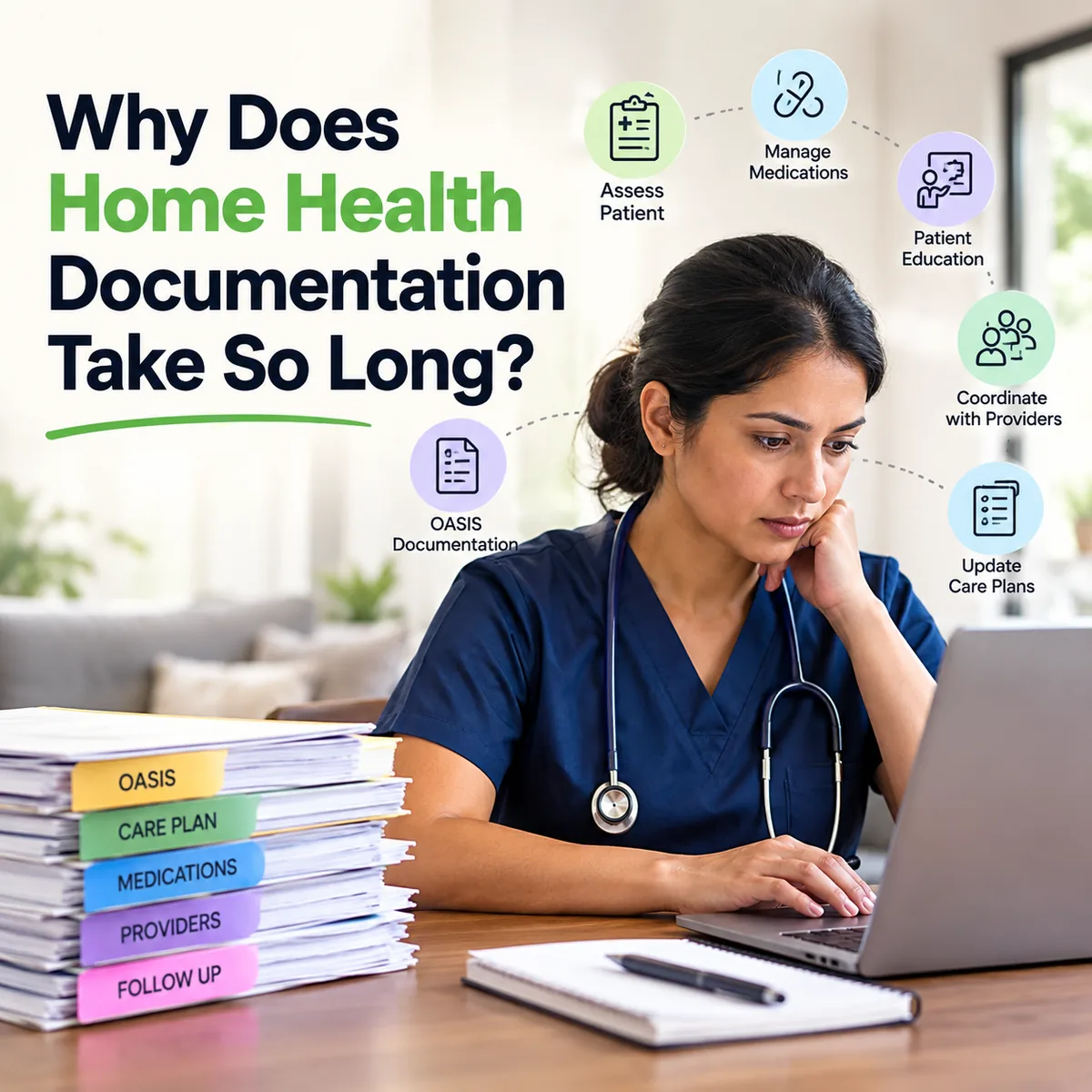
Why Does Home Health Documentation Take So Long?
Home health nurses don't just document a visit. They assess, manage medications, educate, coordinate, update care plans, and complete OASIS, then document it all. Documentation takes so long because it's spread across an entire workflow, where information is captured, checked, entered, updated, and sometimes entered again.
WellSky Documentation Tips Every Home Health Nurse Should Know
Home health documentation isn't about filling in fields; it's about telling the clinical story. These WellSky documentation tips help nurses show skilled need, document wounds and homebound status clearly, and use AI to reduce charting work without losing clinical judgment.
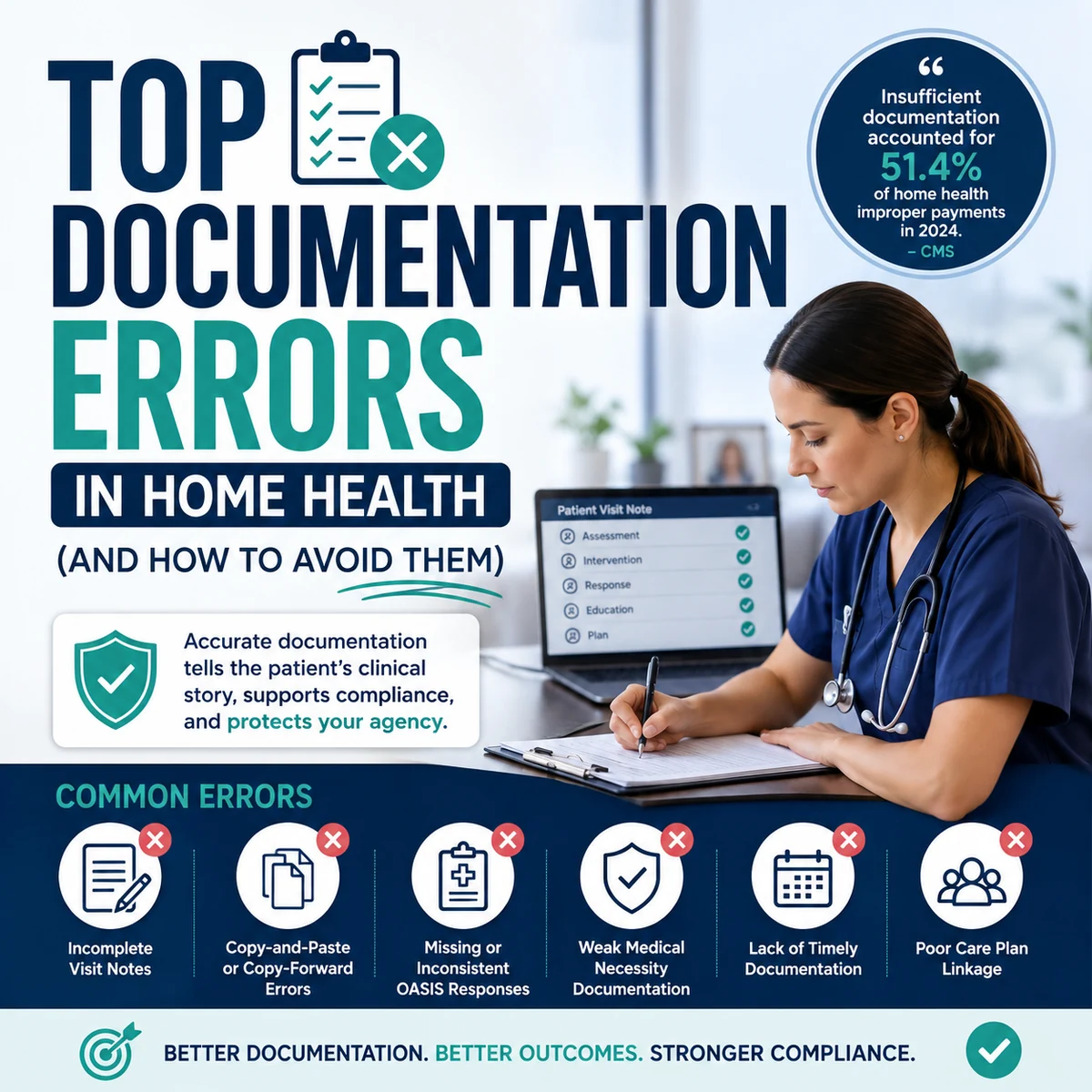
Top Documentation Errors in Home Health (and How to Avoid Them)
A home health note can be technically complete and still be clinically weak, and CMS ties 51.4% of home health improper payments to insufficient documentation. This guide walks through the 15 most common documentation errors with weak-vs-strong examples, then shows how to prevent them with standards, audits, in-workflow checks, and clinician-reviewed AI.
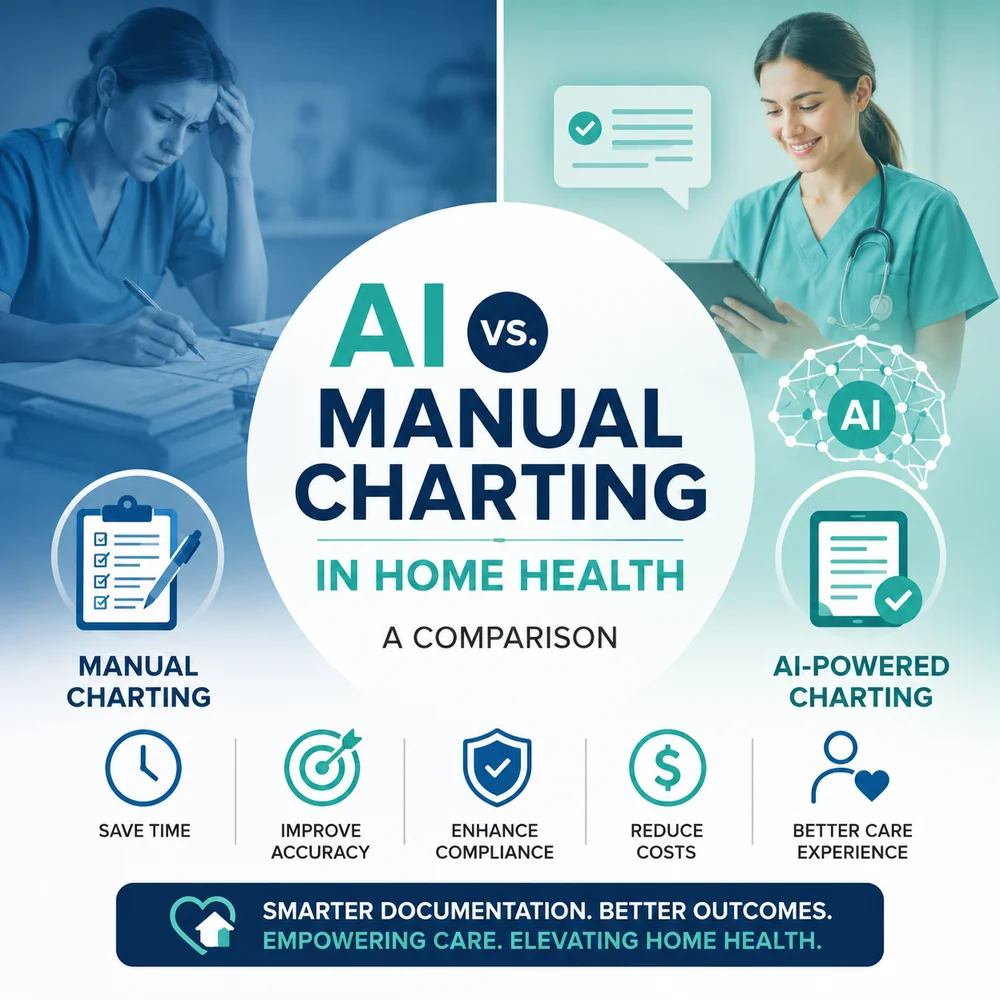
AI vs. Manual Charting in Home Health: An Honest Comparison
Manual charting has been the home health standard for decades, but AI-assisted documentation is changing how notes get done. This honest comparison weighs both across time, accuracy, compliance, cost, clinician experience, and patient care, and explains why the best workflows combine AI efficiency with clinician judgment.

The Biggest Documentation Challenges Home Health Nurses Face
Home health nurses face heavy documentation challenges: delayed point-of-care charting, excessive administrative time, clunky EHRs, OASIS complexity, strict reimbursement rules, working in isolation, endless QA corrections, and after-hours charting that drives burnout. Reducing documentation burden is now essential for clinician retention, patient outcomes, and agency financial performance.