
Patient-Driven Groupings Model (PDGM)
PDGM is Medicare's payment methodology for home health services.
Definition
PDGM is Medicare's payment methodology for home health services. It determines reimbursement based on patient characteristics-including diagnosis, admission source, functional impairment, and comorbidity adjustment-rather than the volume of therapy visits.
Why it matters
PDGM introduced variable LUPA thresholds and changed how agencies manage care planning and reimbursement.
Home Health Documentation Playbook
The complete guide to OASIS-E, Medicare compliance, PDGM, and AI-assisted documentation. Learn how top agencies reduce documentation time without sacrificing compliance.
Listen While You Read
Conversations on lupa & pdgm
Episodes from Inside Home Health that put Patient-Driven Groupings Model (PDGM) in operational context.
 Ep 23
Ep 23Ep 23 · Aug 17, 2026
The Hidden Spreadsheet Error That's Causing the Nursing Shortage | Robert Wingo
 Robert Wingo, BSN, RN, NI-BCWatch
  Ep 24
Ep 24Ep 24 · Sep 16, 2026
83% of Healthcare AI Has NO Governance (Here's Why That's Dangerous) | Dr. Lendra James
 Dr. Lendra James, DNP, MS, RN, NE-BCWatch
  Ep 20
Ep 20Ep 20 · Jul 13, 2026
The Real Cost of Ignoring Nurse Burnout | Jennifer Johnson
 Jennifer JohnsonWatch
Related Blogs
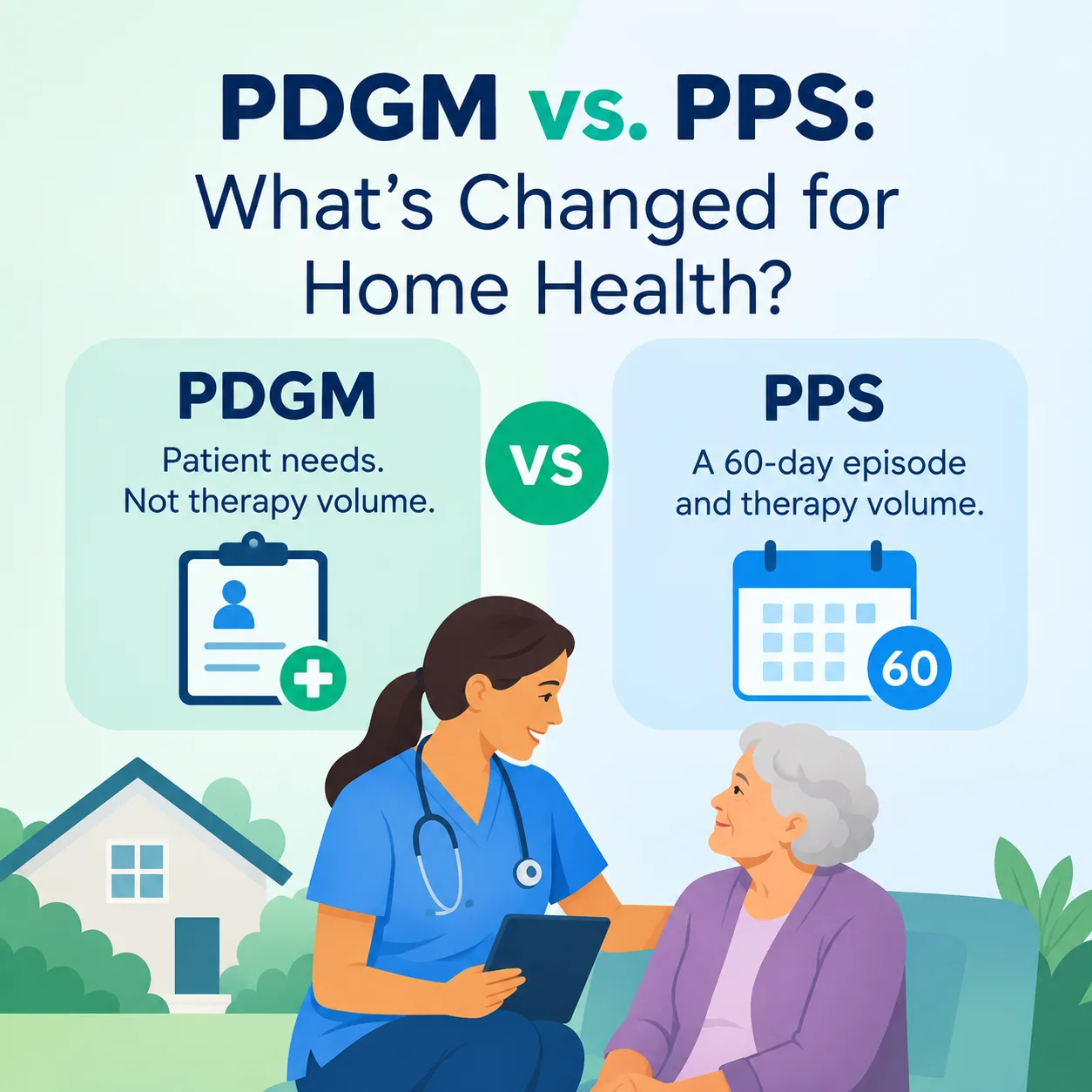
PDGM vs. PPS: What's Changed for Home Health?
PDGM did not replace Medicare's Home Health Prospective Payment System. It changed the case-mix methodology inside HH PPS, and reshaped payment periods, coding, OASIS, LUPA monitoring, billing, and cash flow.
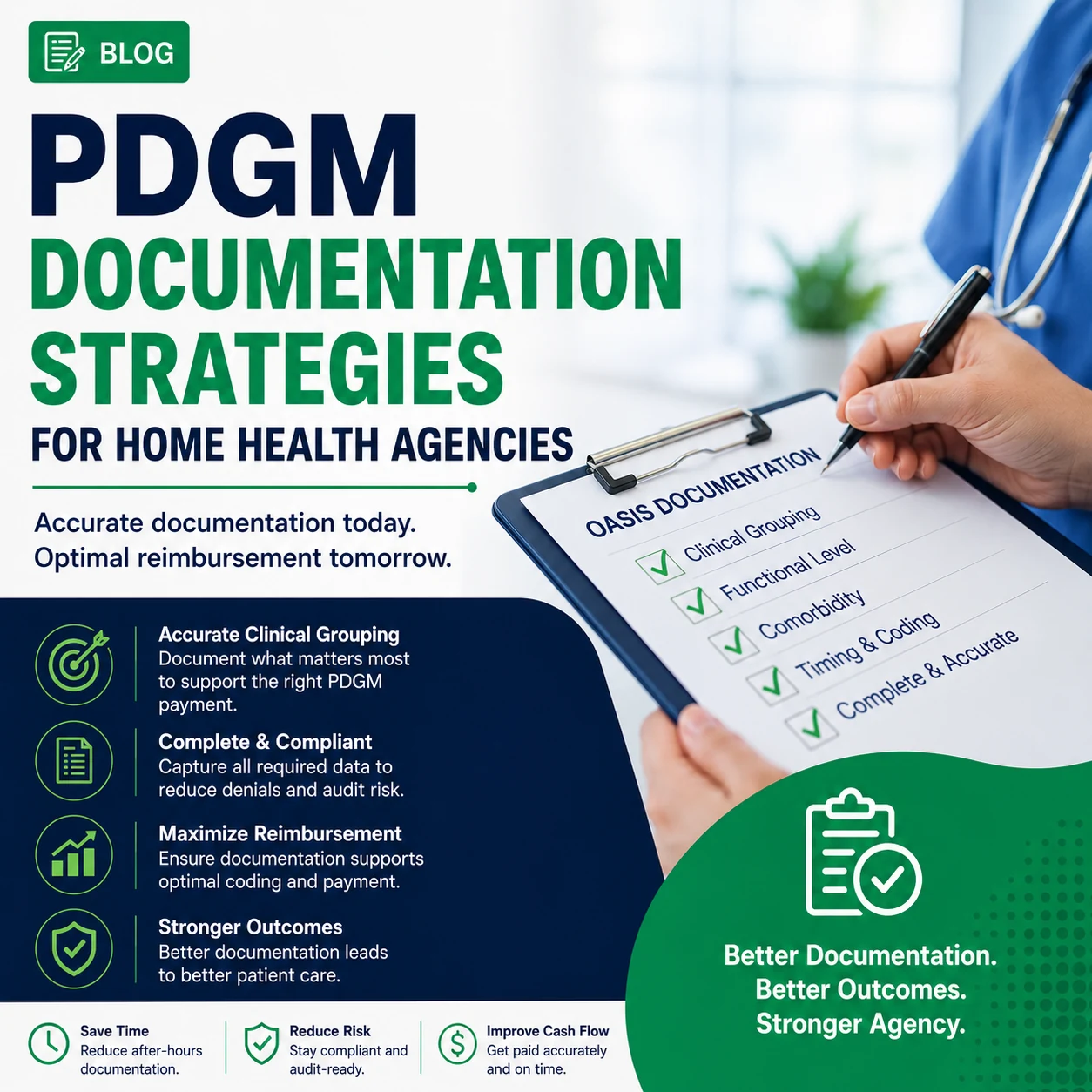
PDGM Documentation Strategies for Home Health Agencies
Under PDGM, documentation establishes the clinical picture that supports classification, medical necessity, coding, and payment. This guide breaks down 15 PDGM documentation strategies, a documentation-to-payment framework, weak-vs-strong examples, and a closed-loop workflow to keep charts consistent and audit-ready.
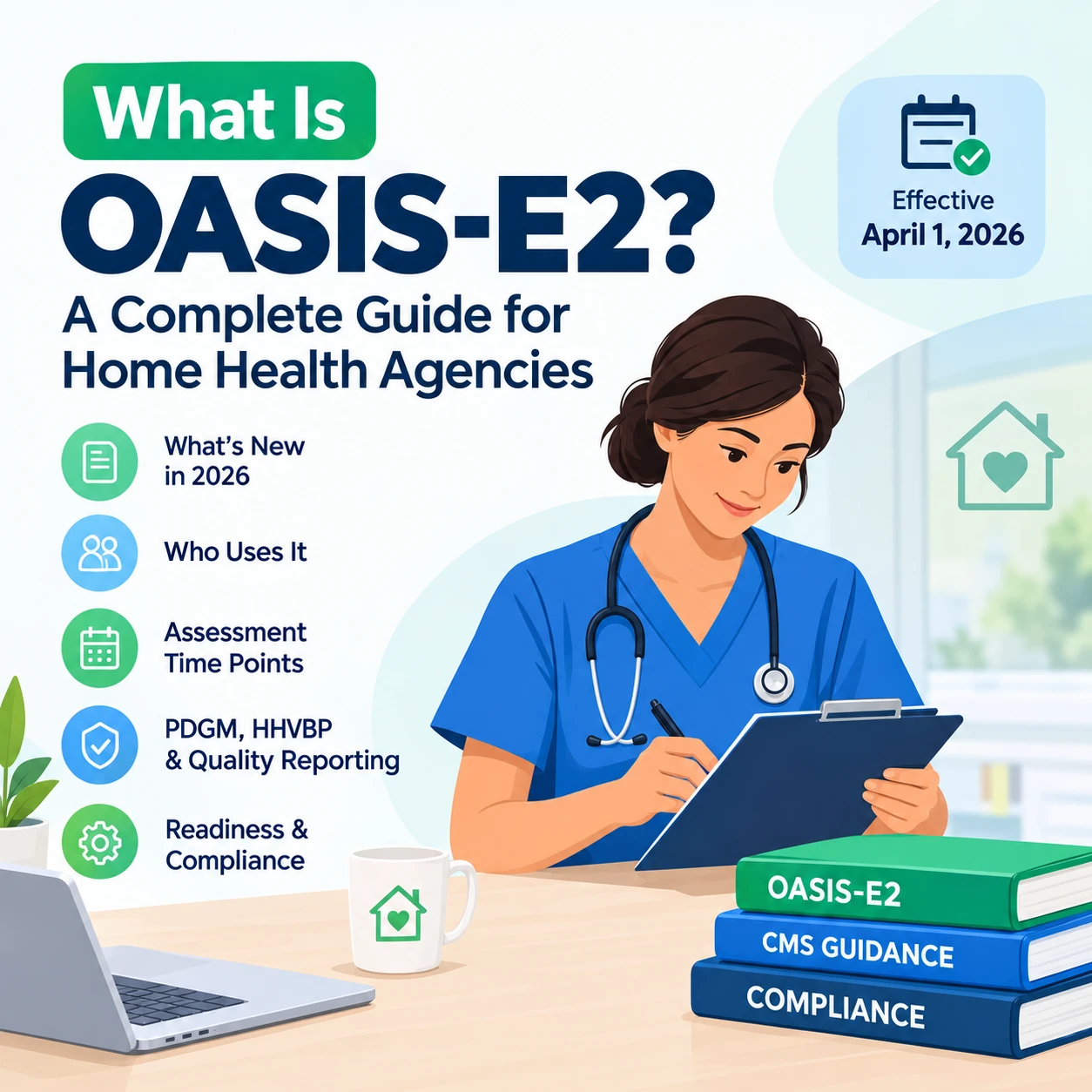
What Is OASIS-E2? A Complete Guide for Home Health Agencies
A practical guide to OASIS-E2: assessment changes, time points, quality and payment uses, EHR and iQIES readiness, and AI support that keeps clinicians in control.
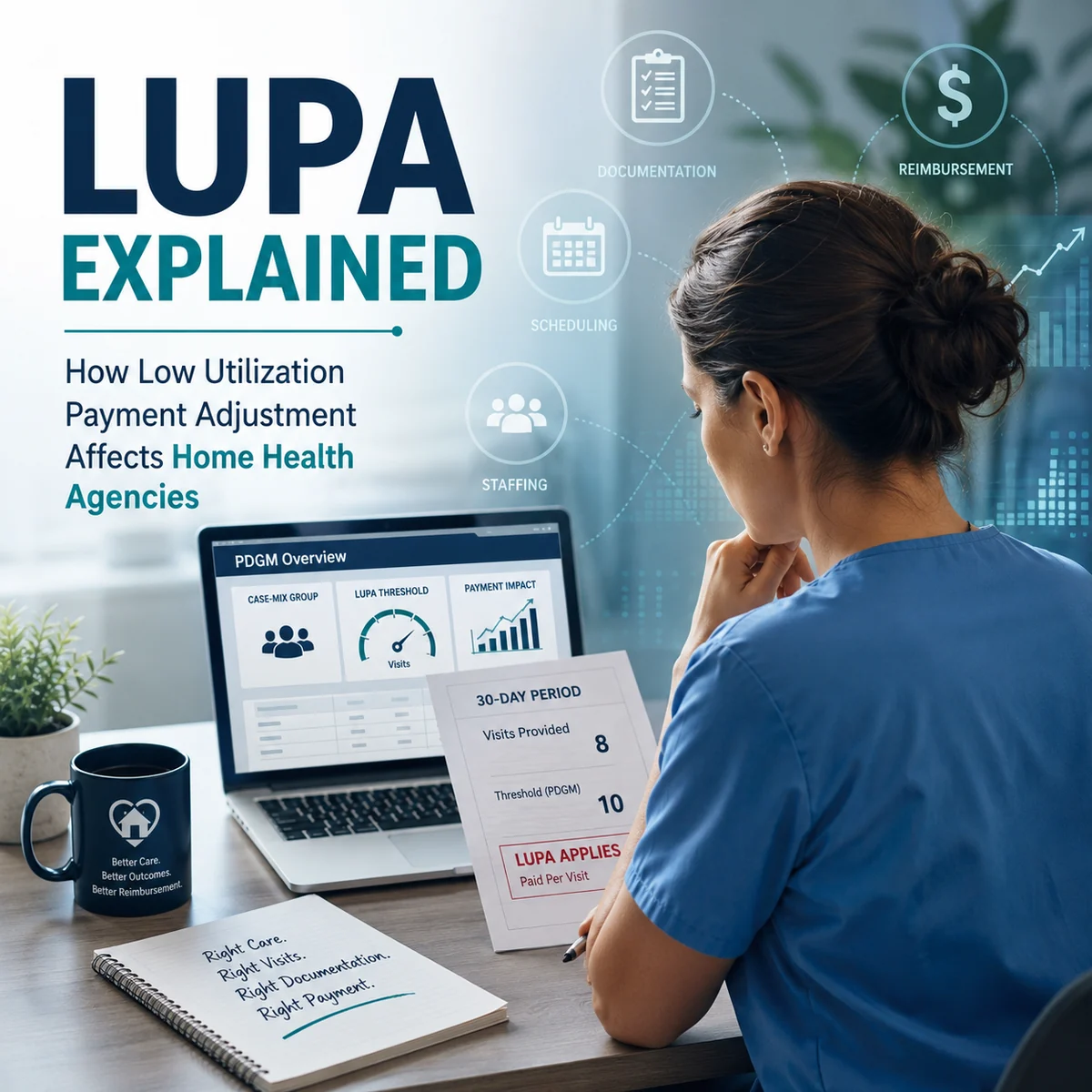
LUPA Explained: How Low Utilization Payment Adjustment Affects Home Health Agencies
LUPA (Low Utilization Payment Adjustment) kicks in when a 30-day home health period falls below its PDGM visit threshold, shifting payment from the case-mix-adjusted 30-day rate to per-visit. This guide explains how thresholds work, what causes avoidable LUPAs, and how to manage LUPA risk without chasing visits.
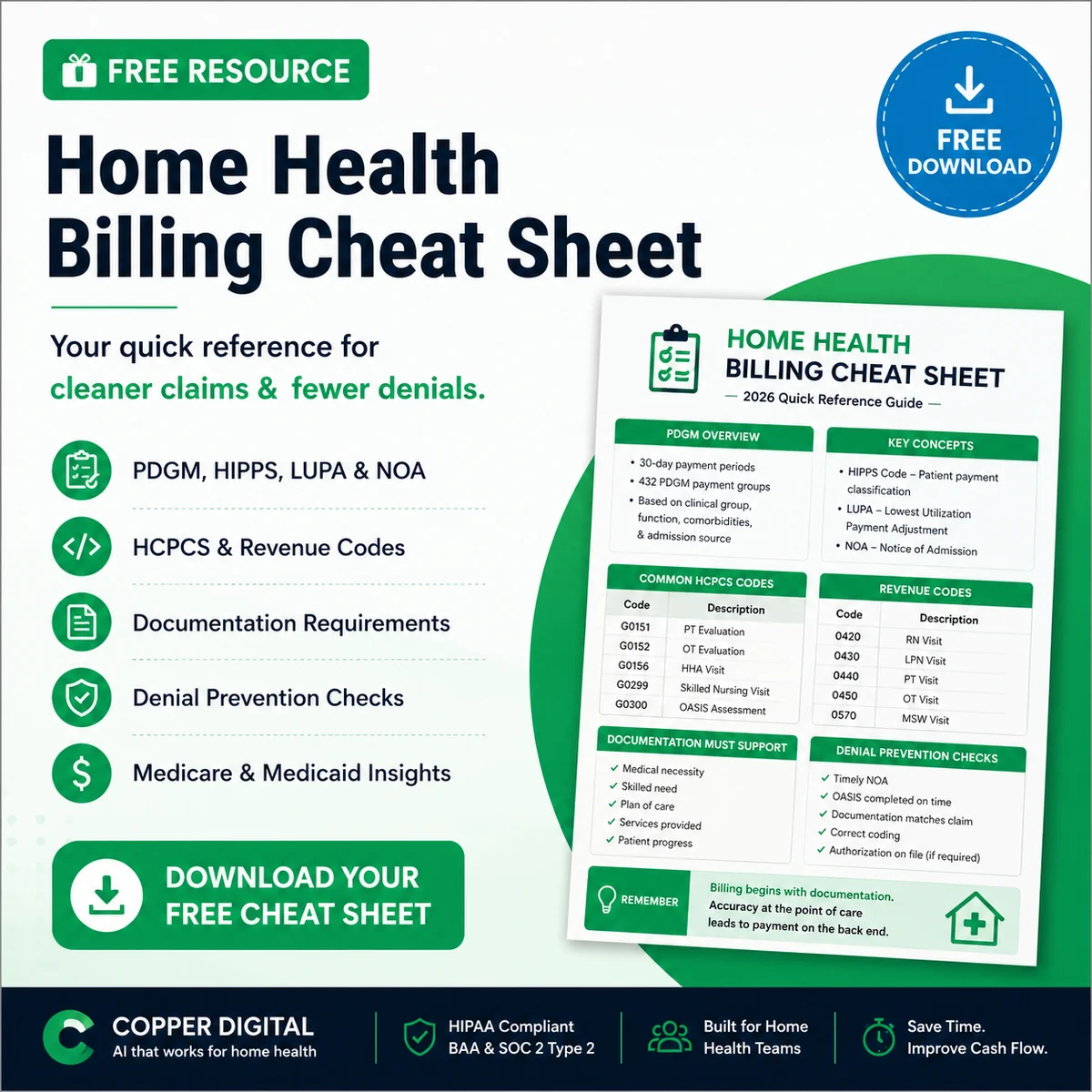
Free Home Health Billing Cheat Sheet
Home health billing gets complicated fast: PDGM, HIPPS, OASIS, NOA, LUPA, HCPCS and revenue codes, and payer rules all have to line up with the documentation. This guide walks through the essentials and gives you a free, downloadable cheat sheet your billing and clinical teams can actually use.