
Is AI Documentation HIPAA Compliant?
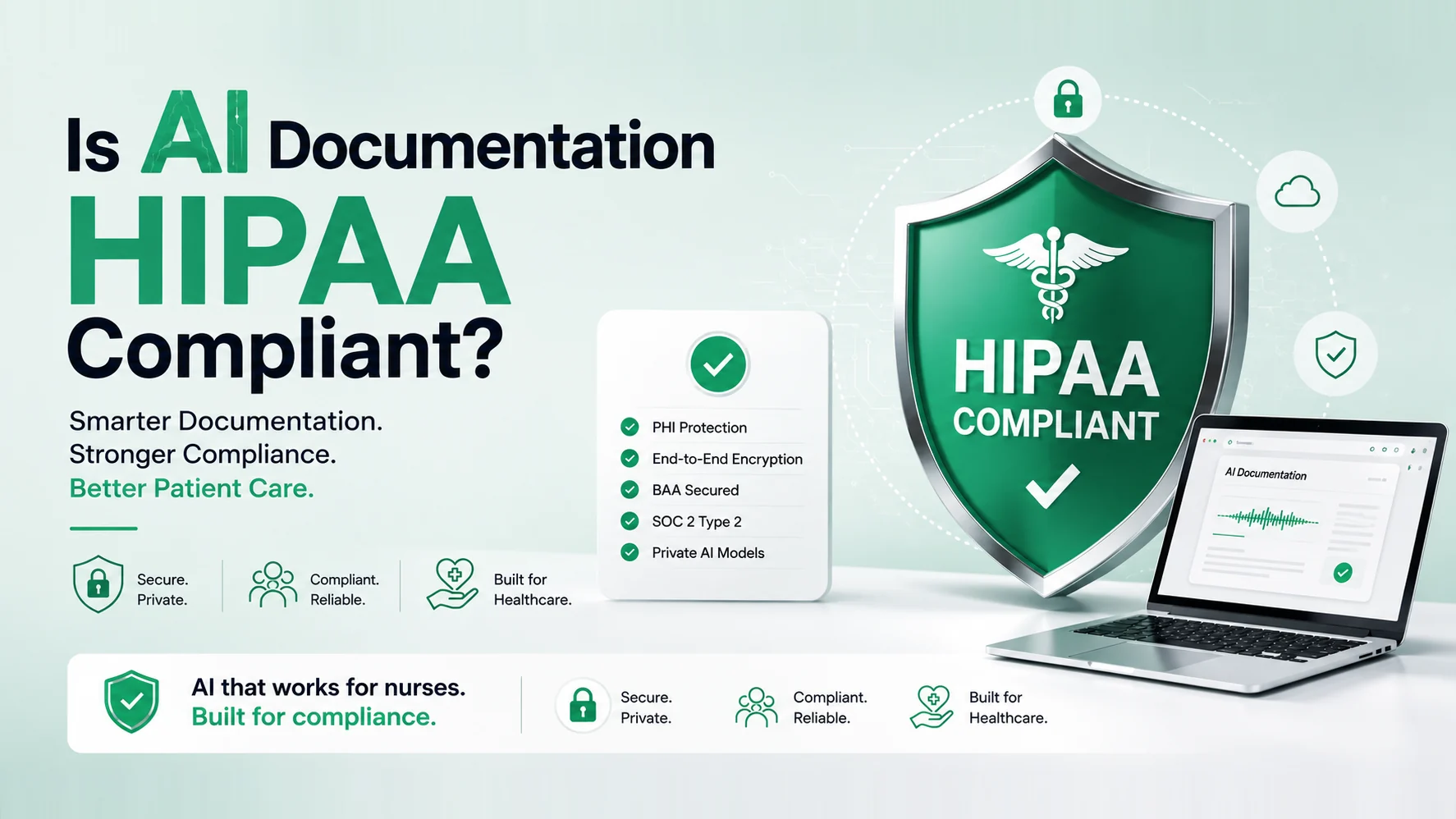
Is AI documentation HIPAA compliant? Yes, but only when it's built for healthcare. This guide covers what HIPAA requires of AI documentation, the security features to look for, common myths, and the exact questions to ask before you share PHI with any AI vendor.
Key Takeaways
- AI documentation can be HIPAA compliant when built specifically for healthcare.
- A signed Business Associate Agreement (BAA) is essential.
- Patient data should never be exposed to unsecured public AI services.
- Encryption, audit logs, access controls, and secure infrastructure are critical safeguards.
- SOC 2 Type II certification strengthens a vendor's security posture.
- Human review should remain part of every clinical documentation workflow.
- Healthcare organizations should carefully evaluate AI vendors before sharing Protected Health Information.
💡 Quick Answer: Yes, AI documentation can be HIPAA compliant, but only when the platform is built for healthcare. That means end-to-end encryption, role-based access, audit logs, a signed Business Associate Agreement (BAA), a private AI environment that never trains on your PHI, and human review before anything reaches the EMR. General-purpose AI tools like ChatGPT are not HIPAA compliant for PHI. See how Copper AI approaches compliant AI documentation.
Artificial intelligence is rapidly transforming healthcare documentation. From AI medical scribes and ambient listening tools to AI-powered OASIS documentation and clinical note generation, healthcare organizations are increasingly adopting AI to reduce clinician burnout and improve documentation efficiency.
But one question consistently comes up before any healthcare organization adopts AI: Is AI documentation HIPAA compliant?
The short answer is yes, but only if it's designed, deployed, and managed correctly.
Not every AI platform is built for healthcare. Consumer AI tools may process sensitive patient information without the safeguards required under the Health Insurance Portability and Accountability Act (HIPAA). In contrast, healthcare-grade AI documentation platforms are specifically designed to protect Protected Health Information (PHI) through encryption, access controls, audit logs, Business Associate Agreements (BAAs), secure infrastructure, and strict data governance.
For home health agencies, hospitals, physician groups, and healthcare organizations, choosing an AI documentation solution isn't just about saving time; it's about protecting patient privacy, maintaining regulatory compliance, and reducing legal and financial risk.
In this guide, we'll explain what HIPAA compliance means for AI documentation, the security features every healthcare organization should look for, common misconceptions about AI and HIPAA, and how to evaluate whether an AI documentation platform is truly healthcare-ready. For a closer look at the safeguards involved, see our companion guide on HIPAA-compliant AI documentation.
Why HIPAA Compliance Matters for AI Documentation
Healthcare organizations handle some of the most sensitive personal information in the world. Every patient assessment, diagnosis, medication list, treatment plan, and clinical note contains Protected Health Information (PHI) that must be safeguarded under HIPAA regulations.
As AI becomes more deeply integrated into clinical documentation, it often processes this PHI to generate notes, summarize visits, suggest documentation, or organize patient records. Without proper safeguards, this creates significant privacy, security, and compliance risks.
A HIPAA violation involving AI documentation can lead to:
- Regulatory investigations
- Financial penalties
- Data breach notifications
- Loss of patient trust
- Reputational damage
- Legal liability
- Operational disruption
For this reason, HIPAA compliance should never be treated as an optional feature when evaluating AI documentation software. It should be one of the primary criteria for vendor selection.
What Does HIPAA Compliance Mean for AI Documentation?
HIPAA compliance isn't a certification or a badge that software vendors can simply claim. Instead, it refers to meeting the legal, technical, and administrative safeguards required to protect patient information throughout its lifecycle.
For AI documentation software, HIPAA compliance means the platform must securely collect, process, store, and transmit Protected Health Information while preventing unauthorized access or misuse.
A HIPAA-compliant AI documentation platform should provide:
- End-to-end encryption
- Secure authentication
- Role-based access controls
- Audit logging
- Secure cloud infrastructure
- Business Associate Agreement (BAA)
- Data retention policies
- Breach notification procedures
Compliance is about the entire ecosystem and not just the AI model itself.
1. Business Associate Agreement (BAA) is Non-Negotiable
One of the clearest indicators that an AI documentation vendor is prepared for healthcare is whether they are willing to sign a Business Associate Agreement (BAA). Under HIPAA, any vendor that creates, receives, maintains, or transmits Protected Health Information on behalf of a healthcare organization is considered a Business Associate and is generally required to enter into a BAA.
The agreement defines each party's responsibilities for protecting patient data, reporting breaches, and maintaining compliance. If a vendor refuses to sign a BAA or cannot clearly explain how they handle PHI, healthcare organizations should treat it as a significant warning sign.
Before selecting an AI documentation platform, verify that the vendor offers a BAA and clearly outlines its HIPAA responsibilities.
2. AI Should Protect Protected Health Information (PHI)
Every AI documentation platform processes clinical information differently. Some tools simply transcribe conversations, while others analyze assessments, generate documentation, summarize encounters, or recommend clinical content. Regardless of functionality, any platform handling PHI must protect that information throughout the entire workflow.
Healthcare-grade AI systems should encrypt patient information both while it is being transmitted and while it is stored. They should also implement strict identity verification, user authentication, and secure session management to prevent unauthorized access.
Organizations should also understand:
- Where patient data is stored
- Whether data leaves the United States
- How long information is retained
- Whether patient data is used to train AI models
- How data is permanently deleted when requested
Transparency around PHI handling is a key part of HIPAA compliance.
3. Choose AI Platforms that Use Private or Secure Healthcare Models
Not all AI models are designed for healthcare. Many publicly available AI services process user prompts through shared infrastructure, and depending on the vendor's policies, submitted information may be retained or used to improve future models.
Healthcare organizations should instead prioritize AI documentation platforms that use private, isolated, or healthcare-specific AI environments where patient data is protected under contractual and technical safeguards. These deployments typically provide stronger control over how PHI is processed and stored.
When evaluating a vendor, ask whether patient information is ever used for model training and what safeguards are in place to prevent unauthorized reuse of clinical data.
4. SOC 2 Type II Adds an Important Layer of Security
While HIPAA establishes legal requirements for protecting health information, many healthcare organizations also look for SOC 2 Type II certification as evidence that a vendor follows mature security practices.
SOC 2 Type II evaluates how an organization manages security, availability, confidentiality, and access controls over an extended period and not just at a single point in time.
Although SOC 2 is not a HIPAA requirement, vendors that maintain both HIPAA safeguards and SOC 2 Type II certification often demonstrate stronger operational security and governance.
5. Human Review Should Always Remain Part of the Workflow
AI documentation should support clinicians and not replace them. The safest AI documentation platforms keep healthcare professionals in control by requiring human review before any clinical note becomes part of the official medical record.
This human-in-the-loop approach helps ensure that documentation is clinically accurate, complete, and appropriate for each patient. It also reduces the risk of incorrect AI-generated information entering the Electronic Medical Record (EMR).
Clinician oversight remains an essential part of safe, compliant AI implementation.
6. Audit Logs Improve Compliance and Accountability
Healthcare organizations must be able to track who accessed patient information, what changes were made, and when those changes occurred. Comprehensive audit logging is a critical security feature that supports HIPAA compliance and internal governance.
AI documentation platforms should maintain detailed logs showing:
- User access
- Documentation edits
- Approval history
- Export activity
- EMR synchronization
- Administrative changes
Audit logs are invaluable during compliance reviews, security investigations, and internal quality assurance.
7. Integration with EMRs Should Be Secure
AI documentation rarely exists in isolation. Most healthcare organizations expect their documentation platform to exchange information with Electronic Medical Record (EMR) systems.
Secure integrations should use encrypted APIs, authenticated connections, and controlled permission settings to protect patient information throughout the transfer process. Organizations should also ensure that only authorized users can initiate synchronization or modify records.
For home health agencies, secure integrations with platforms such as WellSky (Kinnser), Homecare Homebase, or Axxess should preserve both security and data integrity.
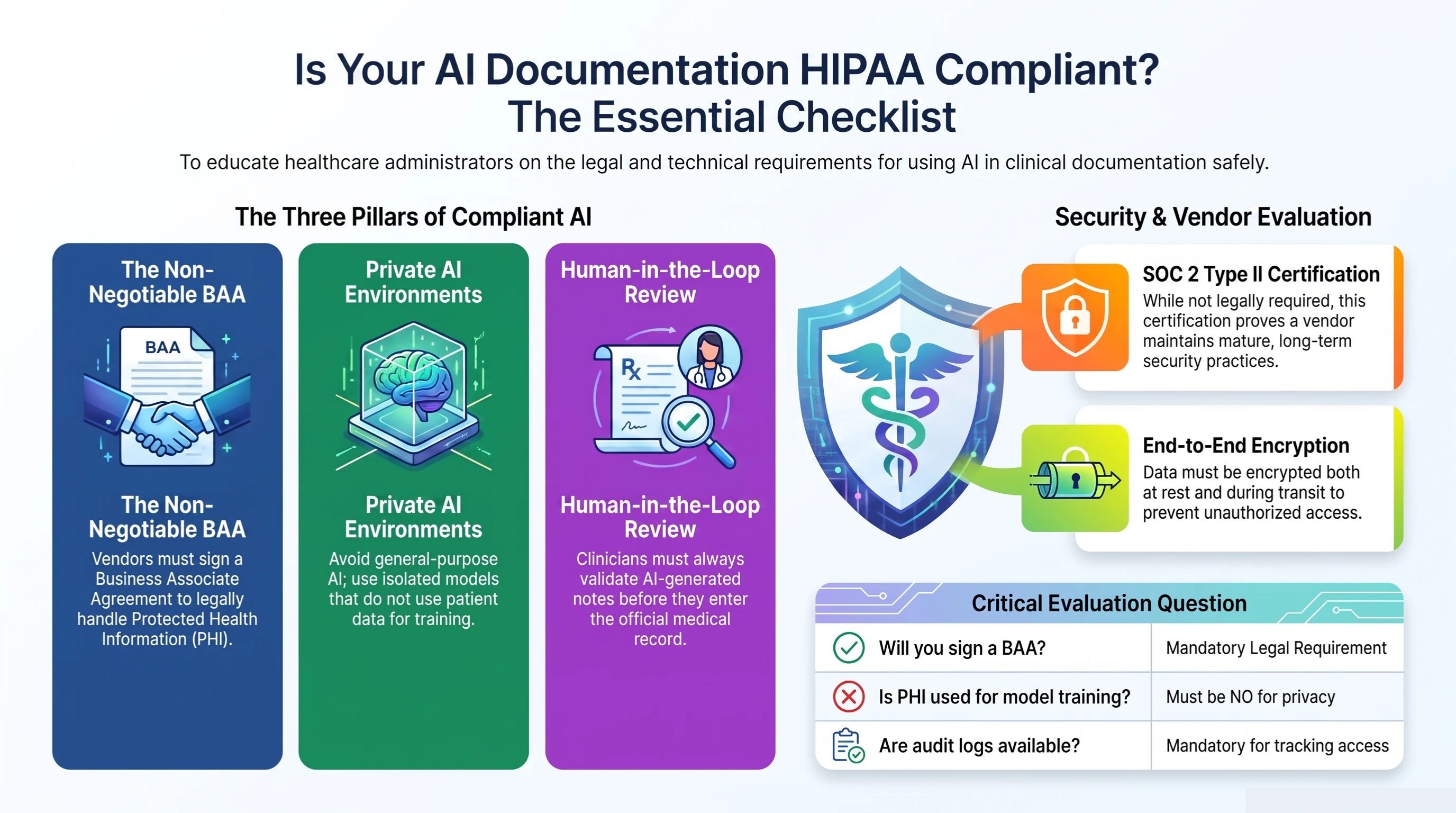
The three pillars of compliant AI documentation, the security signals to evaluate, and the critical questions every healthcare organization should ask a vendor.
Common Myths About AI and HIPAA
Myth 1: Every AI tool is HIPAA compliant.
False. Many general-purpose AI tools are not designed for healthcare and should not be used with PHI unless the vendor explicitly supports HIPAA requirements.
Myth 2: HIPAA compliance guarantees clinical accuracy.
False. HIPAA protects patient privacy and it does not validate medical accuracy. Clinical review is still required.
Myth 3: Encryption alone makes AI HIPAA compliant.
False. HIPAA compliance also requires administrative safeguards, access controls, audit logs, risk management, workforce training, and appropriate contractual agreements.
Myth 4: AI replaces clinical judgment.
False. AI should enhance documentation efficiency while clinicians remain responsible for reviewing, validating, and approving patient records.
How to Evaluate an AI Documentation Vendor
Before selecting an AI documentation solution, ask:
- Will you sign a Business Associate Agreement (BAA)?
- Do you have SOC 2 Type II certification?
- Is patient data encrypted at rest and in transit?
- Is PHI ever used to train public AI models?
- Do you offer role-based access controls?
- Are detailed audit logs available?
- Does the platform require clinician review before EMR submission?
- Where is patient data stored?
- How do you handle data retention and deletion?
- How do you respond to security incidents or breaches?
These questions help distinguish healthcare-ready AI platforms from general-purpose AI tools.
Is Copper AI Documentation HIPAA Compliant?
Yes. Copper AI is designed specifically for healthcare organizations and home health agencies that require secure, compliant AI documentation workflows.
Unlike consumer AI tools, Copper AI is built with healthcare security and compliance in mind. Patient information remains protected throughout the documentation process, and clinicians always review documentation before it is pushed into the EMR.
Copper AI includes:
- HIPAA-compliant architecture designed to safeguard Protected Health Information (PHI)
- Business Associate Agreement (BAA) for healthcare organizations
- SOC 2 Type II certified infrastructure for enterprise-grade security
- Private AI environment that protects patient information
- Role-based access controls to ensure only authorized users access clinical data
- Comprehensive audit logs for compliance and security reviews
- Encrypted data in transit and at rest
- Human-in-the-loop workflow, so AI never submits documentation directly to the EMR without clinician review
- Direct integration with WellSky (Kinnser) to eliminate duplicate documentation
- Support for voice, photo, and structured tap input while maintaining security controls
Copper AI is designed to reduce documentation time, not compromise patient privacy. Nurses remain in control of every chart, while AI helps automate repetitive documentation tasks securely.
⚖️ Note: HIPAA compliance is a shared responsibility. Even with a compliant platform, healthcare organizations must maintain proper internal policies, workforce training, access management, and security practices.
Home Health Agency HIPAA Compliance Checklist
Whether you're evaluating AI documentation software or reviewing your agency's overall compliance program, use this checklist to help reduce HIPAA risk.
Administrative Safeguards
- Sign a Business Associate Agreement (BAA) with every technology vendor handling PHI.
- Conduct regular HIPAA risk assessments.
- Train employees on HIPAA privacy and security requirements.
- Limit employee access based on job responsibilities.
- Create policies for breach response and incident reporting.
Technical Safeguards
- Encrypt all patient information at rest and in transit.
- Enable multi-factor authentication (MFA).
- Use role-based access controls.
- Maintain detailed audit logs.
- Automatically log out inactive users.
- Secure all mobile devices used for home health visits.
Documentation Best Practices
- Complete documentation as close to the patient visit as possible.
- Avoid storing PHI on personal devices.
- Review all AI-generated documentation before submission.
- Never share login credentials.
- Document late entries appropriately.
- Verify OASIS responses before EMR submission.
AI Documentation Checklist
- Confirm the vendor signs a BAA.
- Verify HIPAA compliance.
- Ask for SOC 2 Type II certification.
- Understand where patient data is stored.
- Confirm whether patient data is used to train AI models.
- Verify human review before EMR submission.
- Ensure secure EMR integrations.
- Request documentation of encryption and security controls.
Mobile Home Health Checklist
Before leaving a patient's home, confirm:
- Documentation is complete.
- Photos have uploaded securely.
- Voice recordings have been processed.
- Required OASIS fields are complete.
- Patient information isn't stored locally on the device.
- Device is password protected.
- Visit documentation has synced successfully.
🚀 See compliant AI documentation in action. Copper AI pairs a HIPAA-compliant, SOC 2 Type II architecture and a signed BAA with a human-in-the-loop workflow, so a nurse reviews and approves every note before it reaches the EMR. Explore AI tools for home health nurses, review our compliance approach, or book a demo.
🎓 Go deeper with peers. Join our Home Health Mastermind Skool community for training on HIPAA-ready AI documentation, OASIS accuracy, and secure EMR workflows.
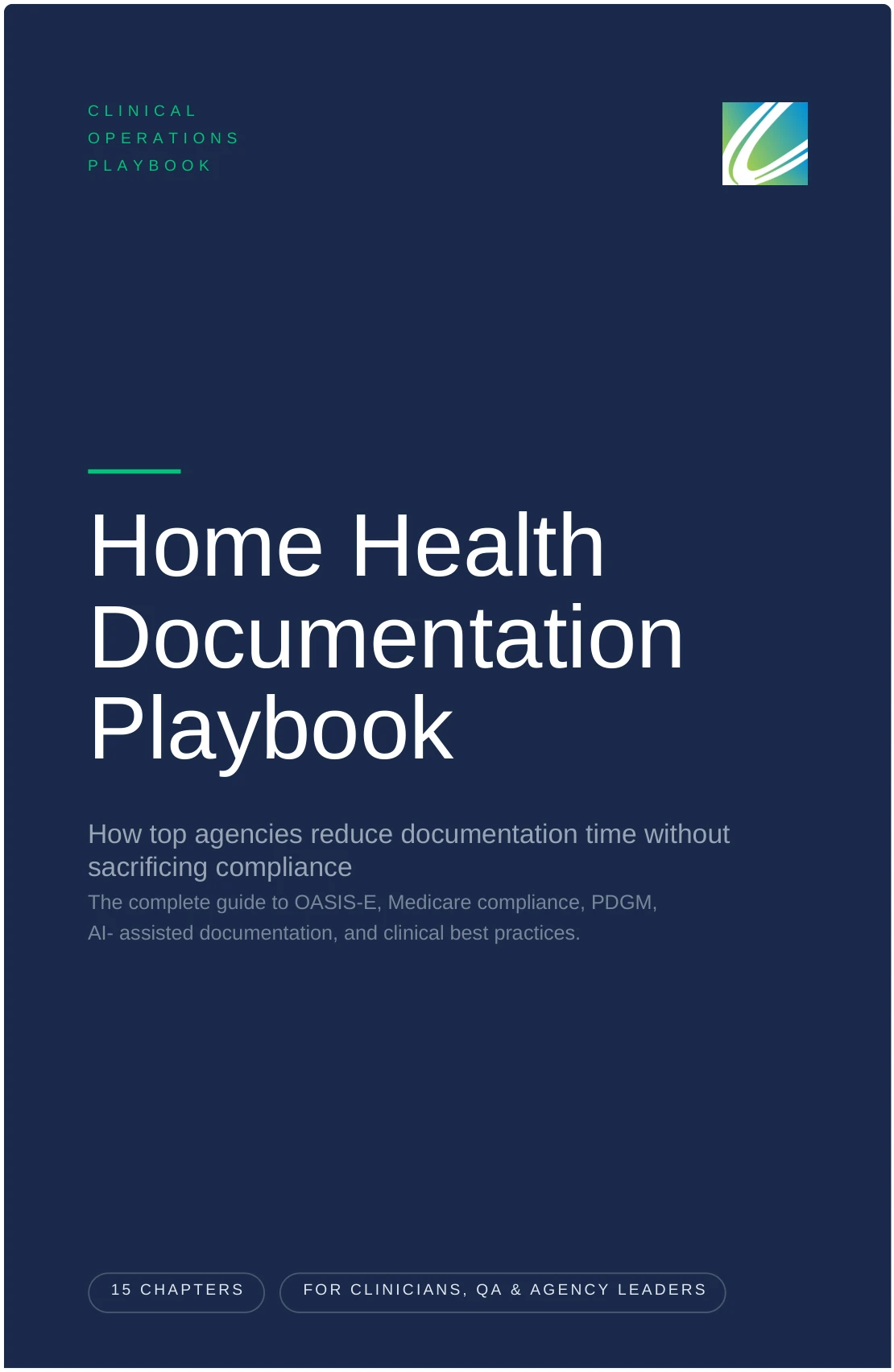
Home Health Documentation Playbook
The complete guide to OASIS-E, Medicare compliance, PDGM, and AI-assisted documentation. Learn how top agencies reduce documentation time without sacrificing compliance.
Bottom Line
AI documentation is HIPAA compliant only when the platform is purpose-built for healthcare: end-to-end encryption, role-based access, audit logs, a signed BAA, a private AI environment that never trains on your PHI, and human review before anything reaches the EMR. Compliance is a shared responsibility, so pair a healthcare-grade platform with trained staff, documented policies, and continuous oversight.

Arvind Sarin is the founder of Copper Digital. For the past year he has spent three days a week inside a 500+ census Texas home health agency, building AI documentation that finishes OASIS and visit notes the same day, with a nurse reviewing and approving every note. He writes about home health documentation, OASIS, Medicare compliance, and applying AI responsibly in clinical workflows.
Frequently asked
Frequently asked questions
Yes, AI documentation can be HIPAA compliant when the platform includes appropriate administrative, technical, and physical safeguards such as encryption, audit logs, access controls, secure infrastructure, and a signed Business Associate Agreement (BAA).
Join the conversation
Leave a comment
Related reading
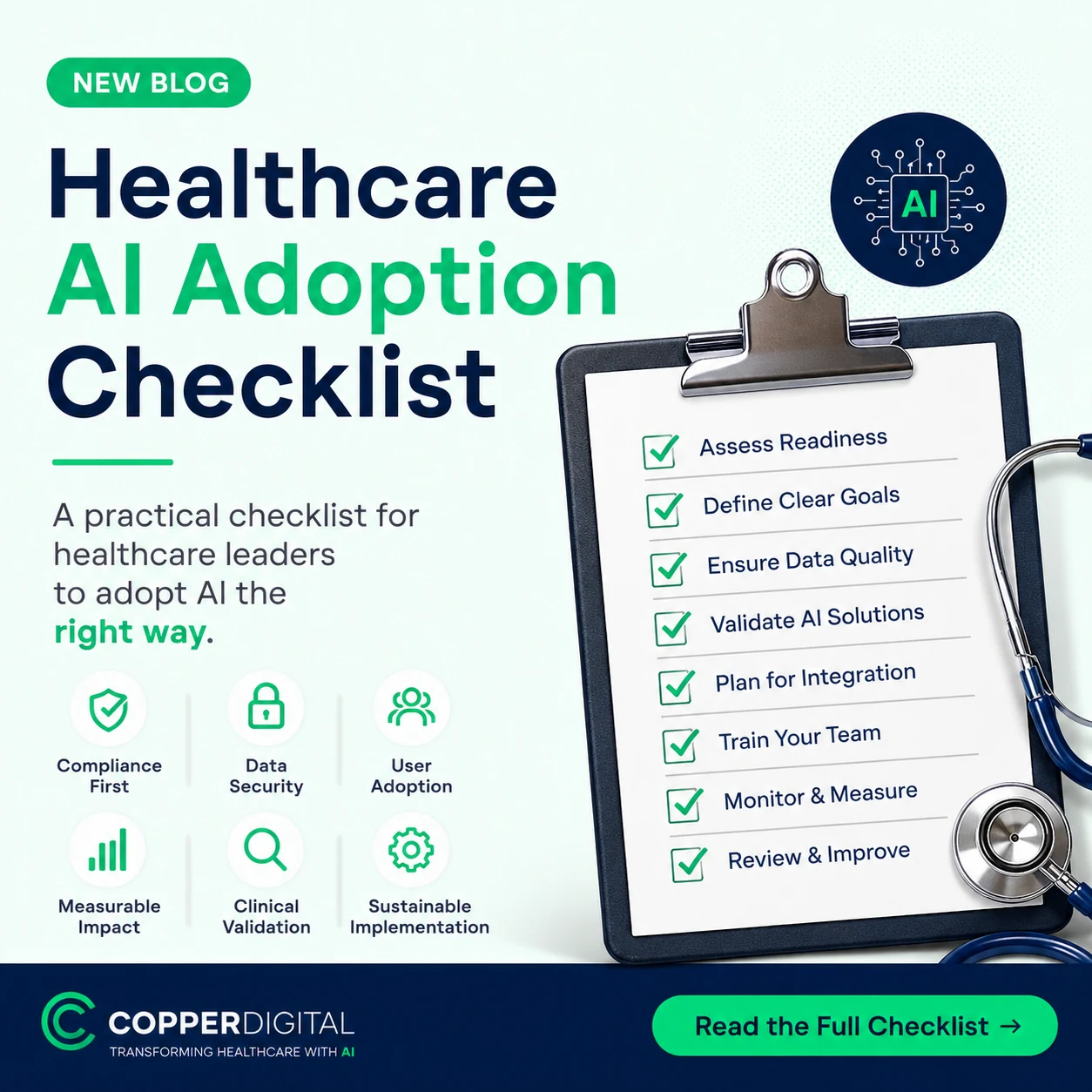
Healthcare AI Adoption Checklist: A Practical Guide for Home Health Agencies
Buying AI software is the easy part, implementing it well is where agencies succeed or fail. This step-by-step healthcare AI adoption checklist covers defining the problem, involving clinicians, verifying security, EMR integration, training, piloting, and measuring success.
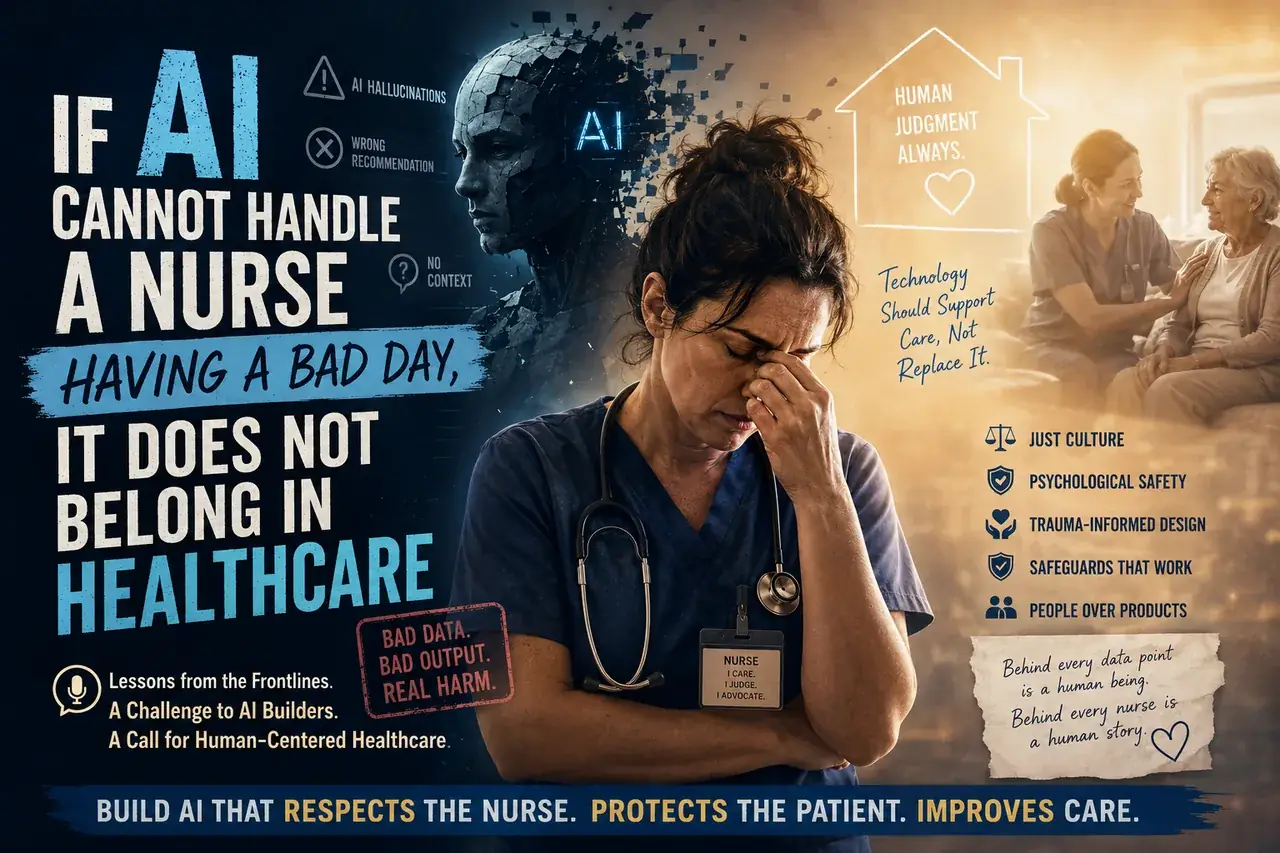
If AI Cannot Handle a Nurse Having a Bad Day, It Does Not Belong in Healthcare
AI is advisory. The nurse's judgment is sacred. Susie Branagan, RN, who calls herself AI's clinical conscience, on applying Just Culture to AI, the real danger of hallucinations in home health, trauma-informed design, and why deploying technology into a broken culture only gives it more efficient ways to do harm.

10 Ways to Write a Stronger Home Health Visit Note
A strong home health visit note creates a clear clinical narrative, what was assessed, what changed, what skilled care was provided and why, how the patient responded, and what happens next, not just a record that a task was completed. This guide gives 10 practical ways to write stronger notes, weak-vs-strong examples across nursing, therapy, and education, common mistakes to avoid, and a simple Assess → Interpret → Intervene → Evaluate → Plan framework.