
Healthcare AI Adoption Checklist: A Practical Guide for Home Health Agencies
Buying AI software is the easy part, implementing it well is where agencies succeed or fail. This step-by-step healthcare AI adoption checklist covers defining the problem, involving clinicians, verifying security, EMR integration, training, piloting, and measuring success.
Key Takeaways
- AI should augment clinicians, not replace them.
- Start by solving a specific operational problem.
- Leadership buy-in is essential for successful adoption.
- Nurses should be involved early in AI selection and implementation.
- HIPAA, SOC 2 Type II, and security should be non-negotiable.
- Pilot before rolling AI out agency-wide.
- Measure success using operational and clinical KPIs.
- Continuous training drives long-term adoption.
💡 Quick Answer: Successful healthcare AI adoption in home health isn't about buying software, it's about preparation. Define a specific operational problem first, involve clinicians early, verify HIPAA/SOC 2 Type II security, ensure EMR integration, train your team, pilot before scaling, and measure results with clear KPIs. Agencies that skip these steps fail even when the technology works.
Artificial intelligence is no longer a future investment, it's becoming part of everyday healthcare operations. From AI-powered clinical documentation to coding, quality assurance, and analytics, home health agencies are adopting AI to reduce administrative burden and improve care.
However, buying AI software is the easy part. Successfully implementing AI requires leadership alignment, clinician buy-in, workflow redesign, compliance planning, and continuous training. Many agencies fail not because the technology doesn't work, but because they skip the preparation.
Whether you're a home health agency owner, Director of Nursing (DON), Clinical Manager, Operations Manager, QA Nurse, or field clinician, this healthcare AI adoption checklist gives you a practical, step-by-step framework for adopting AI the right way.
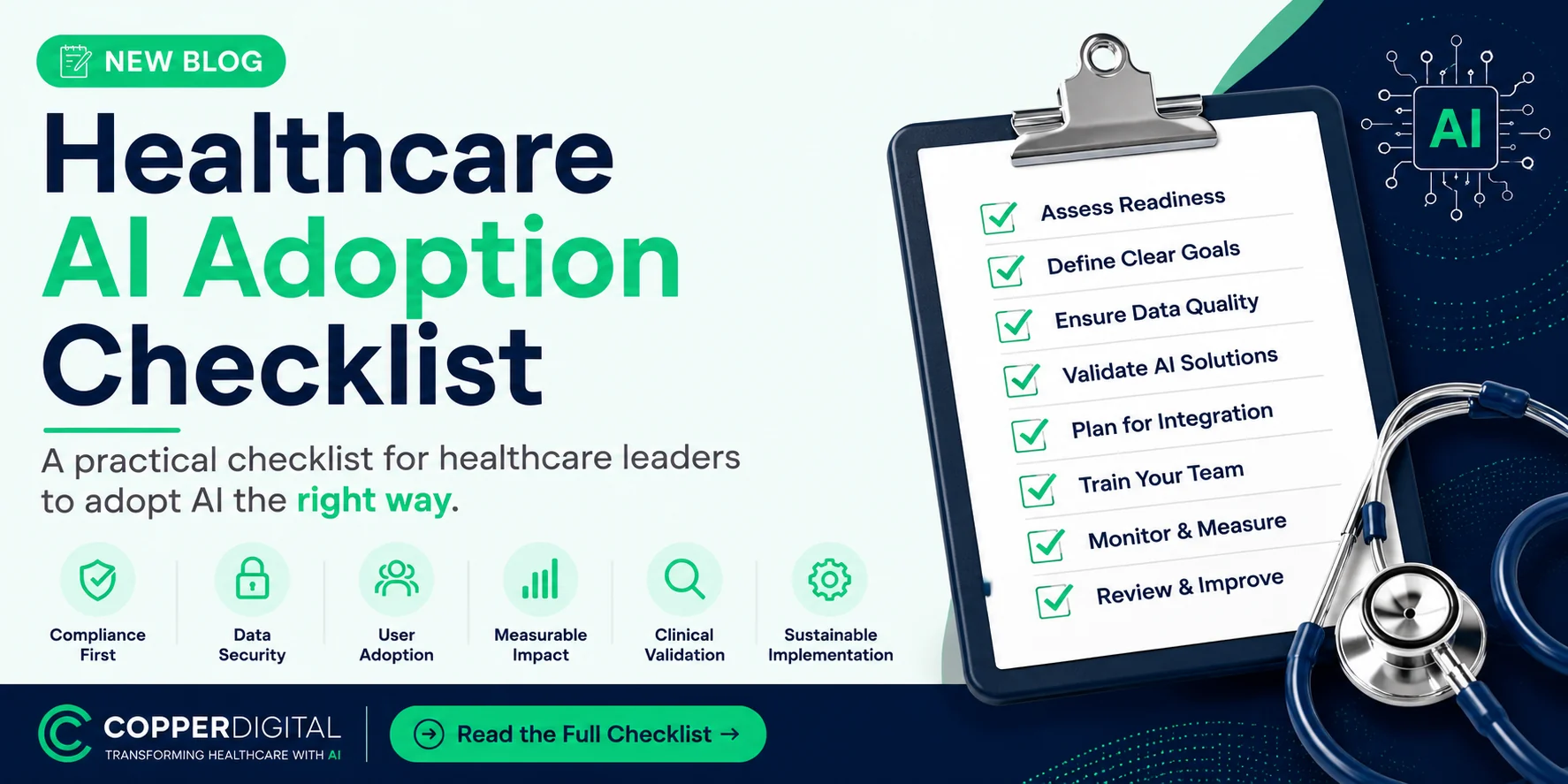
A practical framework for adopting AI the right way, from assessing readiness and defining goals to training, measuring, and continuously improving.
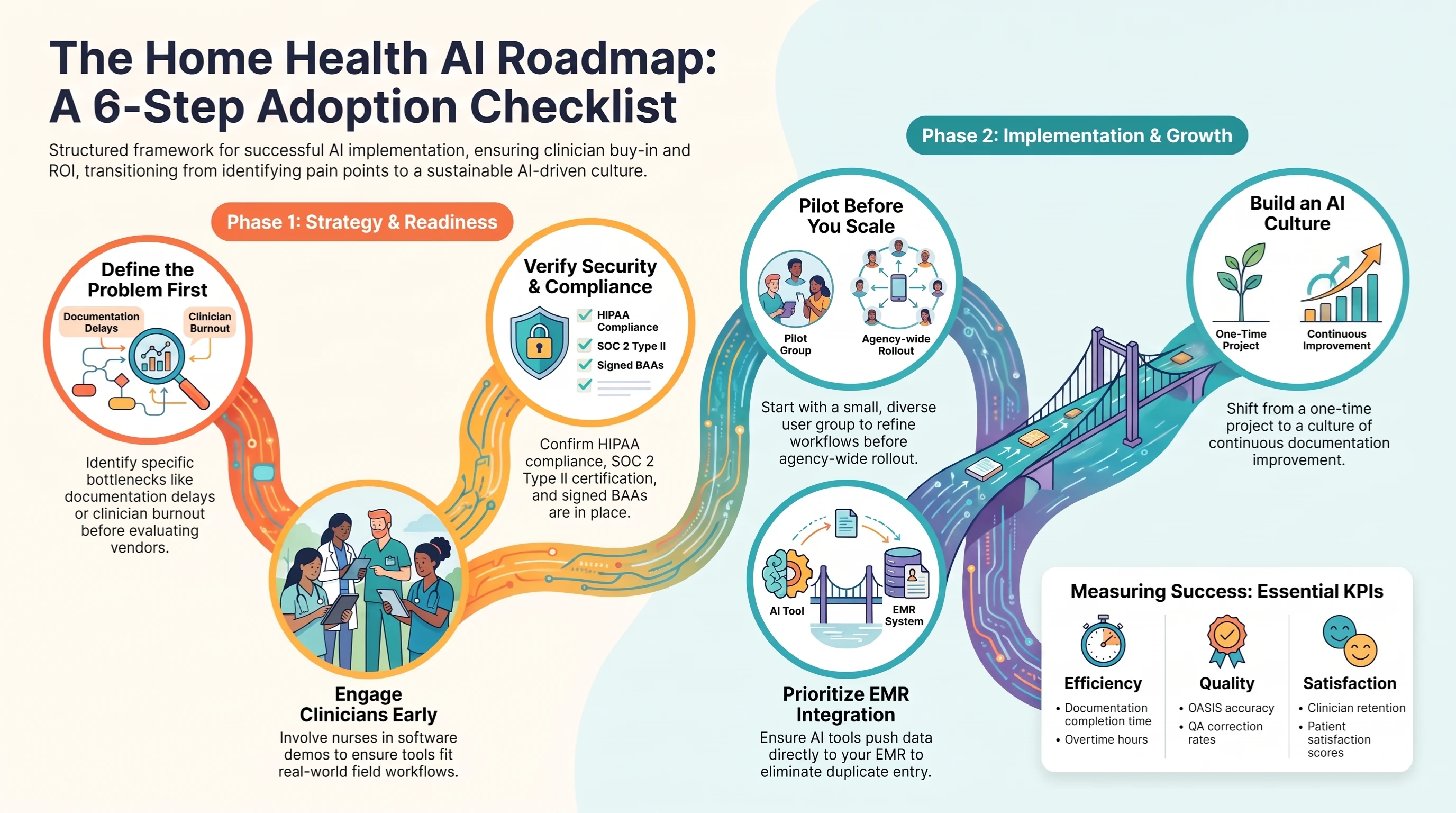
The home health AI adoption roadmap: Phase 1 gets strategy and readiness right, Phase 2 covers implementation and growth, measured with efficiency, quality, and satisfaction KPIs.
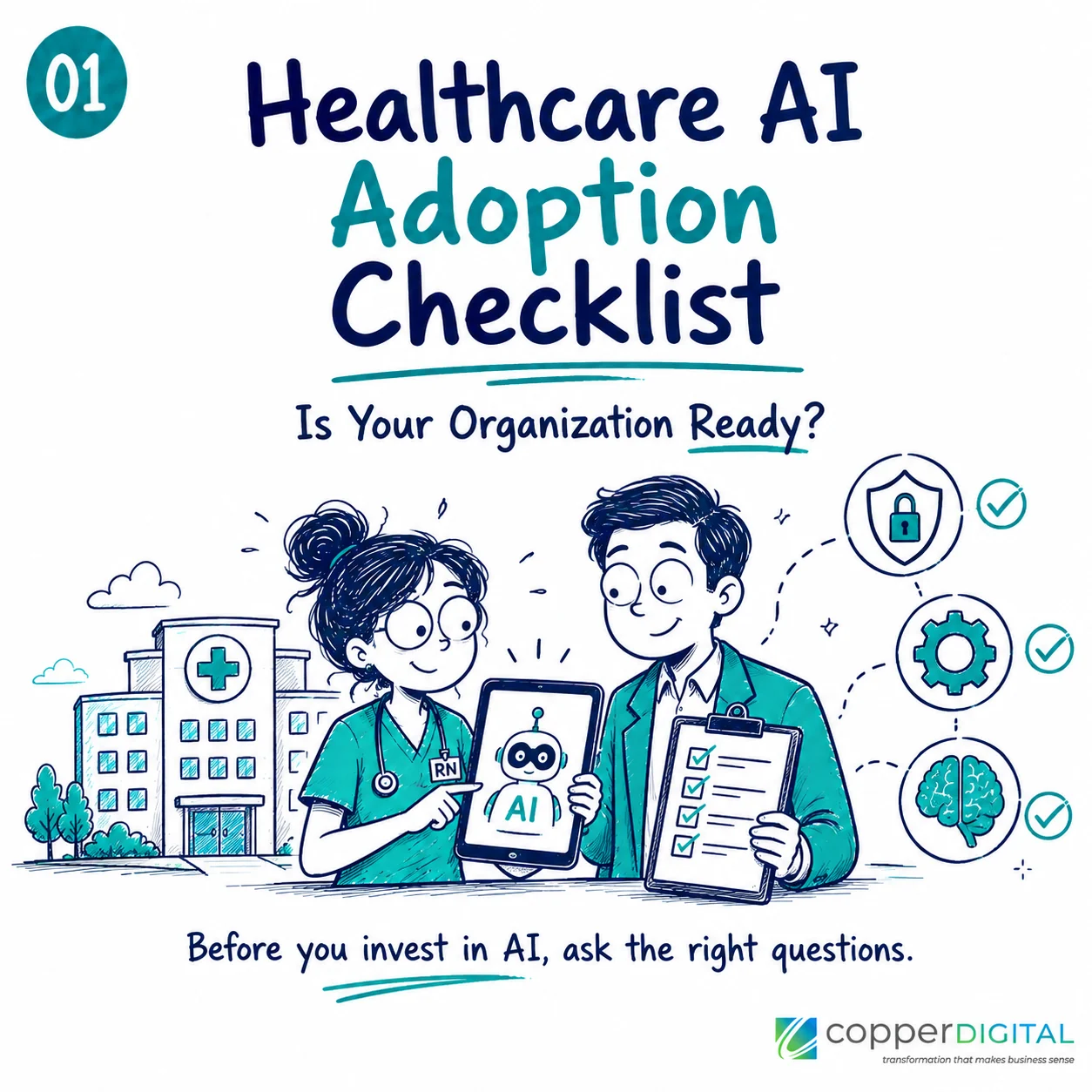
Before you invest in AI, ask the right questions.
Step 1: Define the Problem Before Choosing an AI Solution
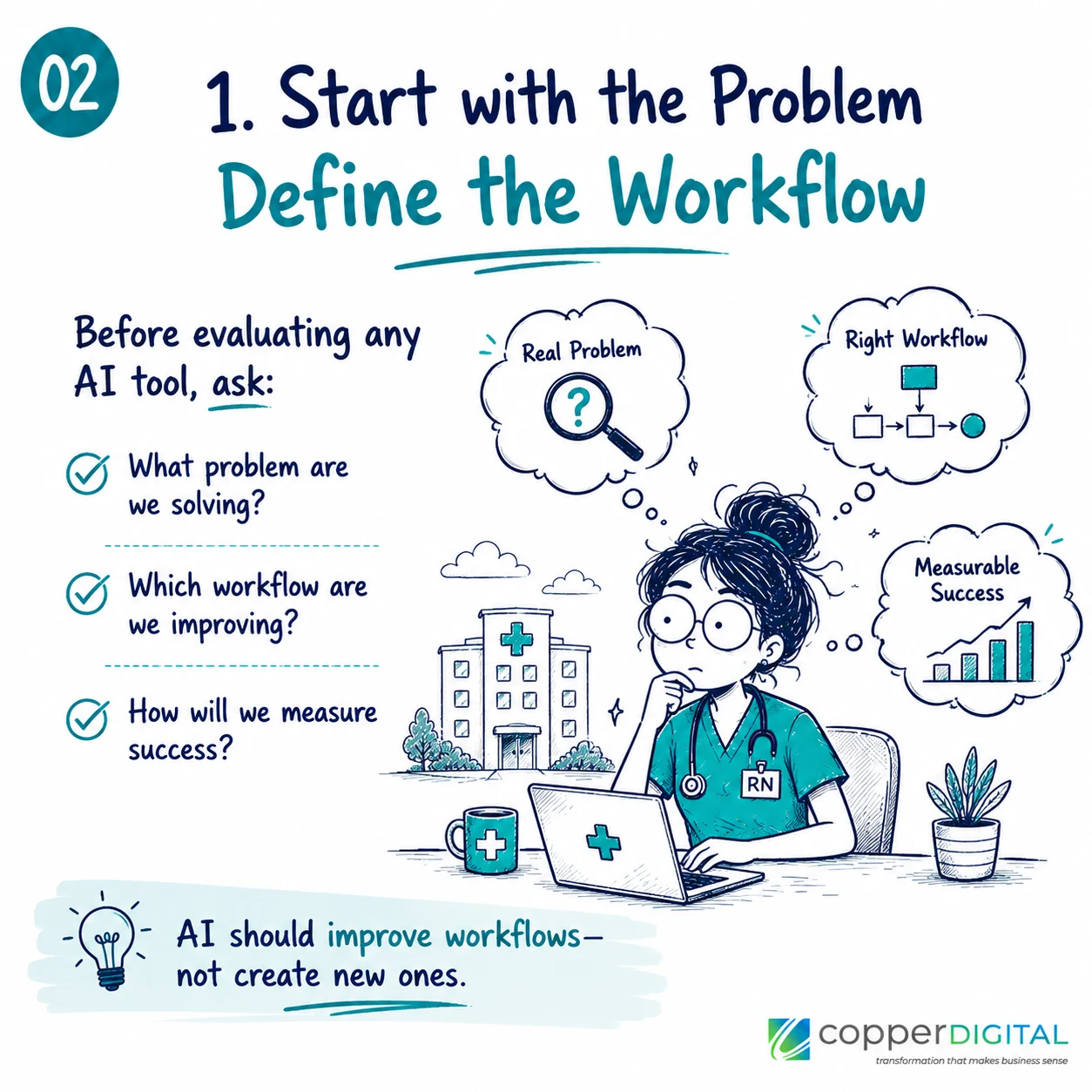
AI should improve workflows, not create new ones.
AI should never be the starting point of your digital transformation strategy, the problem should. One of the most common reasons AI projects fail is that agencies adopt technology before clearly identifying what they're trying to fix.
Is your team struggling with after-hours documentation? Are Start of Care (SOC) assessments delaying billing? Is your QA department overloaded? By documenting your current workflows and measuring baseline performance, you'll be able to compare results after implementation and accurately calculate ROI.
Checklist
- Identify your biggest operational challenge
- Measure current documentation time
- Track overtime caused by charting
- Identify billing delays
- Review clinician feedback
- Define success metrics
- Establish ROI goals
Step 2: Involve Clinical Staff Early
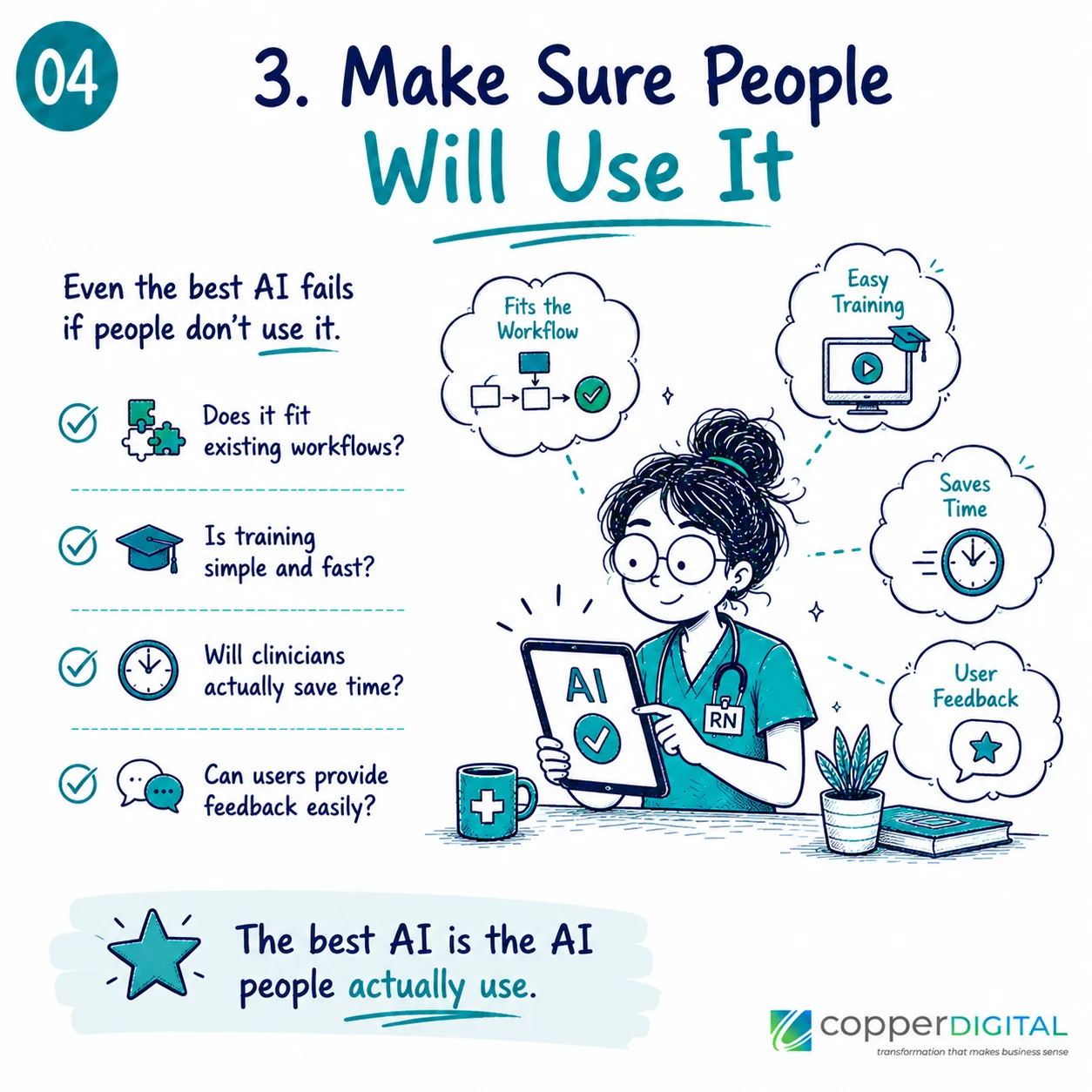
The best AI is the AI people actually use.
Successful AI adoption begins with the people who will use the technology every day. Nurses, therapists, QA specialists, coding teams, and clinical managers should be involved from the start.
Involving clinicians early reduces resistance to change. When staff participate in software evaluations, pilot programs, and workflow design, they feel ownership over the outcome, and agencies that prioritize clinician engagement generally see higher adoption rates and smoother implementations.
Checklist
- Include nurses in software demos
- Gather workflow pain points
- Identify documentation bottlenecks
- Collect feedback from therapists
- Include QA and coding staff
- Appoint AI champions
- Address staff concerns early
Step 3: Evaluate AI Features That Matter
Not all AI platforms are designed specifically for home health. Many general-purpose AI documentation tools work well in hospitals or outpatient clinics but miss home-health-specific workflows like OASIS, PDGM, and post-acute care.
Rather than focusing on marketing claims, evaluate features that directly improve clinician productivity and documentation quality, and that fit your agency's daily operations. (For a category-by-category breakdown, see our home health software comparison guide.)
Checklist
- Voice documentation and ambient AI capture
- Mobile iPad workflows and photo documentation
- OASIS-E2 support
- Skilled nursing visit documentation
- Human review before submission
- AI gap detection
- ICD-10 coding suggestions
- Care plan assistance
- EMR integration
Step 4: Verify Security, HIPAA, and Compliance
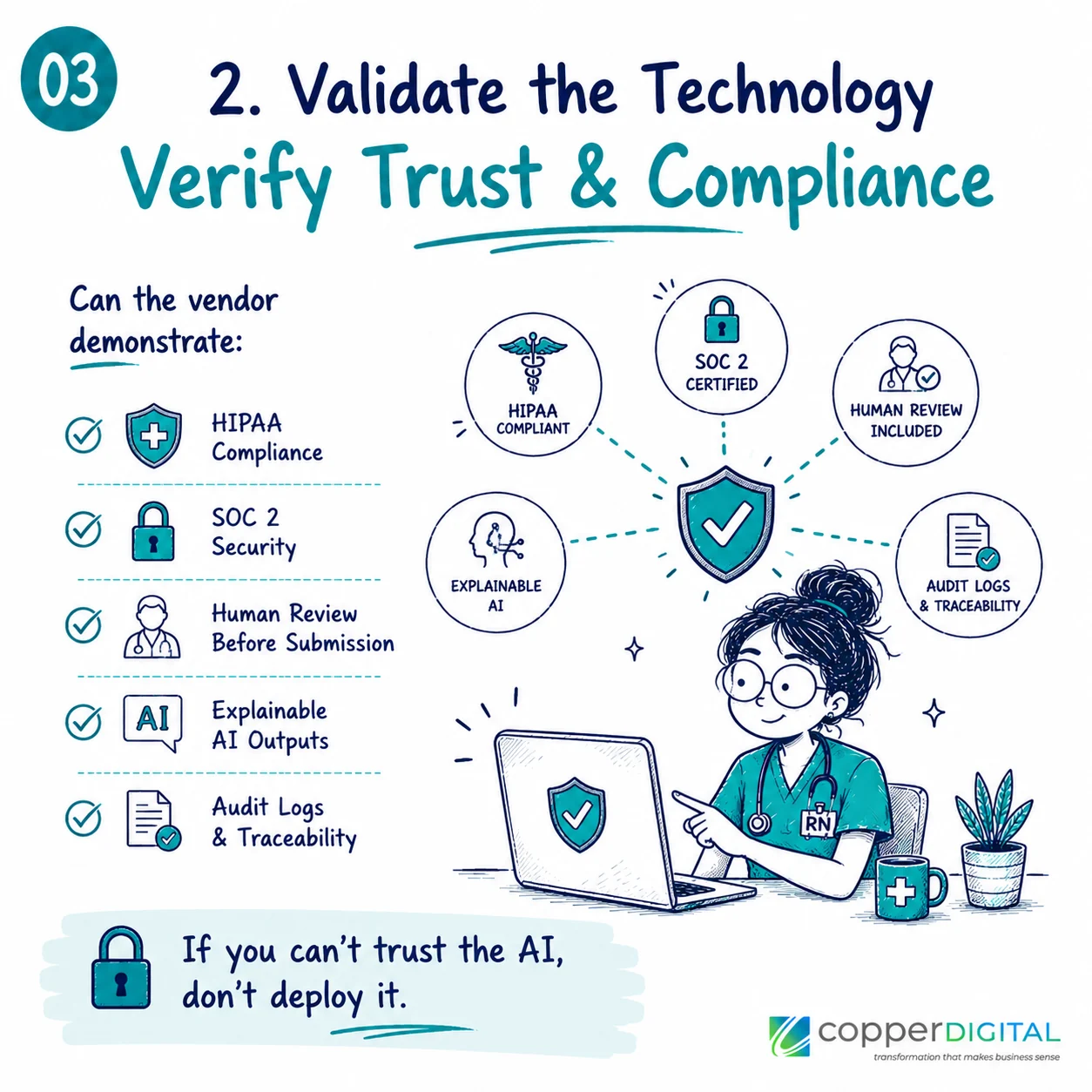
If you can't trust the AI, don't deploy it.
Healthcare AI handles Protected Health Information (PHI), making security and compliance among the most important considerations during vendor evaluation. A platform that improves documentation but lacks appropriate safeguards can expose your agency to HIPAA violations, financial penalties, and reputational damage.
Before implementing any AI solution, verify a signed Business Associate Agreement (BAA), HIPAA-compliant infrastructure, SOC 2 Type II certification, encryption in transit and at rest, detailed audit logs, and role-based access controls. Understand where data is processed, whether it's used to train models, and how long it's retained. Security should never be treated as a feature, it's a foundational requirement.
Checklist
- HIPAA compliance
- Business Associate Agreement (BAA)
- SOC 2 Type II certification
- End-to-end encryption
- Audit logging
- Role-based permissions
- Secure cloud hosting
- Disaster recovery plan
- Data retention policy
- Access monitoring
Step 5: Ensure EMR Integration
The goal of AI is to reduce administrative work, not create more of it. If clinicians have to manually copy AI-generated documentation into the EMR, much of the efficiency disappears.
A strong AI platform should integrate directly with your existing home health EMR, letting clinicians review documentation before securely pushing it into the record. When evaluating vendors, request demonstrations using your existing documentation process, and watch how information moves from patient visit to completed chart.
Checklist
- WellSky (Kinnser) integration
- Homecare Homebase integration
- Axxess integration
- MatrixCare integration
- KanTime integration
- API availability
- Direct documentation push
- Minimal duplicate entry
- Referral workflow integration
Step 6: Train Your Team
Technology adoption depends on people, not software. Even the most advanced AI platform will fail if clinicians don't understand how it works or don't trust the documentation it generates.
Training should extend beyond software tutorials to cover AI capabilities, limitations, documentation review responsibilities, privacy requirements, and best practices. Clinicians need confidence that AI is assisting them, not replacing their clinical judgment.
Checklist
- Initial onboarding
- Hands-on training
- Documentation review process
- AI limitations education
- HIPAA refresher
- Workflow simulations
- Ongoing coaching
- Quarterly refresher sessions
Step 7: Start with a Pilot Program
Rolling out AI across an entire organization on day one introduces unnecessary risk. A structured pilot lets agencies evaluate performance, identify workflow improvements, collect feedback, and measure results before scaling.
Select a diverse group of users representing different experience levels, visit types, and disciplines. Monitor documentation time, user satisfaction, documentation quality, and technical issues. A successful pilot creates internal advocates who help train colleagues during full implementation.
Checklist
- Select representative clinicians
- Establish pilot objectives
- Measure documentation time
- Track quality improvements
- Gather user feedback
- Resolve workflow issues
- Refine implementation plan
Step 8: Measure Success
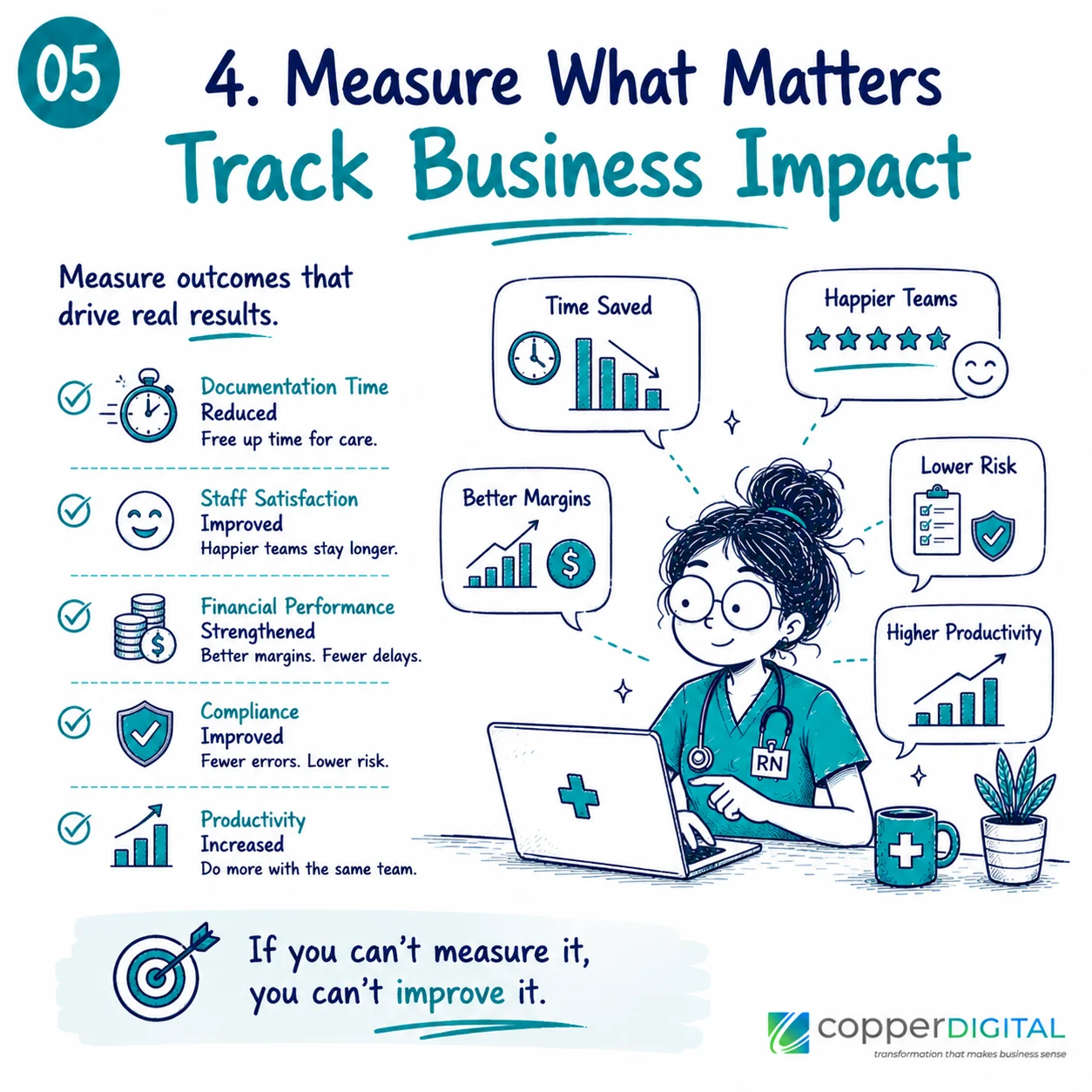
If you can't measure it, you can't improve it.
AI implementation should be evaluated using objective performance data, not anecdotal feedback alone. Establish KPIs before implementation so you can accurately compare improvements after deployment.
The most successful agencies measure documentation efficiency, clinician satisfaction, financial performance, billing speed, compliance, and patient outcomes. Continuous measurement ensures AI keeps delivering value long after go-live.
Recommended KPIs
- Documentation completion time
- After-hours charting
- Overtime hours
- OASIS accuracy
- QA correction rate
- Billing turnaround time
- Claim denial rate
- PDGM reimbursement
- Clinician satisfaction
- Staff retention
- Patient satisfaction
Step 9: Build an AI Culture, Not Just an AI Project
AI is not a one-time software implementation, it's an ongoing transformation of how healthcare teams work. Agencies that achieve the greatest success create a culture of continuous improvement where technology supports clinicians rather than disrupting them.
Leadership should communicate goals, celebrate early wins, encourage feedback, and continuously optimize workflows. The goal isn't simply to adopt AI, it's to build an organization where clinicians spend less time documenting and more time caring for patients.
Checklist
- Celebrate adoption milestones
- Share success stories
- Encourage clinician feedback
- Update workflows regularly
- Monitor new AI capabilities
- Review KPIs quarterly
- Continue staff education
- Promote responsible AI use
AI Adoption Checklist by Role
For Agency Owners
- Define business goals
- Set budget and ROI expectations
- Choose scalable AI solutions
- Ensure vendor support
- Monitor financial impact
For Directors of Nursing (DONs)
- Standardize documentation
- Monitor clinical quality
- Support nurse adoption
- Reduce burnout
- Track compliance
For Clinical Managers
- Train clinicians
- Review documentation quality
- Monitor productivity
- Collect workflow feedback
- Identify improvement opportunities
For Nurses
- Learn AI workflows
- Always review AI-generated documentation
- Report inaccuracies
- Use AI to reduce repetitive work
- Focus more time on patient care
For Operations Managers
- Improve workflow efficiency
- Reduce documentation delays
- Monitor implementation
- Coordinate vendor support
- Measure operational KPIs
Common AI Adoption Mistakes to Avoid
- Buying AI without defining the problem
- Choosing software based on features alone
- Ignoring clinician feedback
- Skipping pilot programs
- Failing to train staff
- Not measuring ROI
- Assuming AI replaces clinical judgment
- Choosing vendors without healthcare expertise
- Ignoring security and compliance requirements
Healthcare AI Adoption Readiness Assessment
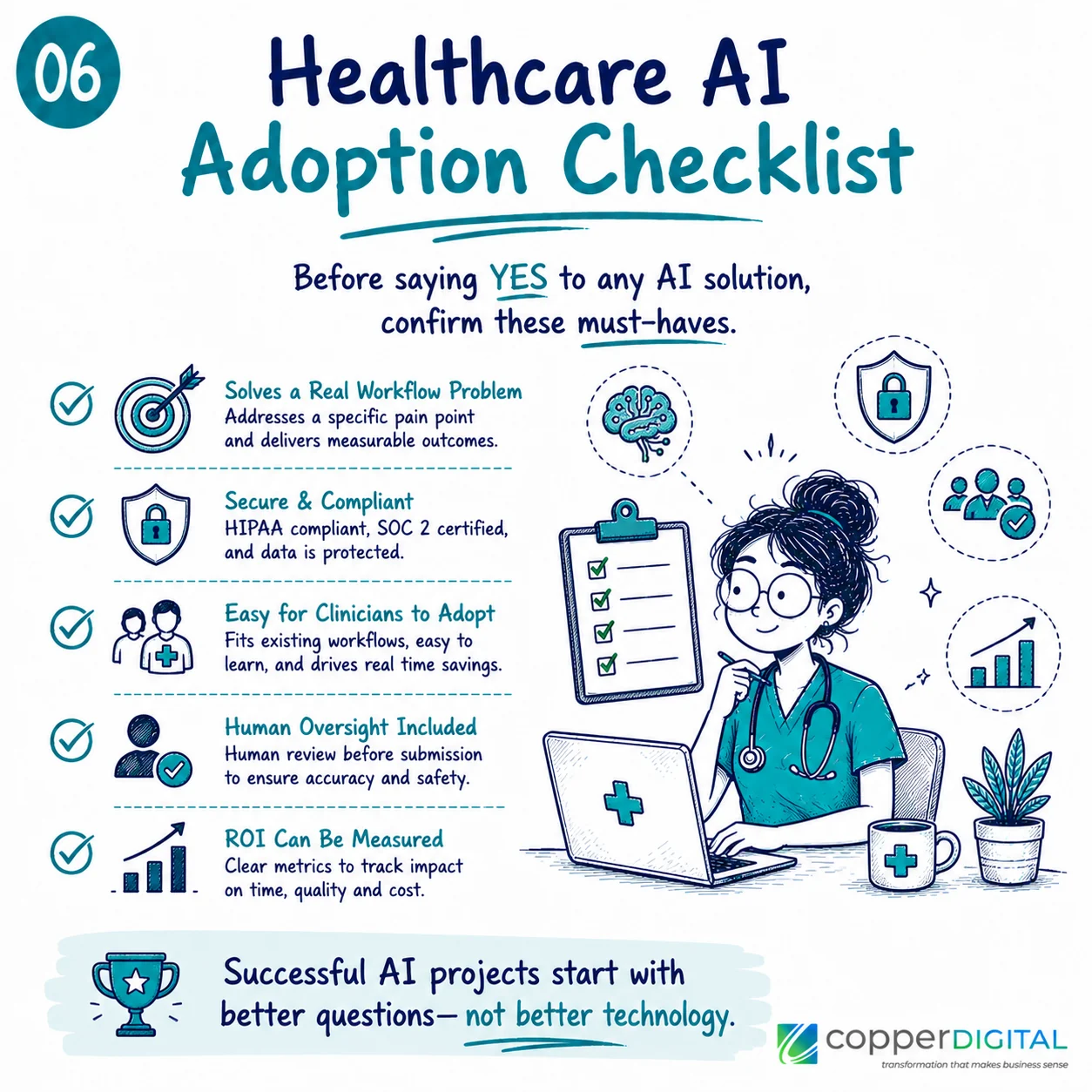
Successful AI projects start with better questions, not better technology.
Before purchasing any AI platform, ask your team these questions:
- Do we know exactly what problem we're trying to solve?
- Is our clinical documentation consistent enough for AI?
- Are our nurses involved in selecting the technology?
- Have we verified HIPAA compliance and SOC 2 Type II certification?
- Will AI integrate directly into our existing EMR?
- Have we established human review procedures?
- Is leadership committed to long-term adoption?
- Do we have an AI governance committee?
- Have we planned staff training?
- Do we know how we'll measure success?
If your agency can confidently answer "yes" to these questions, you're well-positioned for a successful AI implementation.
Final Thoughts
AI has the potential to transform home health, but only when implemented thoughtfully. The most successful agencies view AI as a tool that empowers clinicians, strengthens documentation quality, improves compliance, and reduces administrative burden. Technology alone doesn't create better care, people do. The agencies that involve nurses, prioritize workflow, measure outcomes, and continuously improve their AI strategy will be best positioned to thrive.
🚀 Adopting AI documentation? Start here. Copper Digital is built specifically for home health, HIPAA-compliant and SOC 2 Type II, integrated with WellSky (Kinnser), with a nurse reviewing and approving every note before it reaches the EMR. Explore AI tools for home health nurses, review our compliance approach, or book a demo.
📘 Free download: The Home Health Documentation Playbook, a 232-page guide to OASIS-E, Medicare compliance, PDGM, and AI-assisted documentation, with 150+ point-of-care checklists to support your AI rollout.
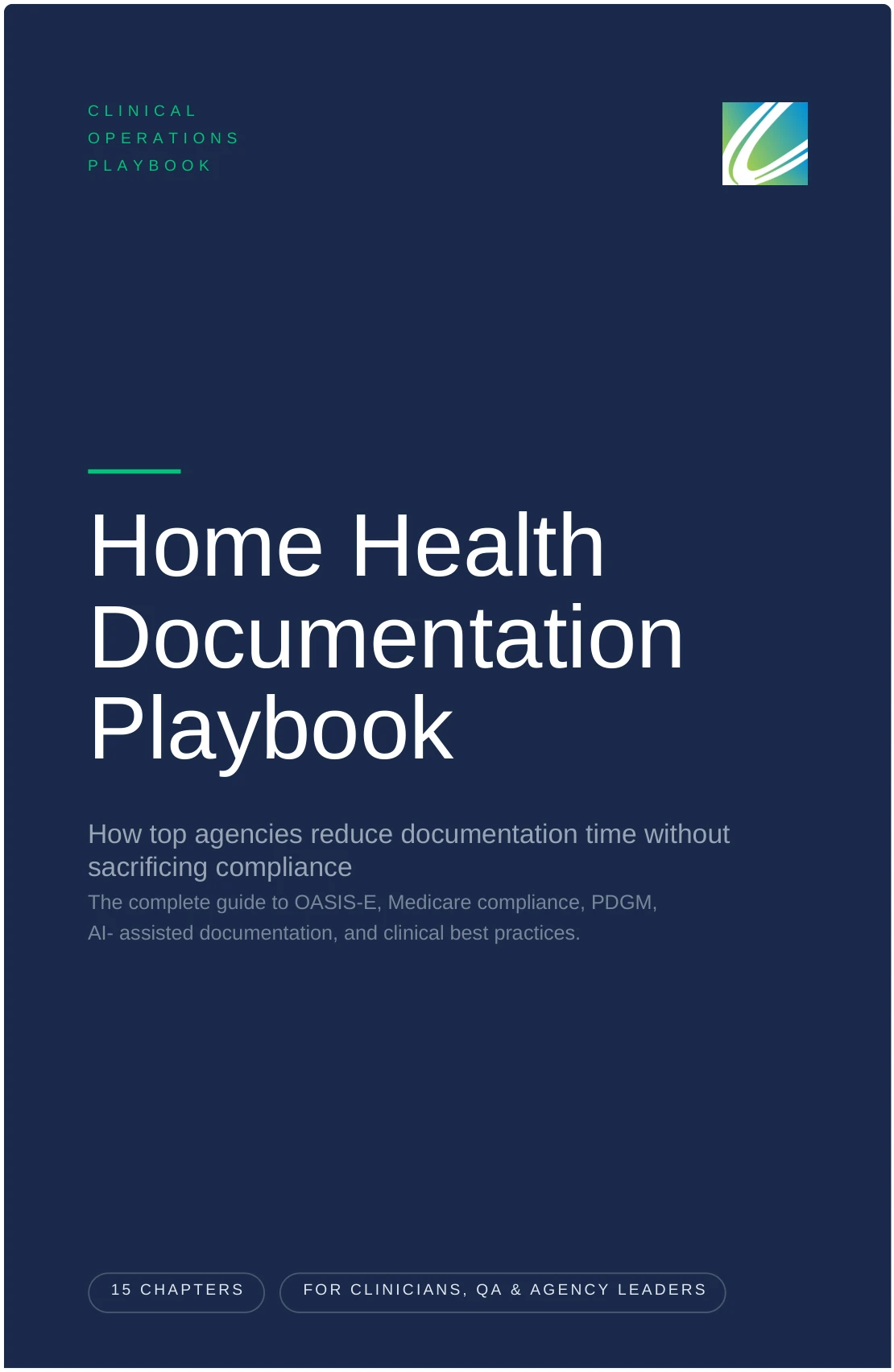
Home Health Documentation Playbook
The complete guide to OASIS-E, Medicare compliance, PDGM, and AI-assisted documentation. Learn how top agencies reduce documentation time without sacrificing compliance.
Bottom Line
A healthcare AI adoption checklist keeps home health agencies from failing at implementation even when the technology works: define the problem first, involve clinicians early, verify HIPAA and SOC 2 Type II security, ensure EMR integration, train the team, pilot before scaling, and measure with clear KPIs. AI should augment clinicians, not replace them, and success is a culture of continuous improvement, not a one-time project.

Arvind Sarin is the founder of Copper Digital. For the past year he has spent three days a week inside a 500+ census Texas home health agency, building AI documentation that finishes OASIS and visit notes the same day, with a nurse reviewing and approving every note. He writes about home health documentation, OASIS, Medicare compliance, and applying AI responsibly in clinical workflows.
Frequently asked
Frequently asked questions
Healthcare AI adoption is the process of implementing artificial intelligence tools into clinical, administrative, and operational workflows to improve efficiency, documentation, patient care, and decision-making.
Join the conversation
Leave a comment
Related reading
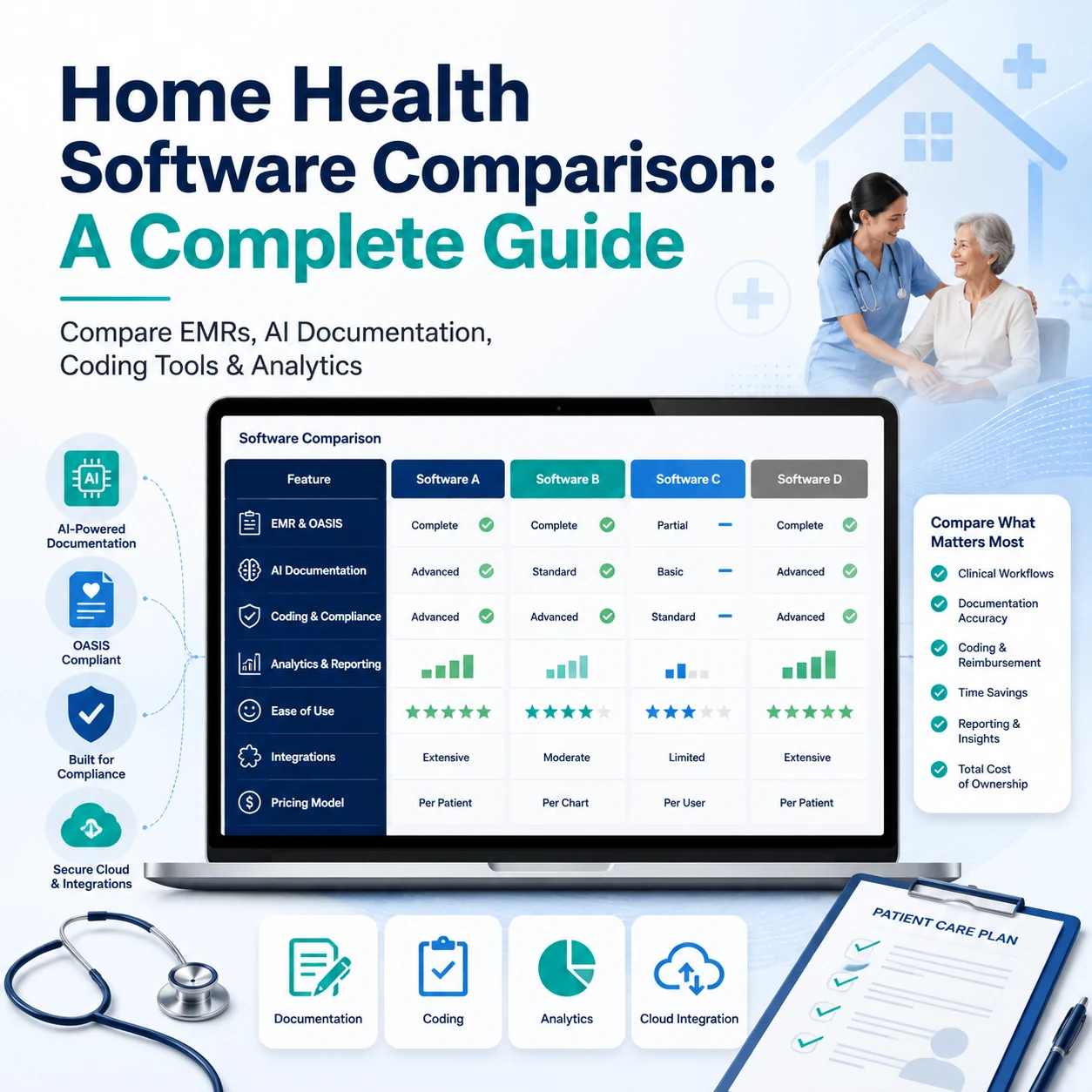
Home Health Software Comparison: A Complete Guide (2026)
The best home health software in 2026 isn't one platform, it's a stack. This guide compares EMRs, AI documentation, coding, OASIS QA, and analytics, with vendor strengths and limitations, comparison tables, and a build-your-stack checklist.
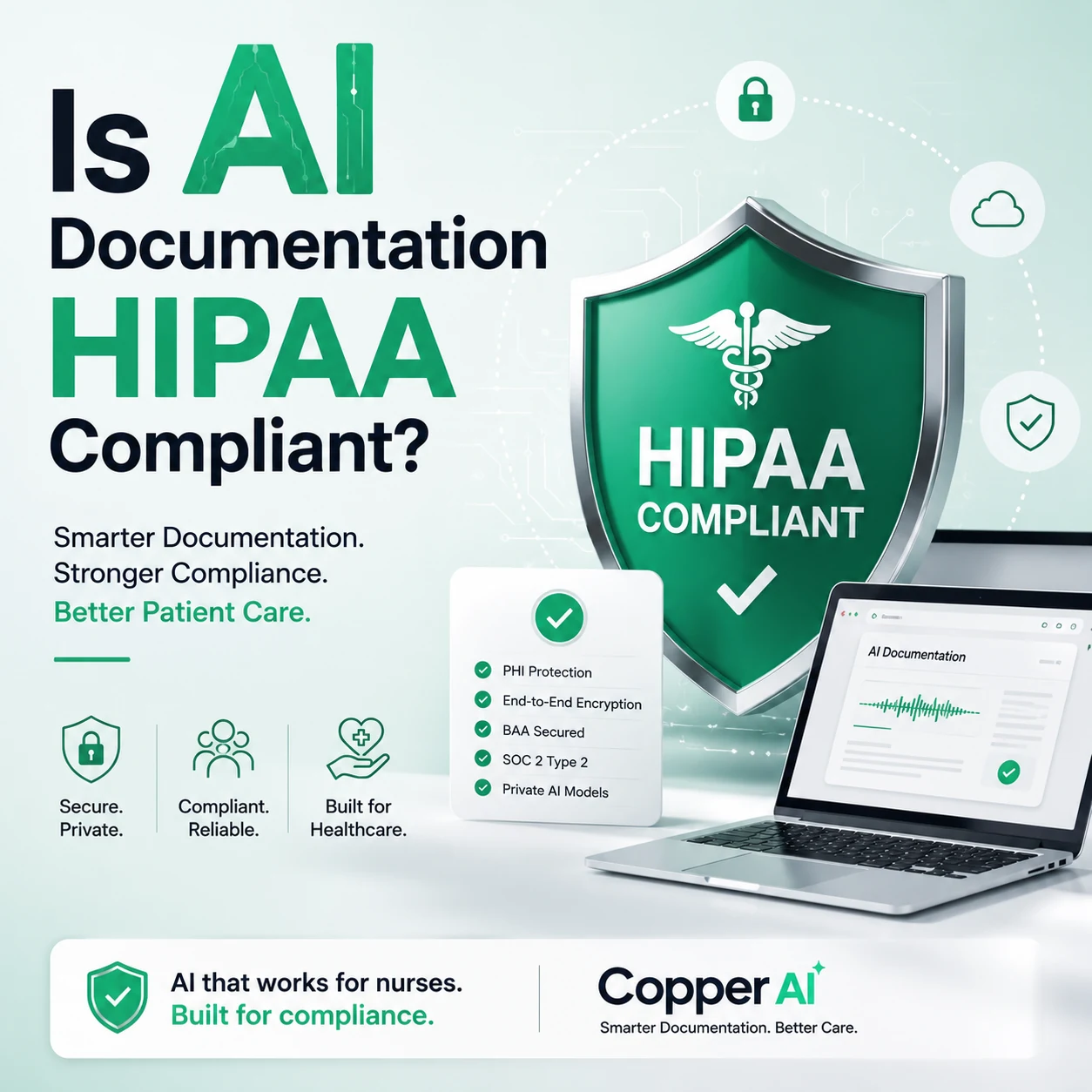
Is AI Documentation HIPAA Compliant?
Is AI documentation HIPAA compliant? Yes, but only when it's built for healthcare. This guide covers what HIPAA requires of AI documentation, the security features to look for, common myths, and the exact questions to ask before you share PHI with any AI vendor.
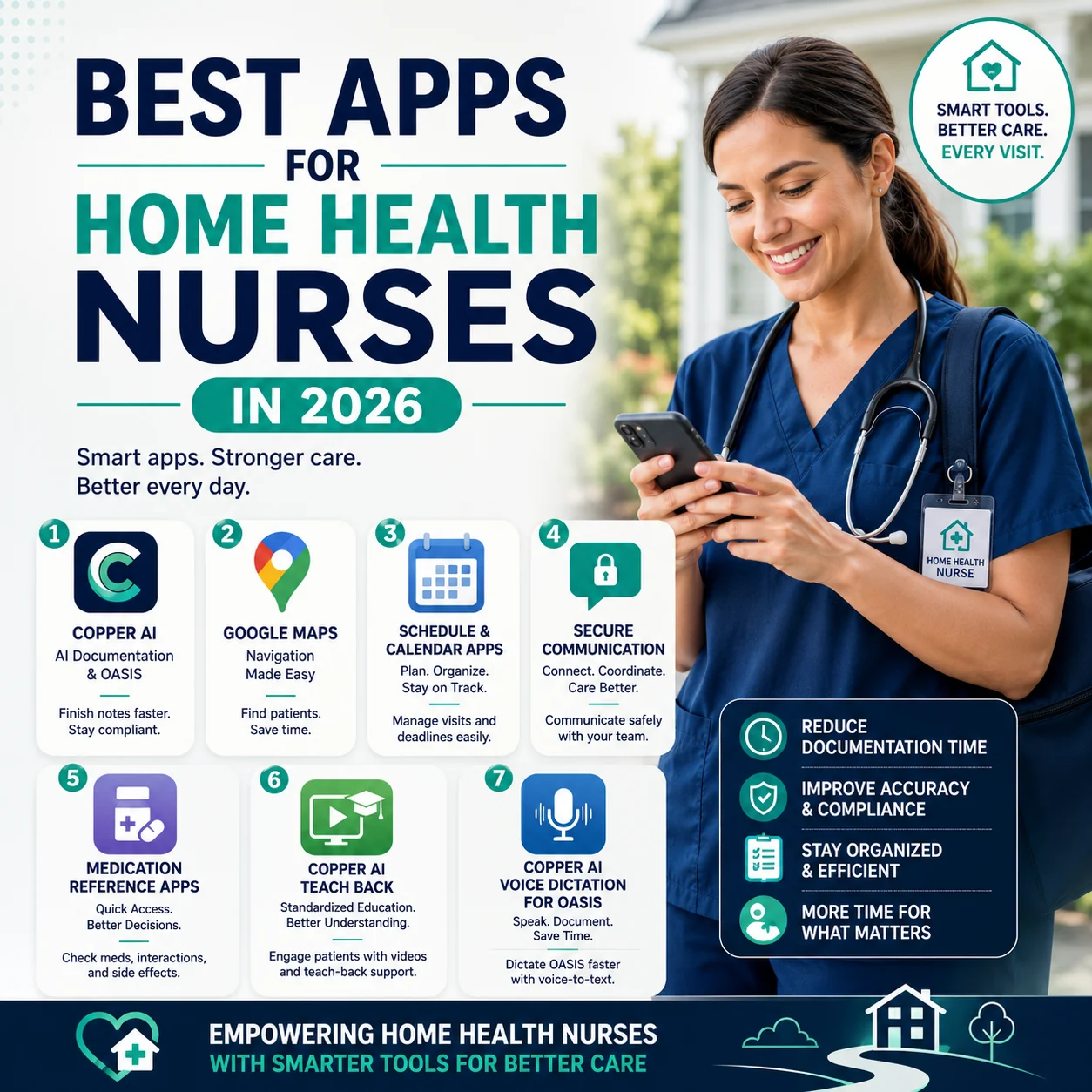
Best Apps for Home Health Nurses in 2026
Home health nurses juggle navigation, documentation, communication, medications, and OASIS every day. These are the best apps for home health nurses in 2026, from AI-powered documentation and OASIS voice dictation to navigation, scheduling, and secure communication tools.