
Home Health Documentation
Home Health Documentation is the complete clinical record created during the delivery of skilled home healthcare services
Definition
Home Health Documentation is the complete clinical record created during the delivery of skilled home healthcare services
Why it matters
Home Health Documentation is part of the Documentation vocabulary used across home health operations, documentation, and revenue cycle. Understanding it helps clinicians, QA leads, and administrators stay aligned on care quality and compliance.
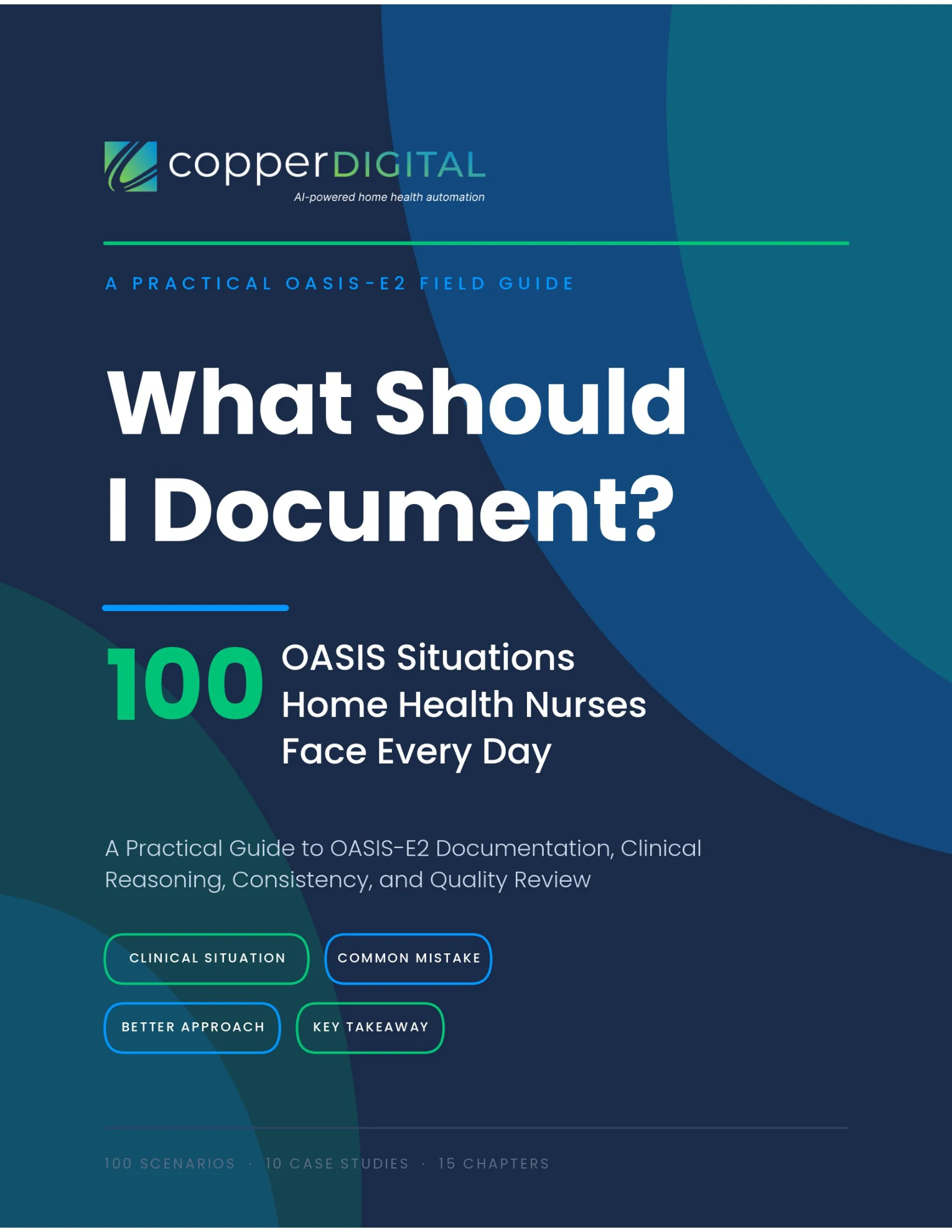
What Should I Document? 100 OASIS Situations Home Health Nurses Face Every Day
100 real OASIS scenarios, worked end to end — clinical situation, common mistake, better approach, and key takeaway. Built around OASIS-E2 (effective April 1, 2026) to turn what you assess into accurate, defensible documentation.
Related terms
Listen While You Read
Conversations on documentation
Episodes from Inside Home Health that put Home Health Documentation in operational context.





Related Blogs
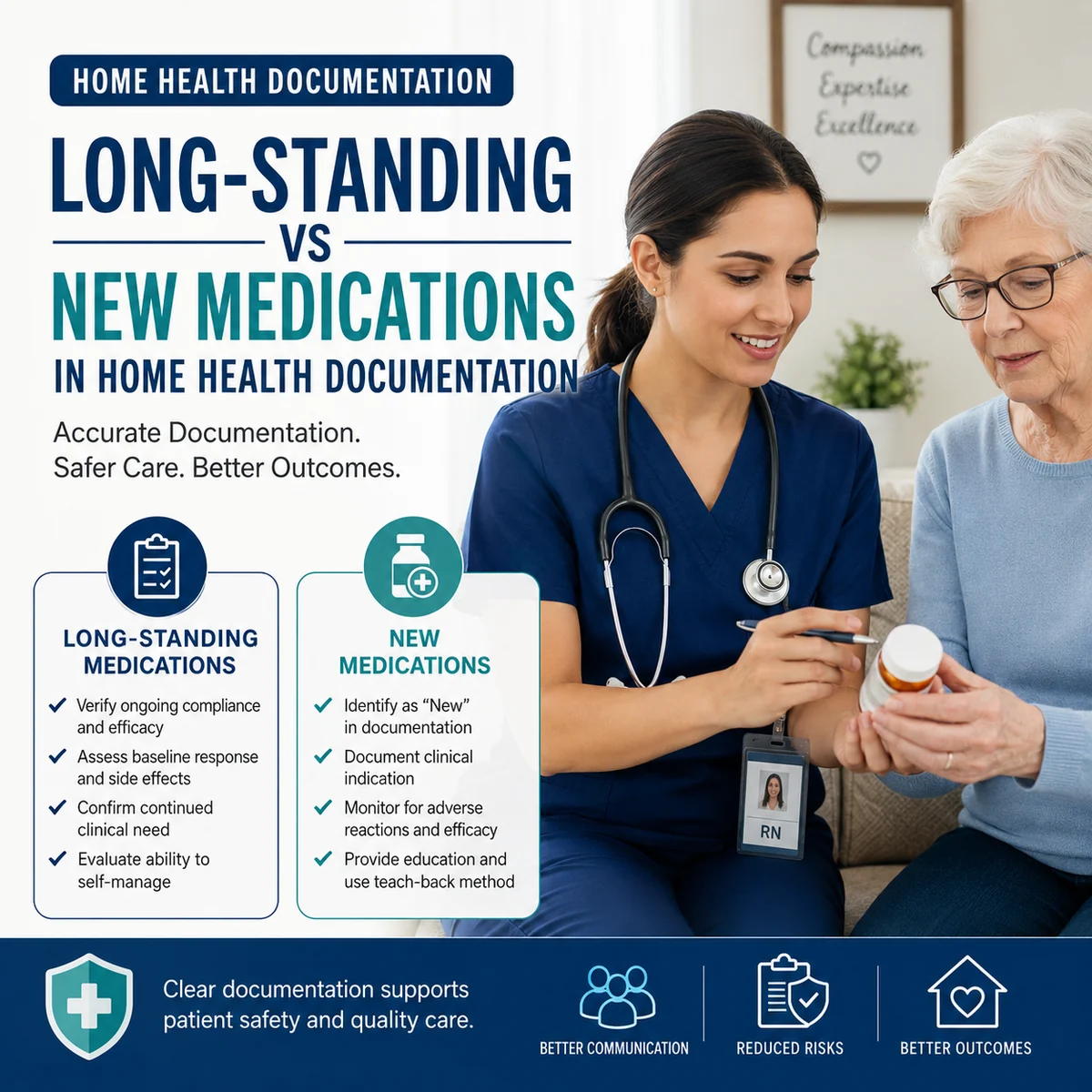
Long-Standing vs. New Medications in Home Health Documentation: What Nurses Need to Know
A patient's medication list often mixes drugs they've taken for years with brand-new prescriptions from a recent hospital stay, and the two need very different documentation. This guide breaks down what to document for long-standing vs. new medications, how to reconcile the regimen, and how to use teach-back to confirm understanding.

Why Home Health Documentation Is Driving Your Best Nurses Out the Door
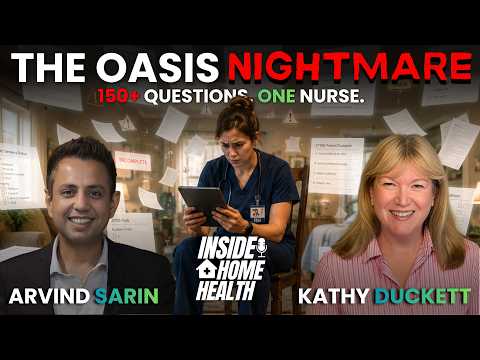
Home health was designed as a short-term bridge from the hospital to independence at home. Veteran nurse Kathy Duckett explains how we buried that purpose under 150+ OASIS questions, and why fixing documentation, not blaming nurses, is how agencies keep their best clinicians.
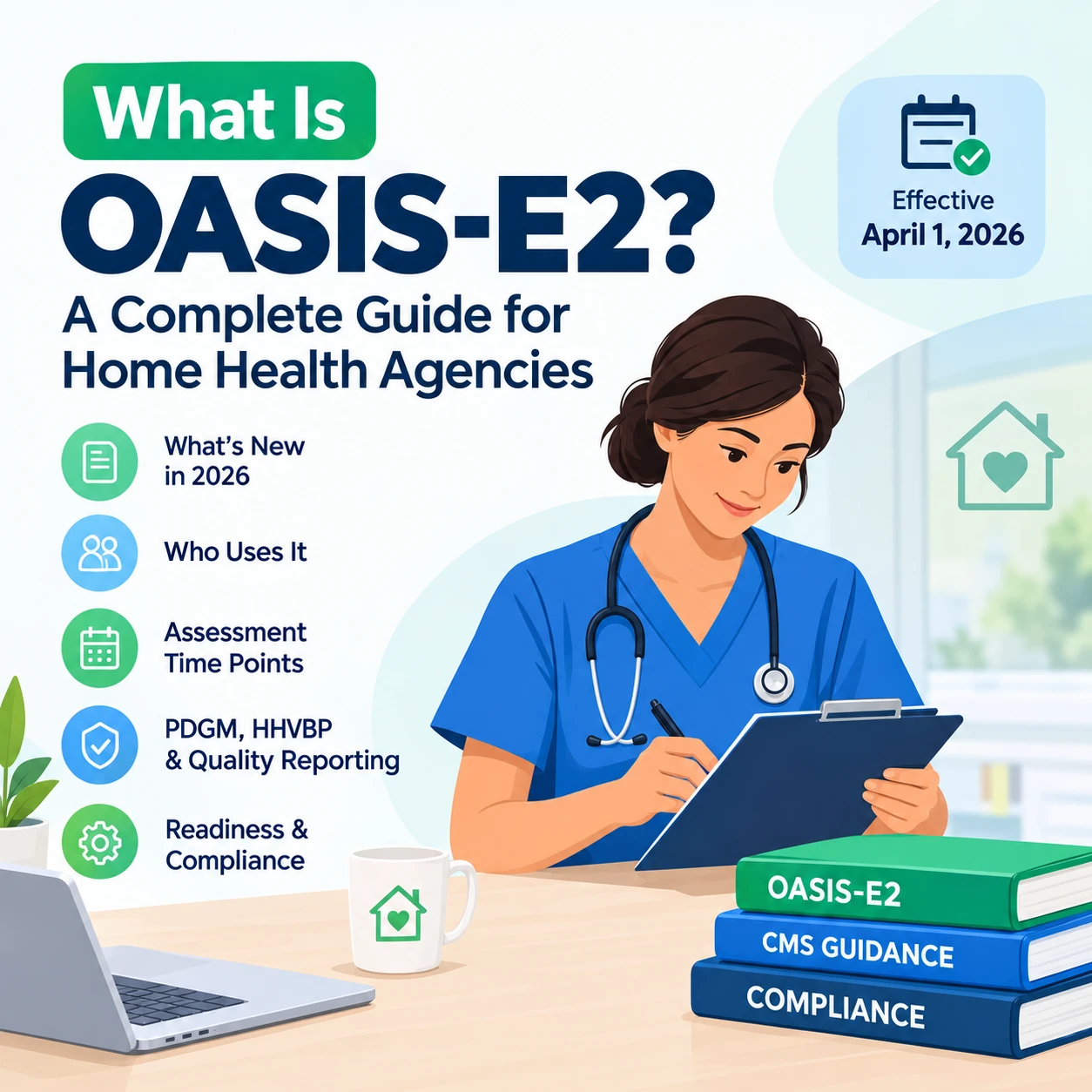
What Is OASIS-E2? A Complete Guide for Home Health Agencies
A practical guide to OASIS-E2: assessment changes, time points, quality and payment uses, EHR and iQIES readiness, and AI support that keeps clinicians in control.
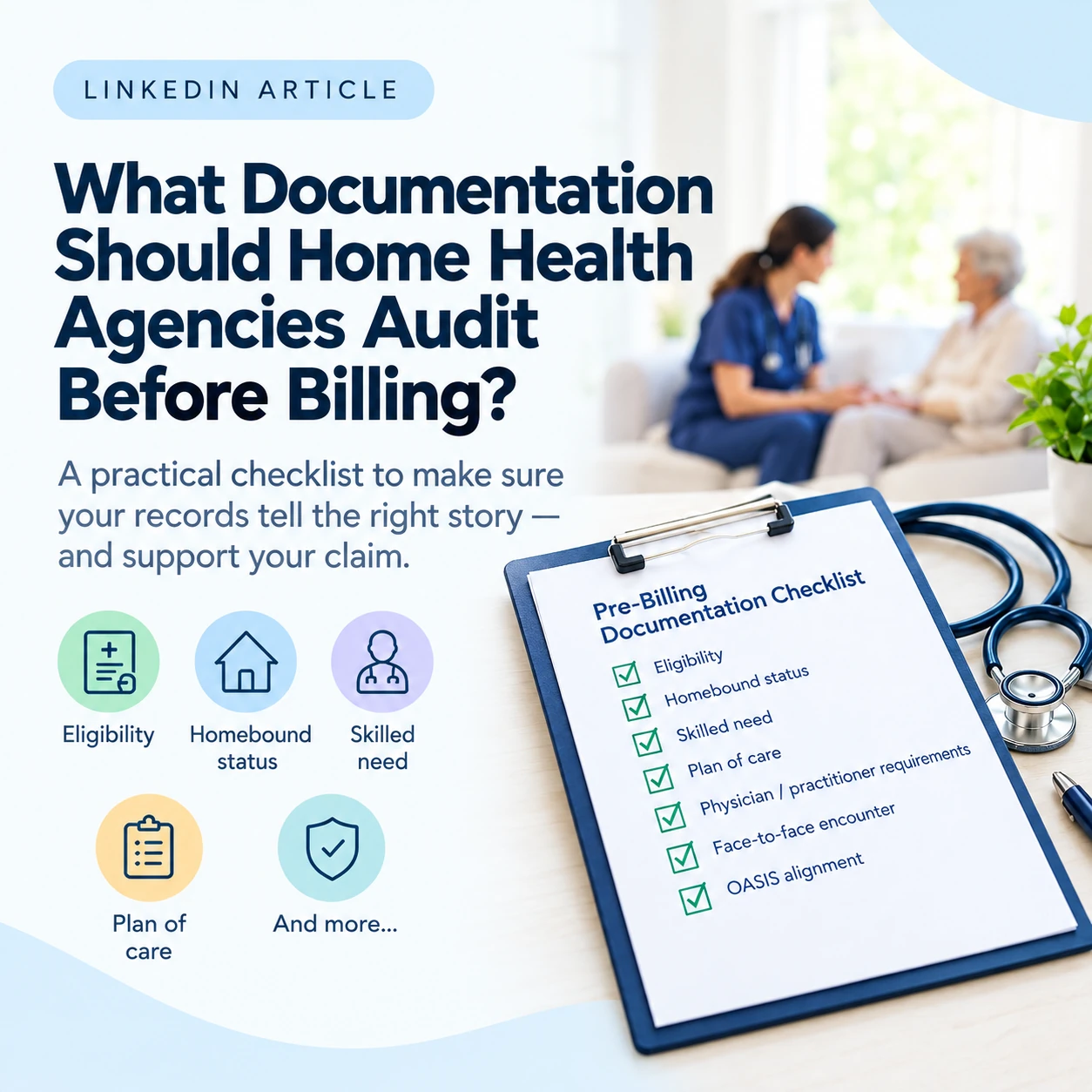
What Documentation Should Home Health Agencies Audit Before Billing?
Before billing, confirm that eligibility, medical necessity, orders, OASIS-E2, coding, and visit documentation tell a consistent story and support the services on the claim.
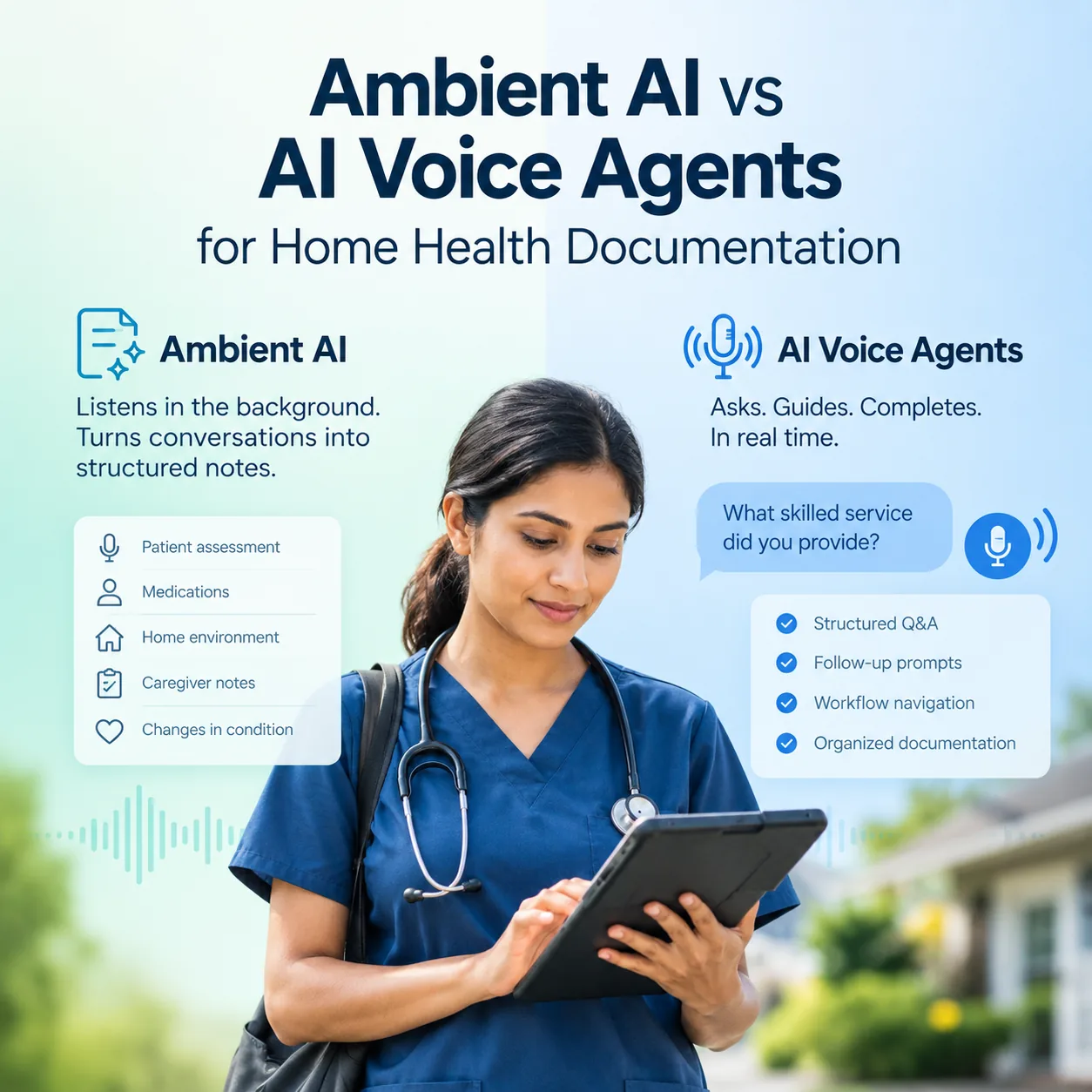
Ambient AI vs. AI Voice Agents for Home Health Documentation
Ambient AI listens and structures natural visit conversations, while AI voice agents actively ask, guide, and complete targeted workflows. The strongest home health documentation design may combine both, with the clinician reviewing every final record.