
Hospice Aggregate Cap (CAP)
The hospice aggregate cap is the annual statutory limit on total Medicare payments an individual hospice may retain, calculated from the applicable per-beneficiary cap amount and beneficiary count. Medicare payments above the calculated cap must be repaid.
Definition
The hospice aggregate cap is the annual statutory limit on total Medicare payments an individual hospice may retain, calculated from the applicable per-beneficiary cap amount and beneficiary count. Medicare payments above the calculated cap must be repaid.
Why it matters
Hospices must monitor cap exposure throughout the year because patient mix, length of stay, and payment timing can create a material repayment obligation.
Home Health Documentation Playbook
The complete guide to OASIS-E, Medicare compliance, PDGM, and AI-assisted documentation. Learn how top agencies reduce documentation time without sacrificing compliance.
Listen While You Read
Conversations on hospice
Episodes from Inside Home Health that put Hospice Aggregate Cap (CAP) in operational context.
 Ep 22
Ep 22Ep 22 · Jul 27, 2026
How AI Can Give Clinicians Their Time Back
 Genevieve FomWatch
  Ep 18
Ep 18Ep 18 · Jun 29, 2026
Building Healthcare AI Without Trust Is a Mistake
 Jeanette YatesWatch
  Ep 24
Ep 24Ep 24 · Sep 16, 2026
83% of Healthcare AI Has NO Governance (Here's Why That's Dangerous) | Dr. Lendra James
 Dr. Lendra James, DNP, MS, RN, NE-BCWatch
Related Blogs
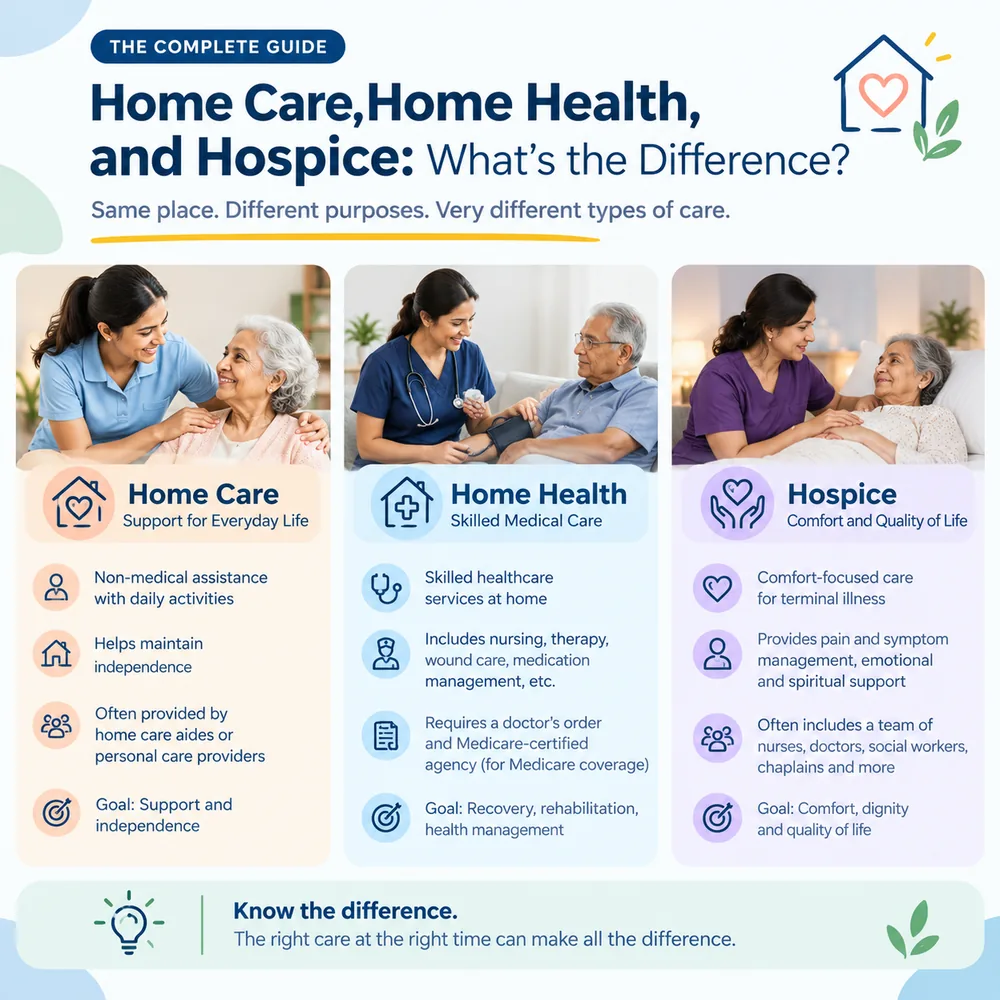
Home Care, Home Health, and Hospice: What's the Difference?
Home care supports daily life, home health provides skilled healthcare, and hospice focuses on comfort for terminal illness. Compare the services, eligibility, coverage, and goals of each model.
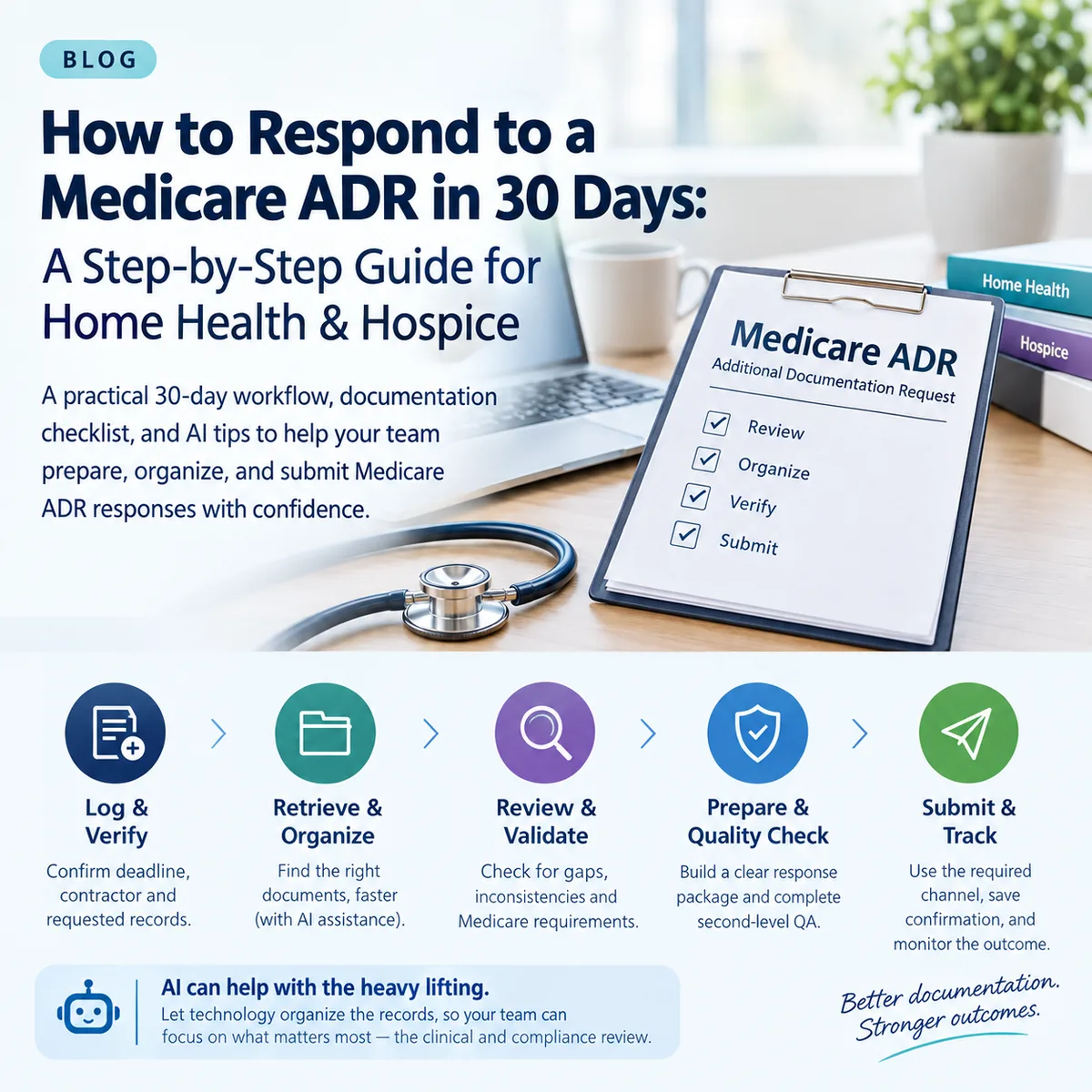
How to Respond to a Medicare ADR in 30 Days: A Step-by-Step Guide for Home Health & Hospice
A Medicare ADR turns an ordinary claim into a time-sensitive compliance project. Not every ADR is due in 30 days, so the goal isn't to "respond in 30 days" but to have a process that moves quickly, consistently, and defensibly. Here's a practical day-by-day workflow for home health and hospice, plus where AI can help.
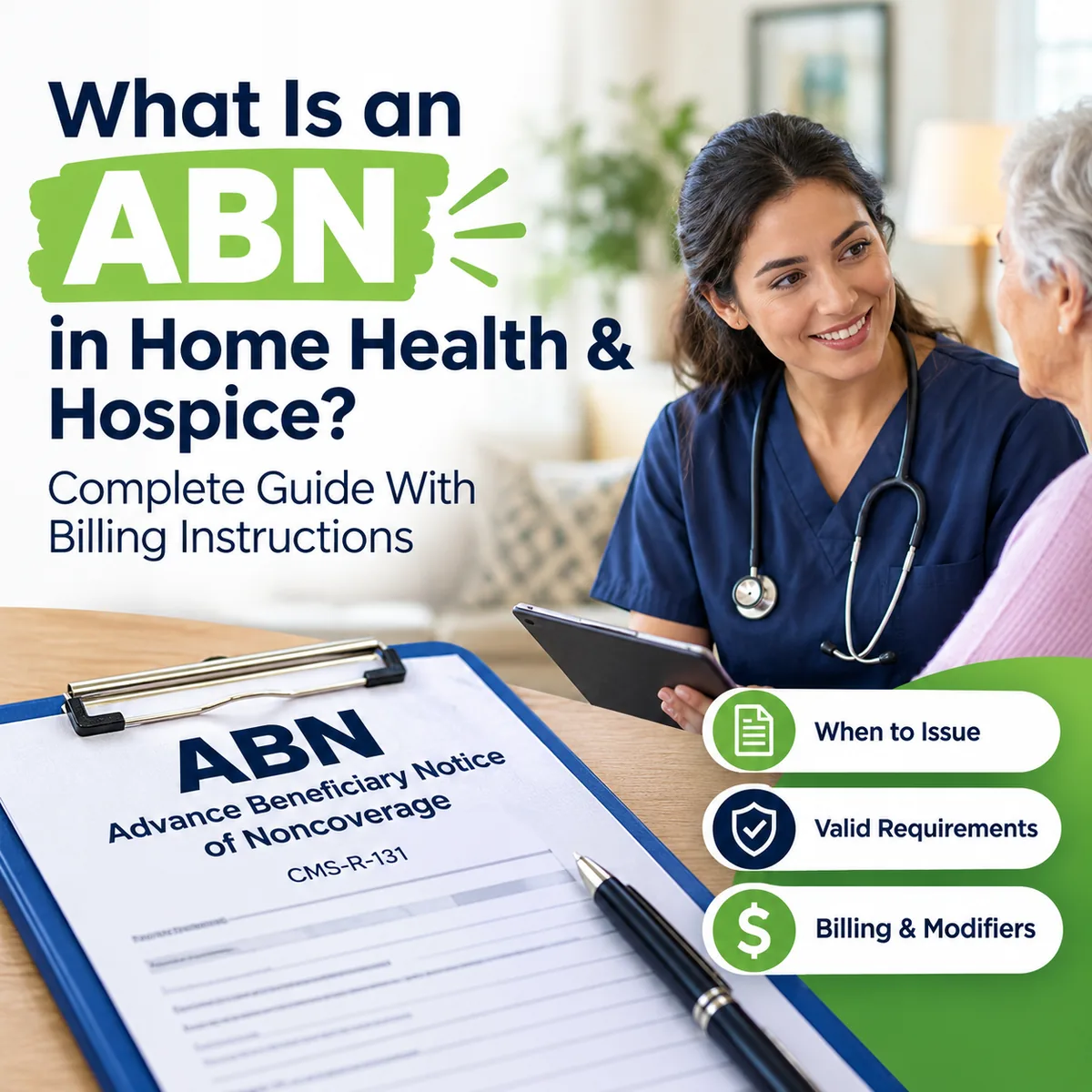
What Is an ABN in Home Health & Hospice? Complete Guide With Billing Instructions
A patient wants to continue care, but Medicare may not pay for it. Who owes the bill? That's where the Advance Beneficiary Notice of Noncoverage (ABN), Form CMS-R-131, comes in. Here's when it's required in home health and hospice, what makes it valid, the beneficiary's three choices, and how to bill it correctly.
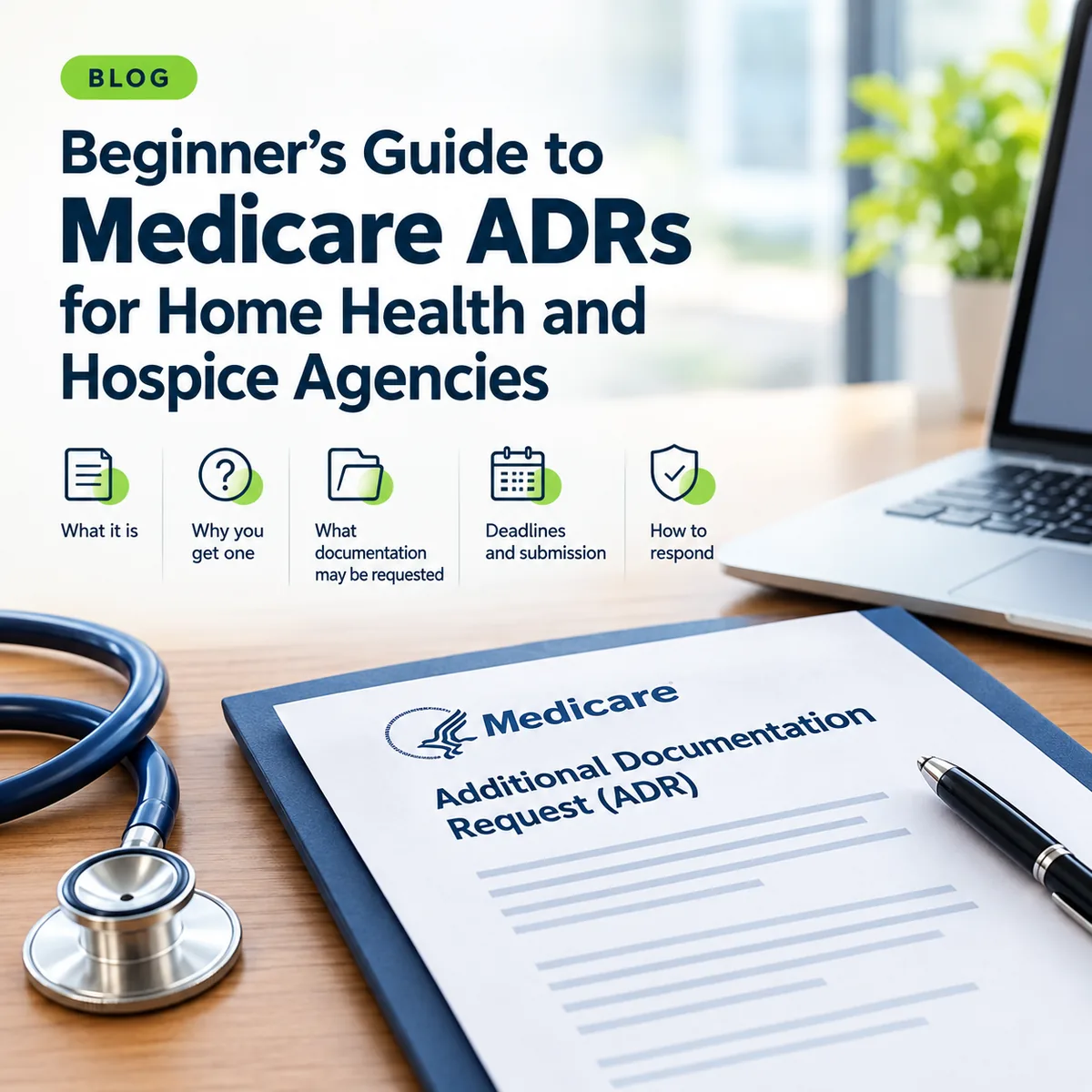
Beginner's Guide to Medicare ADRs for Home Health and Hospice Agencies
A letter from Medicare asking for additional records raises fast questions: what do they need, why this claim, how long do we have? That letter is often an Additional Documentation Request (ADR). Here's what an ADR is, why home health and hospice agencies get them, what's requested, the deadlines, and how to respond.

HIPAA in Home Health & Hospice: Understanding the Basics & Privacy Rules
Understand how HIPAA applies when home health and hospice teams work in patients' homes, travel with devices, communicate with families, and rely on outside vendors.