
Hospice
Medicare-covered end-of-life care for a terminal illness with a six-month prognosis.
Definition
Medicare-covered end-of-life care for a terminal illness with a six-month prognosis.
Why it matters
Hospice is part of the Medicare vocabulary used across home health operations, documentation, and revenue cycle. Understanding it helps clinicians, QA leads, and administrators stay aligned on care quality and compliance.
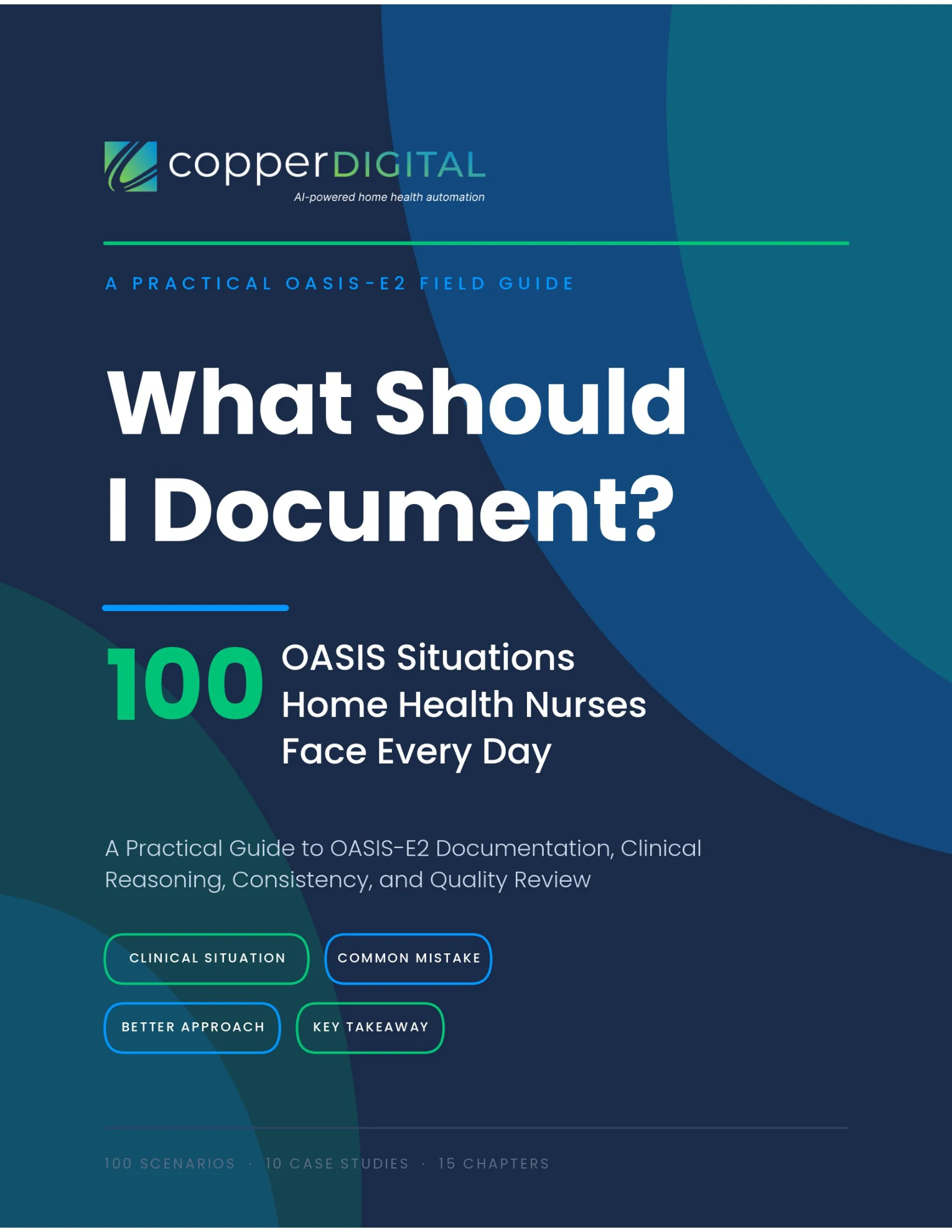
What Should I Document? 100 OASIS Situations Home Health Nurses Face Every Day
100 real OASIS scenarios, worked end to end — clinical situation, common mistake, better approach, and key takeaway. Built around OASIS-E2 (effective April 1, 2026) to turn what you assess into accurate, defensible documentation.
Related terms
Listen While You Read
Conversations on medicare
Episodes from Inside Home Health that put Hospice in operational context.
 Ep 13
Ep 13Ep 13 · May 18, 2026
Why OASIS Is Every Nurse's Biggest Nightmare
 Kathy DuckettWatch
  Ep 6
Ep 6Ep 6 · Mar 30, 2026
What Makes OASIS Documentation So DIFFICULT?
Kathy DuckettWatch  Ep 24
Ep 24Ep 24 · Sep 16, 2026
83% of Healthcare AI Has NO Governance (Here's Why That's Dangerous) | Dr. Lendra James
 Dr. Lendra James, DNP, MS, RN, NE-BCWatch
Related Blogs
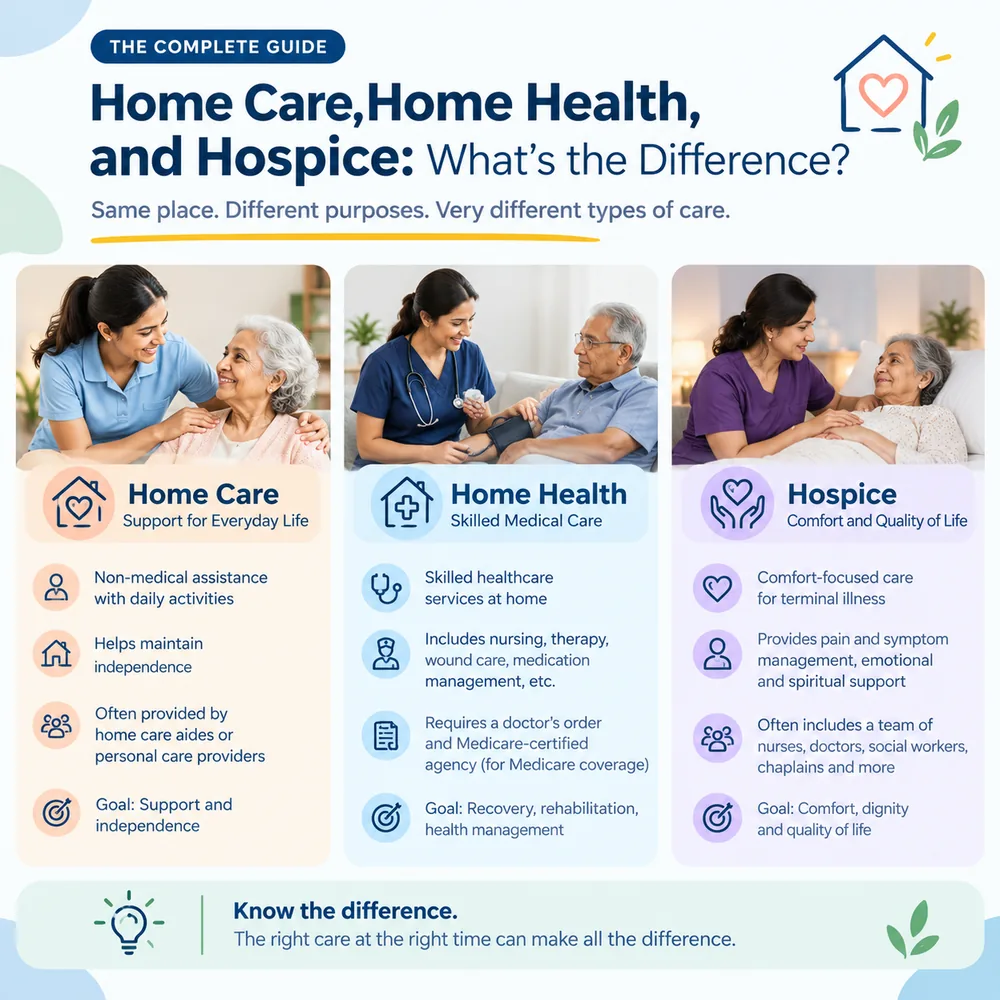
Home Care, Home Health, and Hospice: What's the Difference?
Home care supports daily life, home health provides skilled healthcare, and hospice focuses on comfort for terminal illness. Compare the services, eligibility, coverage, and goals of each model.
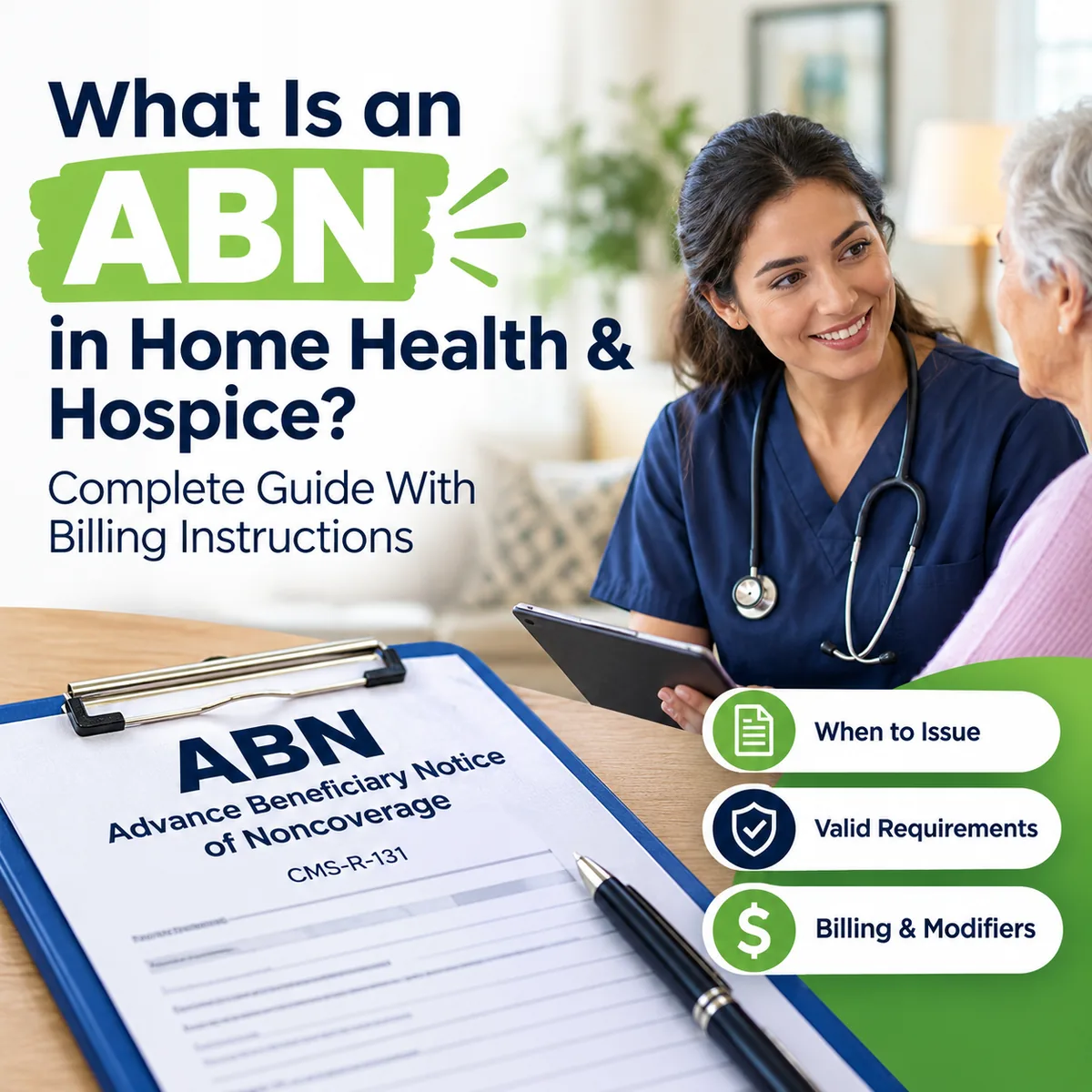
What Is an ABN in Home Health & Hospice? Complete Guide With Billing Instructions
A patient wants to continue care, but Medicare may not pay for it. Who owes the bill? That's where the Advance Beneficiary Notice of Noncoverage (ABN), Form CMS-R-131, comes in. Here's when it's required in home health and hospice, what makes it valid, the beneficiary's three choices, and how to bill it correctly.
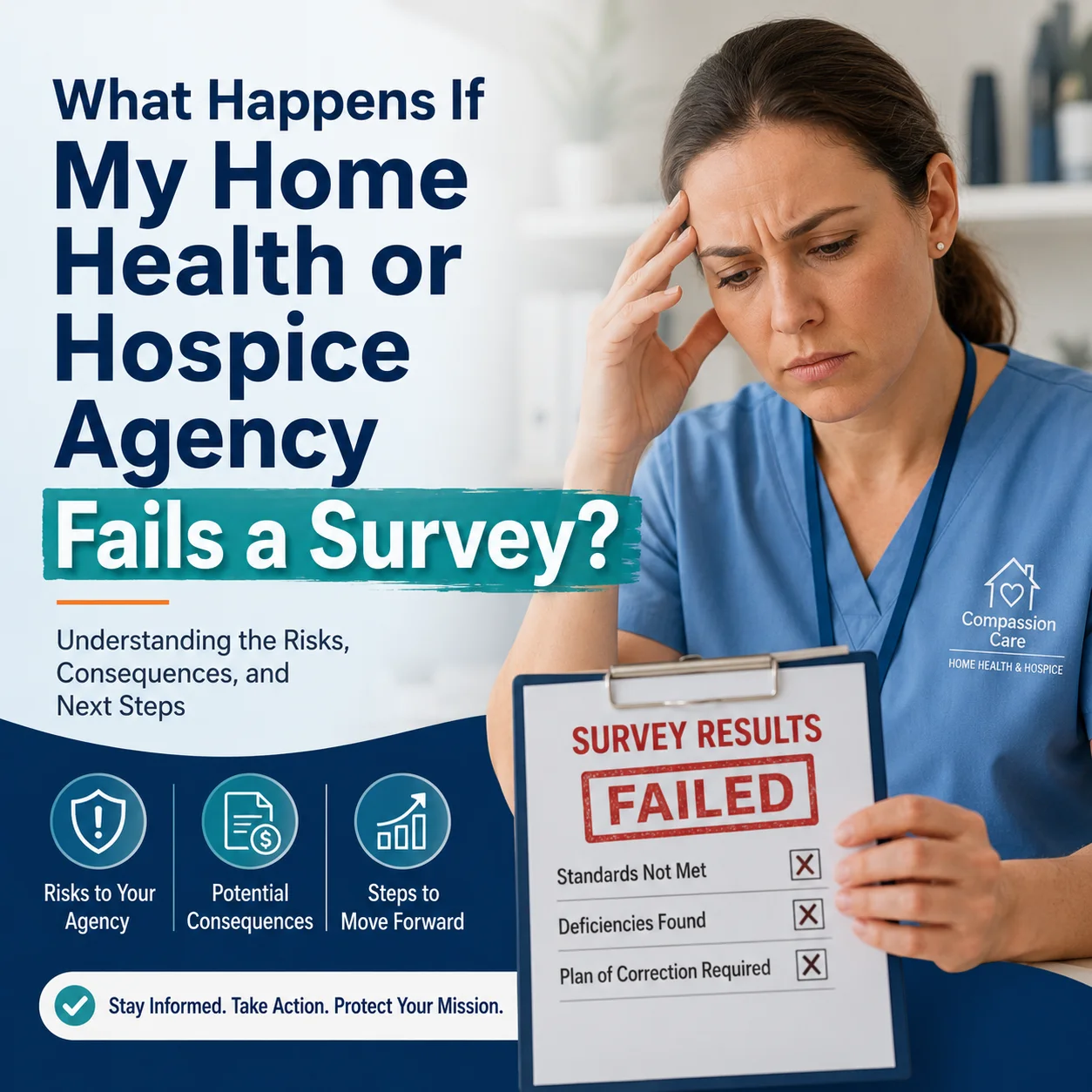
What Happens If My Home Health or Hospice Agency Fails a Survey?
A survey deficiency does not automatically mean closure. Learn what happens next, how corrective action works, and when survey problems can threaten Medicare participation.
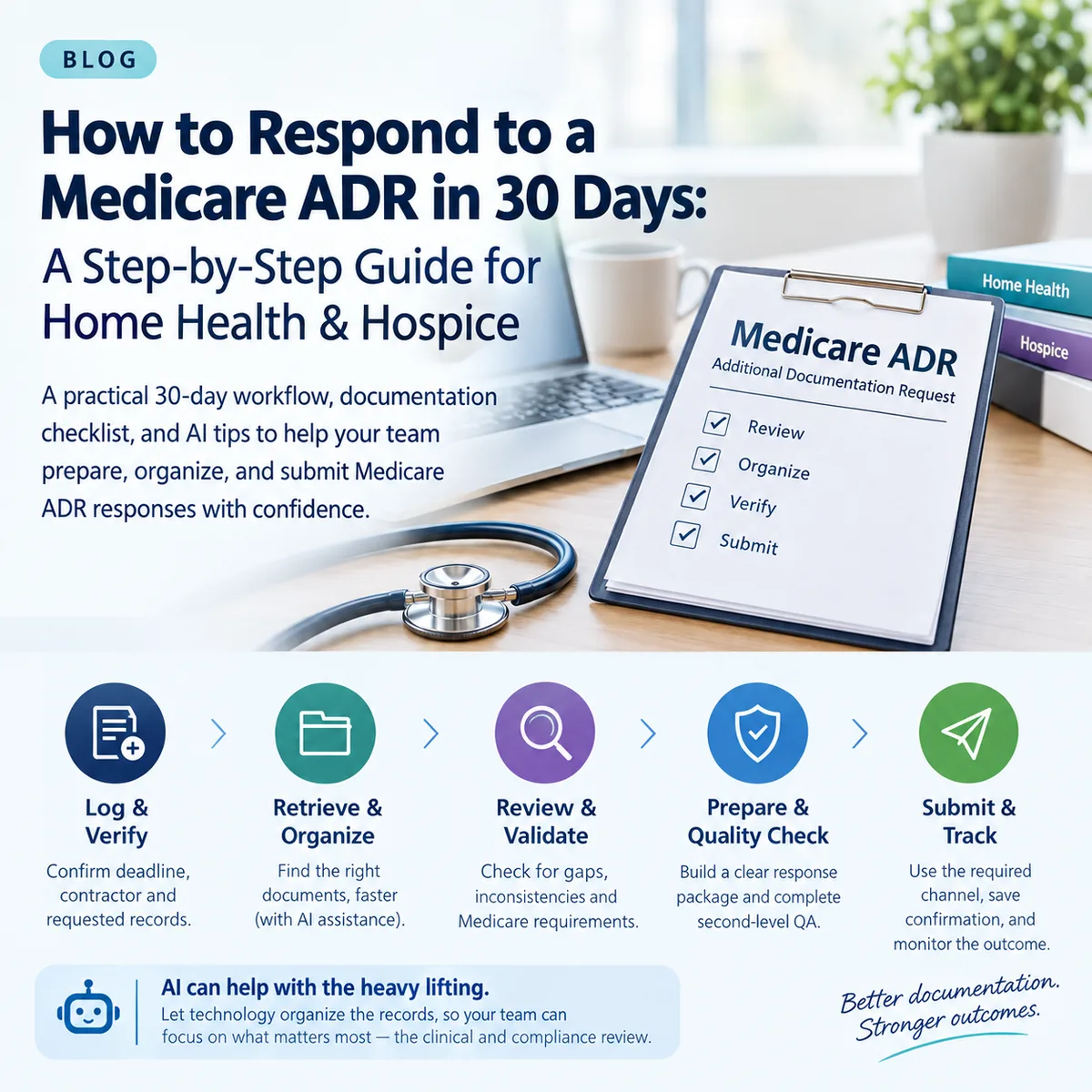
How to Respond to a Medicare ADR in 30 Days: A Step-by-Step Guide for Home Health & Hospice
A Medicare ADR turns an ordinary claim into a time-sensitive compliance project. Not every ADR is due in 30 days, so the goal isn't to "respond in 30 days" but to have a process that moves quickly, consistently, and defensibly. Here's a practical day-by-day workflow for home health and hospice, plus where AI can help.
Beginner's Guide to Medicare ADRs for Home Health and Hospice Agencies
A letter from Medicare asking for additional records raises fast questions: what do they need, why this claim, how long do we have? That letter is often an Additional Documentation Request (ADR). Here's what an ADR is, why home health and hospice agencies get them, what's requested, the deadlines, and how to respond.