
Patient-Driven Groupings Model (PDGM)
PDGM is Medicare's payment methodology for home health services.
Definition
PDGM is Medicare's payment methodology for home health services. It determines reimbursement based on patient characteristics-including diagnosis, admission source, functional impairment, and comorbidity adjustment-rather than the volume of therapy visits.
Why it matters
PDGM introduced variable LUPA thresholds and changed how agencies manage care planning and reimbursement.
Home Health Documentation Playbook
The complete guide to OASIS-E, Medicare compliance, PDGM, and AI-assisted documentation. Learn how top agencies reduce documentation time without sacrificing compliance.
Listen While You Read
Conversations on lupa & pdgm
Episodes from Inside Home Health that put Patient-Driven Groupings Model (PDGM) in operational context.
 Ep 23
Ep 23Ep 23 · Aug 17, 2026
The Hidden Spreadsheet Error That's Causing the Nursing Shortage | Robert Wingo
 Robert Wingo, BSN, RN, NI-BCWatch
  Ep 20
Ep 20Ep 20 · Jul 13, 2026
The Real Cost of Ignoring Nurse Burnout | Jennifer Johnson
 Jennifer JohnsonWatch
  Ep 16
Ep 16Ep 16 · Jun 15, 2026
Star Agency or Compliance Disaster? Understanding Home Health Ratings
 Kathy DuckettWatch
Related Blogs
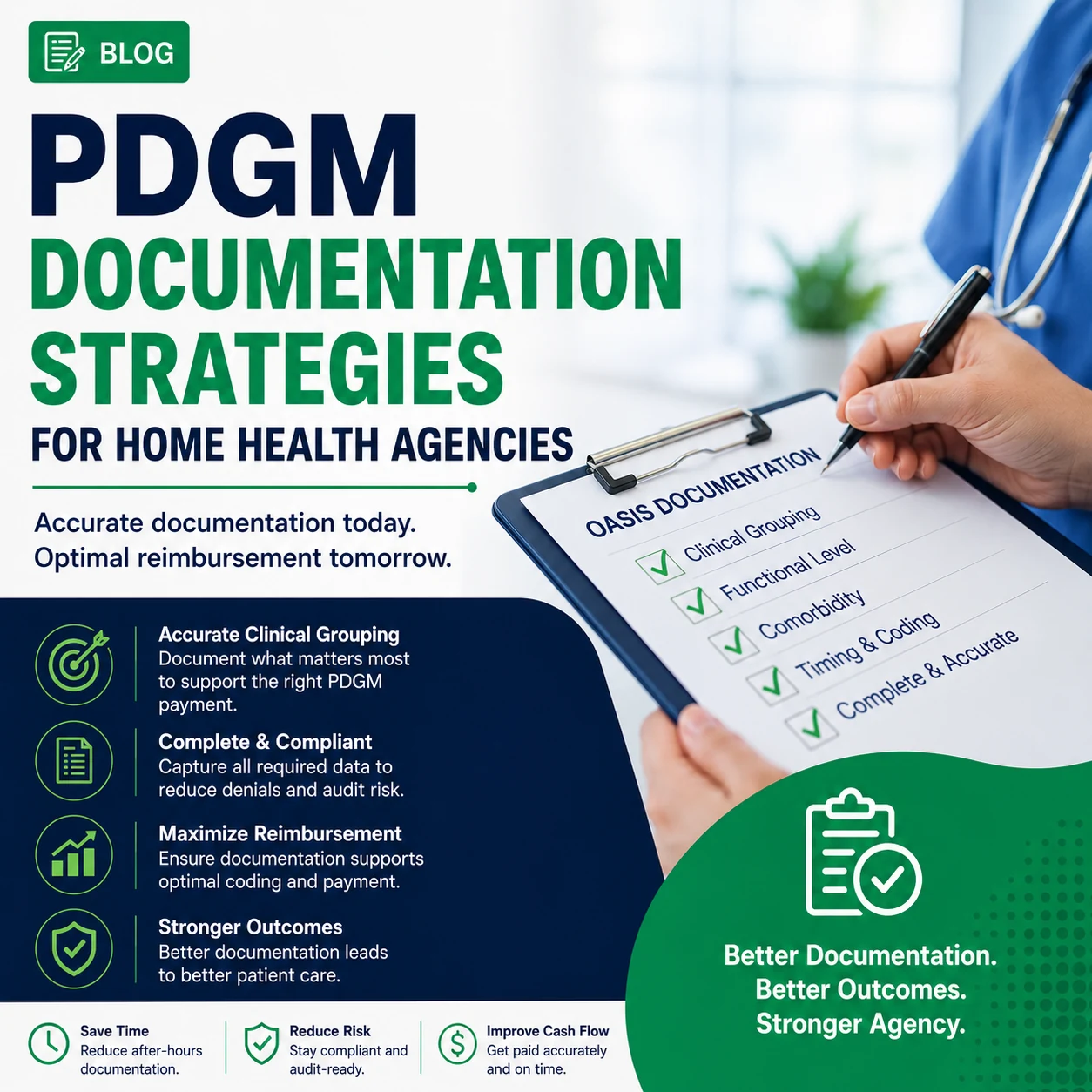
PDGM Documentation Strategies for Home Health Agencies
Under PDGM, documentation establishes the clinical picture that supports classification, medical necessity, coding, and payment. This guide breaks down 15 PDGM documentation strategies, a documentation-to-payment framework, weak-vs-strong examples, and a closed-loop workflow to keep charts consistent and audit-ready.
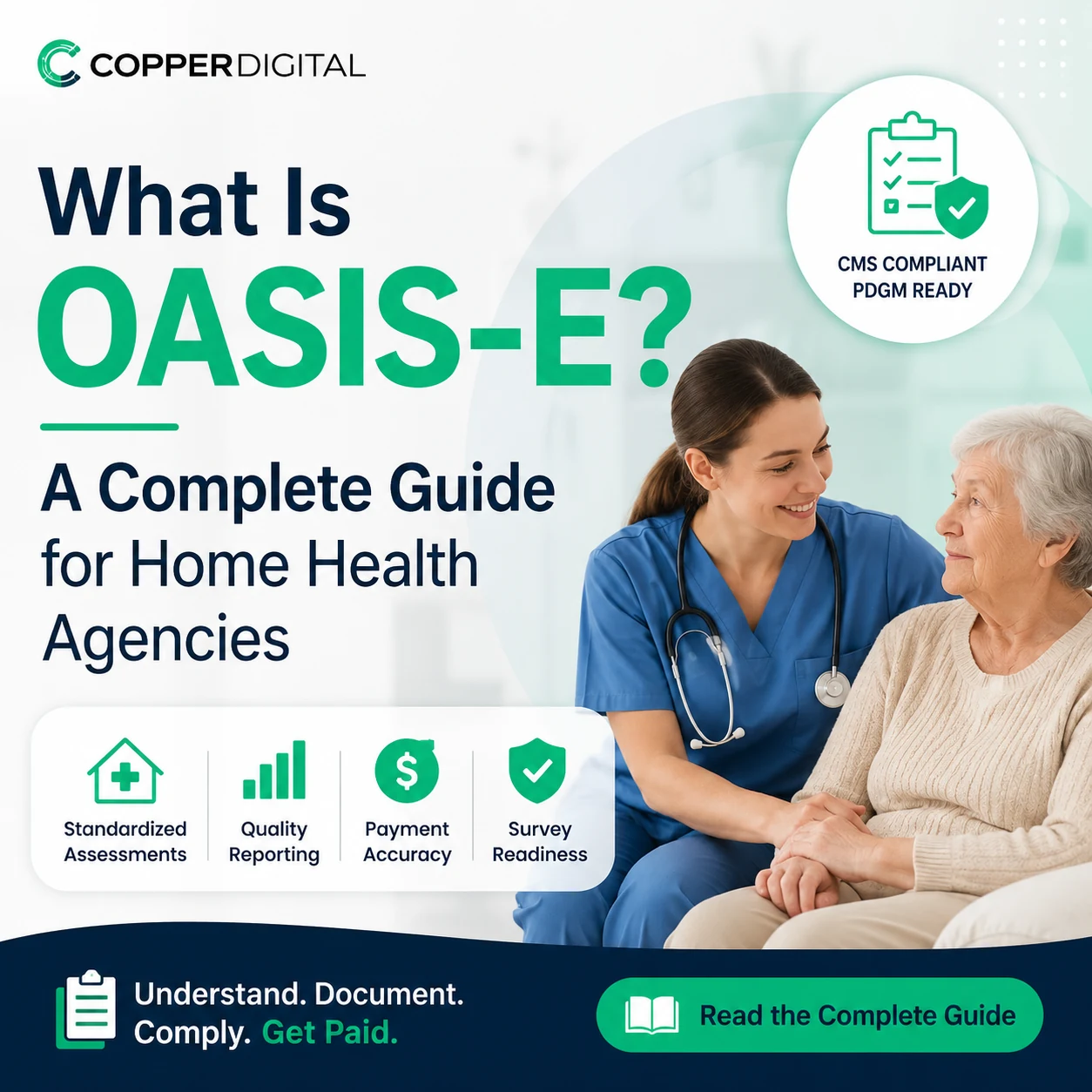
What Is OASIS-E? The Complete Guide for Home Health Agencies (2026)
OASIS-E is the CMS-required standardized assessment behind home health reimbursement, quality, and compliance. This complete guide covers what OASIS-E is, how it differs from D1/E1/E2, the five assessment time points, Section GG, PDGM impact, and documentation best practices.
Why Medicare Home Health Claims Get Denied
Medicare home health claim denials are revenue leaks, not just billing issues. This guide breaks down the ten most common reasons claims get denied, from OASIS gaps and late NOAs to coding and medical-necessity problems, and how to prevent them to get paid faster.
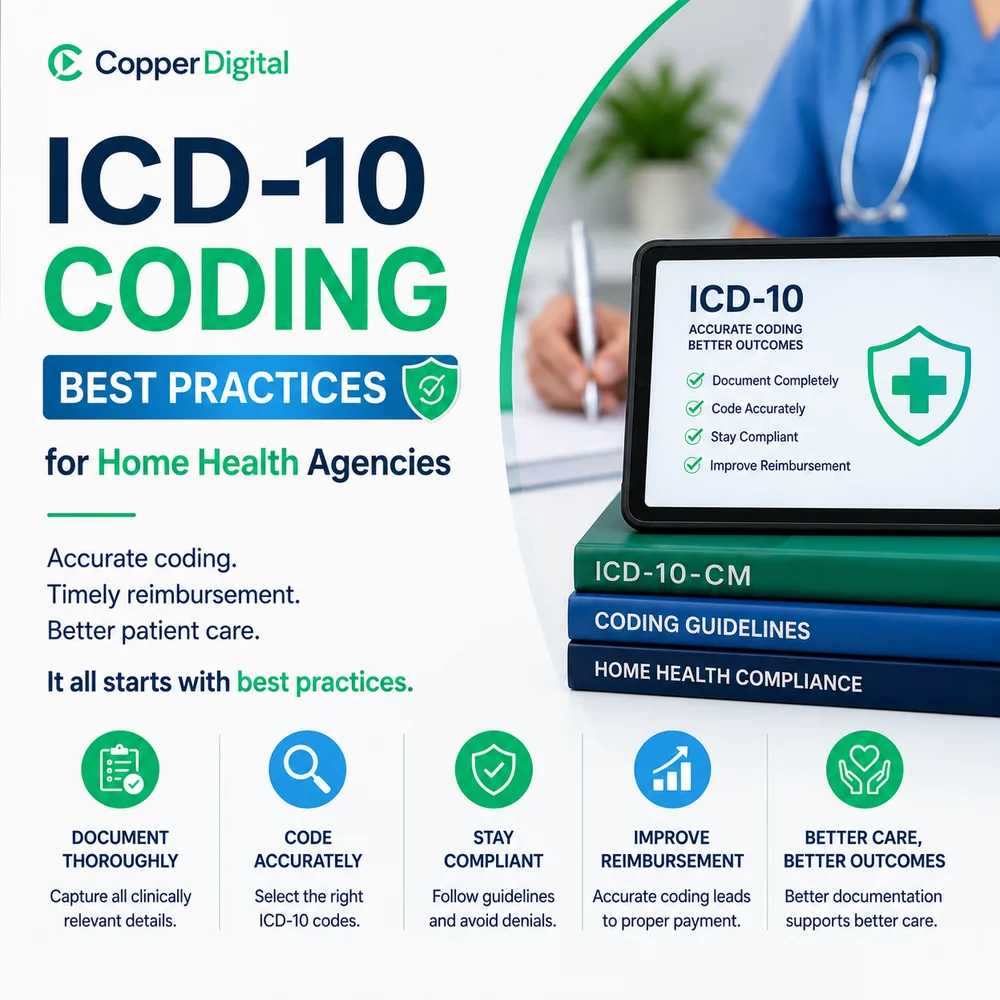
ICD-10 Coding Best Practices for Home Health Agencies
Accurate ICD-10 coding shapes PDGM reimbursement, claim denials, and Medicare compliance in home health. This guide walks through the eight best practices every agency should follow, from selecting the correct primary diagnosis and capturing comorbidities to coding specificity, OASIS alignment, annual updates, audits, and using AI as a coding support tool.
OASIS-E1 vs OASIS-E2: A Complete Side-by-Side Comparison for Home Health Agencies
Wondering what changed between OASIS-E1 and OASIS-E2? OASIS-E2 is an incremental update, not a redesign. The framework, five time points, and PDGM methodology stay the same, while CMS refines Section GG, cognitive and behavioral items, SDOH, and SPADEs. This guide compares both versions side by side and gives you a transition plan and checklist.