
Claim
Payment request submitted to a payer.
Definition
Payment request submitted to a payer.
Why it matters
Claim is part of the Revenue Cycle vocabulary used across home health operations, documentation, and revenue cycle. Understanding it helps clinicians, QA leads, and administrators stay aligned on care quality and compliance.
Home Health Documentation Playbook
The complete guide to OASIS-E, Medicare compliance, PDGM, and AI-assisted documentation. Learn how top agencies reduce documentation time without sacrificing compliance.
Related terms
Listen While You Read
Conversations on revenue cycle
Episodes from Inside Home Health that put Claim in operational context.





Related Blogs
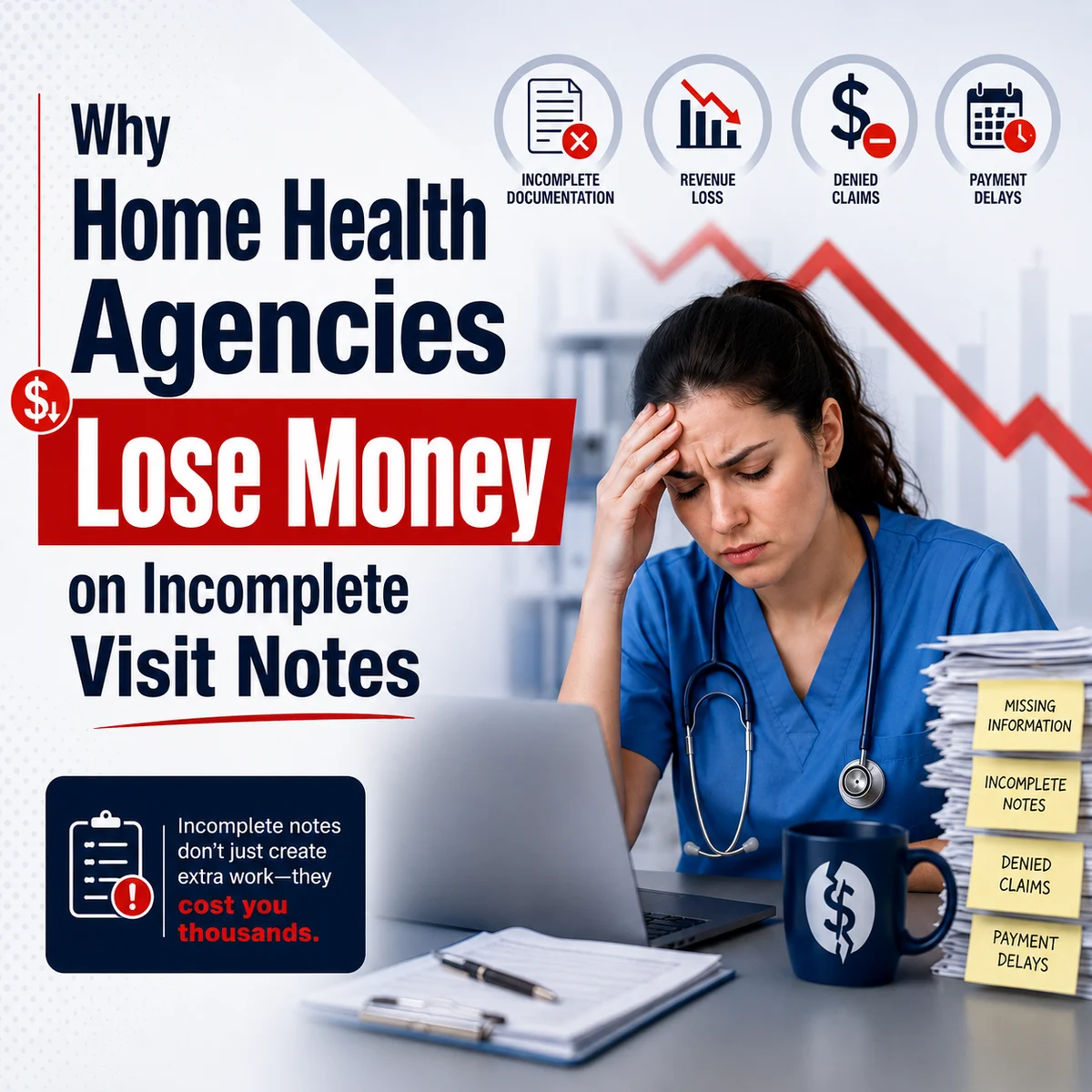
Why Home Health Agencies Lose Money on Incomplete Visit Notes
An incomplete visit note rarely creates just one problem, it moves downstream into QA rework, billing holds, denials, and audit risk. This guide breaks down the 7 most common documentation gaps, how they drain revenue, and the workflow (frameworks, real-time QA, prompts, and clinician-reviewed AI) that helps nurses finish accurate notes the first time.
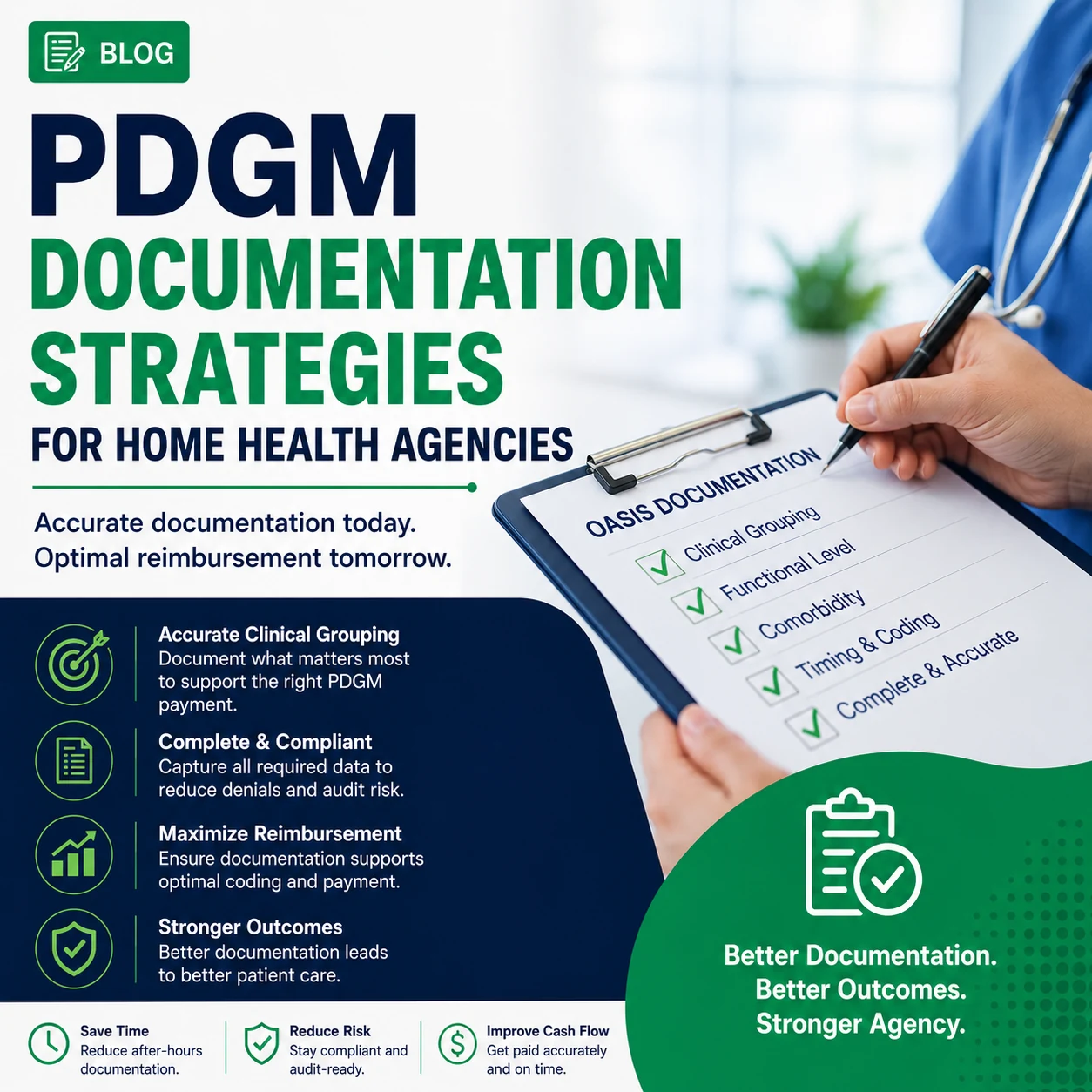
PDGM Documentation Strategies for Home Health Agencies
Under PDGM, documentation establishes the clinical picture that supports classification, medical necessity, coding, and payment. This guide breaks down 15 PDGM documentation strategies, a documentation-to-payment framework, weak-vs-strong examples, and a closed-loop workflow to keep charts consistent and audit-ready.
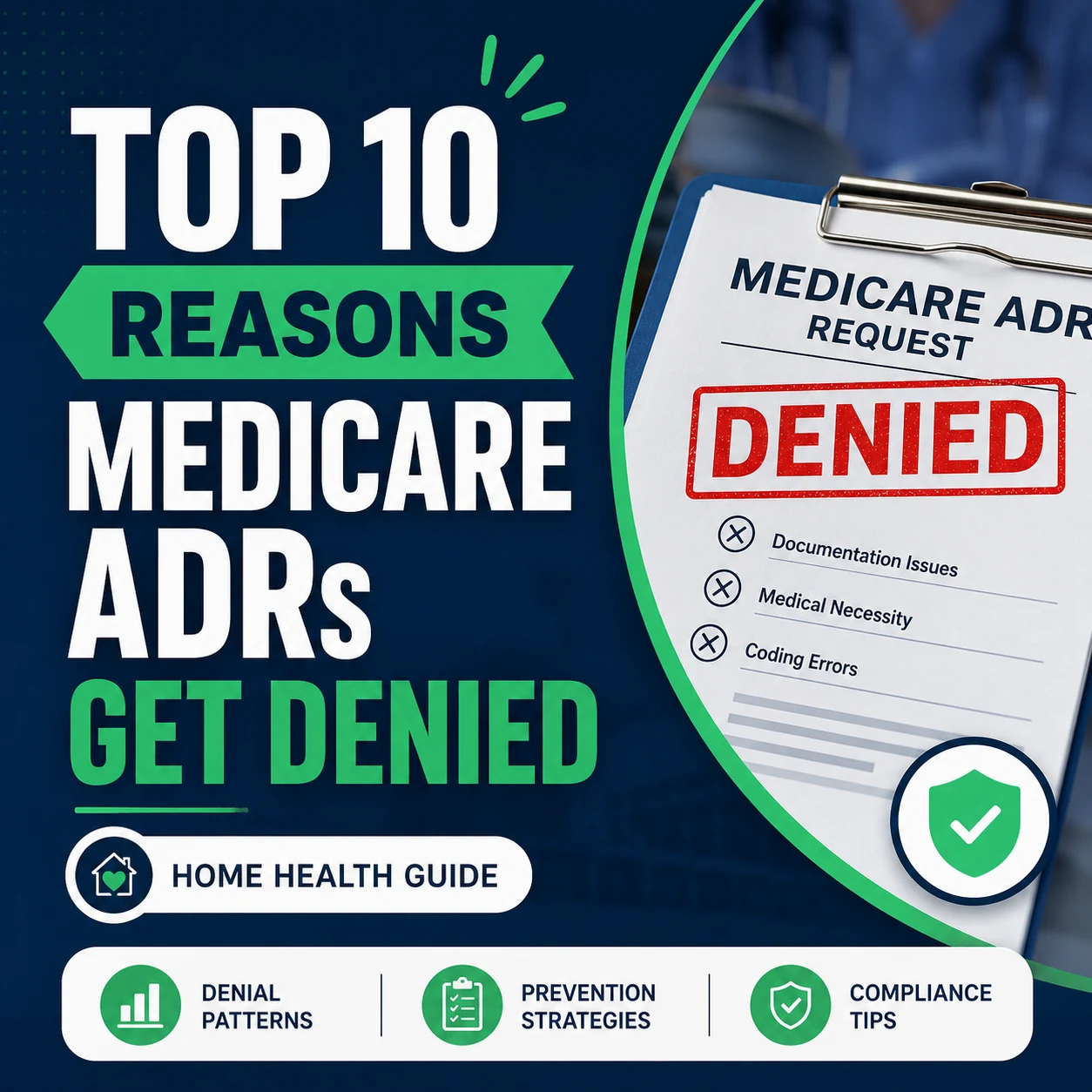
Top 10 Reasons Medicare ADRs Get Denied and How to Prevent Them
A Medicare ADR can turn a routine claim into a major administrative project, and the problem usually isn't the care, it's the documentation. This guide breaks down the 10 most common Medicare ADR denial patterns for home health and hospice, with a practical prevention strategy for each.
Why Medicare Home Health Claims Get Denied
Medicare home health claim denials are revenue leaks, not just billing issues. This guide breaks down the ten most common reasons claims get denied, from OASIS gaps and late NOAs to coding and medical-necessity problems, and how to prevent them to get paid faster.

Common OASIS Documentation Mistakes That Lead to Payment Delays
Common OASIS documentation mistakes, such as incomplete assessments, incorrect diagnosis coding, inaccurate Section GG scoring, medication and homebound-status errors, weak skilled-need documentation, and missing physician signatures, are among the biggest causes of home health payment delays. Because OASIS data drives PDGM reimbursement, most of these errors are preventable with point-of-care charting, strong QA, and AI-powered documentation validation.